 |
Pinny-Poo |
|
He is not recognized by the F.C.I. |
Origin |
Germany <> France -> U.S.A. | |
Translation |
Francis Vandersteen |
A brief presentation of the Pinny-Poo |
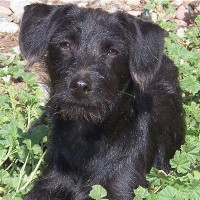
| The Pinny-Poo is a specific cross between the Miniature Pinscher and the Poodle, whose size can vary considerably depending on whether the Poodle parent is a toy, miniature or standard. The coat can also vary depending on the genes. They are energetic and love to play with their family, be it their humans or other pets. They are good with older children but can be lively with younger ones. The Pinny-Poo makes a good watchdog as they are loyal and protective as well as loving. This breed can be a little stubborn, so training them may take a little extra time and patience. |
History of the Pinny-Poo |
| The Pinny-Poo doesn't have much history yet, so you need to consider the history of its parent breeds, the Miniature Pinscher and the Poodle. |
A little of the Miniature Pinscher |
||
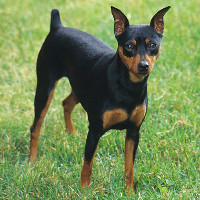
| The Miniature Pinscher is around 2,000 years old and originated in Germany as a vermin hunter. They are not related to the Dobermann Pinscher, although they look like them and share the same name. Pinscher actually means Terrier in German, and the breed is thought to be related to the German Terrier, the Dachshund and the Italian Greyhound. They are often called Min-Pin for short, and have been found in 2,000-year-old paintings from the Renaissance period. The German Miniature Pinscher Klub was founded at the end of the 17th century and around 20 years later, they were at the Stuttgart show. Shortly afterwards, the breed began to become popular in the USA and was accepted by the American Kennel Club in 1925. Five years later, in 1930, the Miniature Pinscher Club of America was formed. | ||
 |
||
| Standard of the Miniature Pinscher | ||
A little of the Poodle |
||
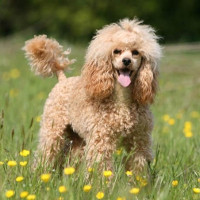
| Another German dog, the Poodle, is one of the oldest known dog breeds. They are thought to have existed before the first century, and statues have been found among Egyptian artifacts and drawings. The breed was developed from various European dogs such as French, Spanish, Hungarian, Russian, German and Portuguese Water Dogs. Some experts also believe that the North African Barbet is part of their heritage. There are many other stories about the Poodle, but these are the most commonly accepted. They come in three versions, the standard, the toy and the miniature, all of which were created in the 15th century. They were often used for hunting, although they soon proved to be excellent circus dogs and even better family companions. The Poodle has been a member of the American Kennel Club since 1887 and is the 7th most popular breed. | ||
 |
||
| Standard of the Poodle |
Appearance of the Pinny-Poo |
| The Pinny-Poo is a small to medium-sized dog, depending on the variety of Poodle used. In fact, they can weigh from 2.5 to 20.5 kilos and measure between 20.5 and 46 centimeters. These dogs have small round brown or amber eyes, a brown or black nose on a pointed muzzle, long floppy ears and their coat can be medium to long, dense and can be any color from white, black, red, silver, blue, gray, brown, cream, apricot, lemon, fawn, sable, brindle, orange and piebald. They usually have a wavy coat, but it can also be straight, depending on genes, and can be hypoallergenic like the Poodle. |
Temperament of the Pinny-Poo |
| Your Pinny-Poo will make an excellent family companion because of its loving, gentle personality. They love to be with their family all the time and can have problems with separation anxiety if left alone for too long. Their gentle temperament and loyalty make them excellent companion dogs for everyone, and although they may take a little longer to train, they are intelligent and can learn tricks that will keep you entertained for hours. Once your Pinny-Poo is trained, he's obedient and you shouldn't have any more worries with him. They are wary of strangers and make good watchdogs, but must be introduced to guests. |
Needs and activities of the Pinny-Poo |
| The Pinny-Poo needs at least an hour's exercise a day to stay physically fit and avoid boredom or anxiety. Many dogs who don't get enough exercise can develop bad habits or behavioral problems such as excessive barking or chewing your personal belongings. Some interesting activities for Pinny-Poo include brisk walks, going to the dog park to play with other dogs, swimming, playing catch or flyball, hiking or simply running around in a fenced yard. These dogs are excellent for learning tricks and can also be good for agility competitions or obedience classes. If your dog is small enough, you can also play ball indoors. |
Maintenance of the Pinny-Poo |
| Because of the Poodle's genes, you may need to spend some time maintaining their coat. They need to be brushed daily, and most Pinny-Poo owners take their dogs to a professional every few months to keep their coats manageable. However, you can do it yourself with clippers if you learn how. You'll also need to bathe your Pinny-Poo every few weeks and clean his ears then too. Be sure to use a gentle dog shampoo approved by your vet so as not to dry out your Pinny-Poo's skin. You can trim your dog's nails yourself about once a month with nail clippers, or have them done by the groomer or vet. |



 English (United Kingdom)

Comments