 |
Pineranian |
|
He is not recognized by the F.C.I. |
Origin |
Germany -> U.S.A. | |
Translation |
Francis Vandersteen |
A brief presentation of the Pineranian |
| The Pineranian is a mixed hybrid of two miniature breeds, the Miniature Pinscher and the German Toy Spitz / Pomeranian. Because they're both toy breeds, the Pineranian will measure around 25.5 centimeters and weigh an average of 4.5 kilos. These dogs are perfect family companions that get along with other pets if socialized young and with children, although they can be lively with young children if teased. They are quick learners and excellent at learning tricks, so they do well in agility, obedience and tracking activities. In fact, they are also used as therapy dogs because of their ability to learn and their desire to please. |
History of the Pineranian |
| The Pineranian hasn't been around long enough to have much history, so you'll have to look at the stories of the Miniature Pinscher and the German Toy Spitz / Pomeranian. |
A little of the Miniature Pinscher |
||
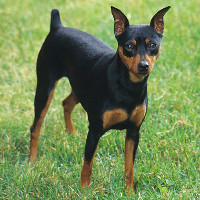
| The Miniature Pinscher originated in Germany in the 1600s and, despite their similar appearance and name, they are not related to the Dobermann Pinscher. In fact, the Miniature Pinscher has been around longer than the Dobermann, and some say over 2,000 years. They are thought to be part of the German Pinscher family, which includes the Terrier, Dachshund and Italian Greyhound. Pinscher is actually German for terrier or biter. The Pinscher Klub originated in Germany in the late 17th century and was later named the Pinscher-Schnauzer Klub. In the 1900s, the breed was shown at the Stuttgart Dog Show in Germany, and in the 1920s, the Miniature Pinscher Club of America was formed. Shortly afterwards, they were registered with the American Kennel Club, where they are the 68th most popular dog breed in the USA. | ||
 |
||
| Standard of the Miniature Pinscher | ||
A little of the German Toy Spitz / Pomeranian |
||
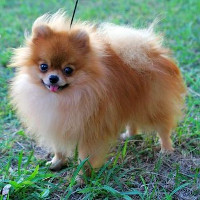
| The German Toy Spitz / Pomeranian originated in Germany in the 1800s as a sheepdog and companion. They were bred from Schipperke, American Eskimo Dog, Samoyed, German Spitz and Norwegian Elkhound. They take their name from Pomerania, where they originate. When they started out as sheepdogs, they were much larger, averaging around 14 kilos, but were bred to be smaller and eventually become better-sized companion dogs. Queen Charlotte and King George III had two German Toy Spitz / Pomeranians, but they didn't become popular until their daughter, Queen Victoria, began breeding them. In 1888, they were accepted into the American Kennel Club and are now the 22nd most popular dog breed in America. | ||
 |
||
| Standard of the German Toy Spitz / Pomeranian |
Appearance of the Pineranian |
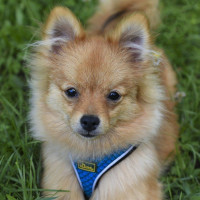
| The Pineranian is a mixed toy breed that rarely exceeds 4.5 kilos and generally stands around 25.5 centimeters tall. They have a dense, fluffy, short to medium coat that can be almost any color, including brindle, sable, merle, red, chocolate, fawn, cream, blue, silver, yellow, pinto, brown, black and piebald. Your Pineranian should have blue or brown eyes, a brown or black nose, a small round head, pointed ears and a short, fluffy tail. They have short, usually fluffy legs with small, delicate paws. The hair on their chest and neck is longest, perhaps creating a mane-like appearance as the German Toy Spitz / Pomeranian is well known for. |
Temperament of the Pineranian |
| The Pineranian has a funny, affectionate temperament and is generally happy and excited, but needs to be socialized when young so it can get along with other pets. They can look after older children, but do best in a home with adults and no other pets. They need a lot of attention and can be sensitive to separation anxiety when left alone for too long. Your Pineranian may be shy or fearful of strangers or other animals at first and may need to be introduced to avoid accidents. They learn quickly and will do just about anything to please their humans, but should be praised for their efforts. |
Needs and activities of the Pineranian |
| This breed needs a little activity every day to keep them happy. In fact, it's best if you take your Pineranian for a few 15-30 minute walks a day. The Pineranian also enjoys taking part in agility and obedience classes, playing flyball or Frisbee, going swimming, hiking and playing catch. Dogs that don't get enough exercise can become overweight, anxious or bored. This can sometimes lead to behavioral problems such as excessive barking, chewing and aggression. Since the Pineranian is a small dog, he can enjoy most of his activities inside the house, but it's important for him to go outside at least twice a day. |
Maintenance of the Pineranian |
| The amount of maintenance your Pineranian needs depends on the thickness and length of your dog's coat. The longer and thicker the coat, the more brushing your dog will need. Generally, they should be brushed at least every other day with a pincushion or smooth brush and a metal comb. Be sure to take your time and do a thorough job under your dog's neck and chest, as well as on his bottom and under his tail. Your dog can be bathed and shampooed with a mild shampoo from time to time, but not too often, otherwise it will dry out your dog's skin. |



 English (United Kingdom)

Comments