 |
Pinweiler |
|
He is not recognized by the F.C.I. |
Origin |
Germany -> U.S.A. | |
Translation |
Francis Vandersteen |
A brief presentation of the Pinweiler |
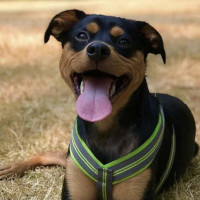
| This breed can vary considerably in size because the parent breeds are so different in size. While the Rottweiler is a large dog that can exceed 45 kilos, the Miniature Pinscher is a toy dog and usually weighs around 4.5 kilos. As a result, the Pinweiler can weigh between 13.5 and 27 kilos as an adult. Their coloring resembles a Rottweiler and their body is more like a large Miniature Pinscher with floppy ears and a long tail. This energetic, fun-loving breed loves to play with other pets and older children, but should not be left alone with young children. |
History of the Pinweiler |
| The Pinweiler is a relatively new hybrid that hasn't had much time to develop its own origin story. However, we know all about its parent breeds, the Miniature Pinscher and the Rottweiler. |
A little of the Miniature Pinscher |
||
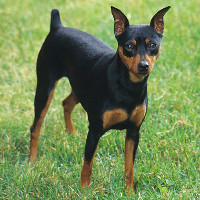
| The Miniature Pinscher originated in Germany around 2000 years ago, according to Renaissance paintings. They are not related to the Dobermann Pinscher as the name suggests, although they do resemble miniature Dobermanns. In fact, the Dwarf Pinscher has been around much longer. These little dogs started out as rascals but ended up as pets when it was discovered how friendly and adorable they were. Most people think the Miniature Pinscher was bred from the Dachshund, Italian Greyhound and some forms of Terrier. Their name even means Terrier in German. The red-haired Miniature Pinscher was nicknamed Reh Pinscher because it so closely resembled the little red deer that lived in Germany at the time. The Pinscher Klub of Germany was formed in the late 1800s, but they weren't seen in America until 20 years later. In 1925, they were accepted by the American Kennel Club and the Miniature Pinscher Club of America was formed in 1930. | ||
 |
||
| Standard of the Miniature Pinscher | ||
A little of the Rottweiler |
||
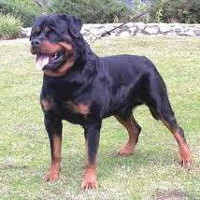
| The Rottweiler also originated in Germany around the same time as the Miniature Pinscher, from the Roman Drover Dog, German Shepherd and Mastiff. Their name comes from the town where they originated, which at the time was called Rottweil. They were originally used to guard soldiers in the Roman Empire, but were later used to guard livestock during the day and protect homes at night. These muscular dogs were also used to pull carts and wagons, or to hunt bears. After the ban on driving cattle and the use of donkeys for dragging, the Rottweiler was mainly used by butchers to pull meat carts and was nicknamed the Rottweiler Metzgerhund, meaning Rottweiler butcher's dog. The International Club for Leonbergers and Rottweilers was launched in Germany in 1899 and they became popular in America soon after, being accepted by the American Kennel Club in 1931. | ||
 |
||
| Standard of the Rottweiler |
Appearance of the Pinweiler |
| Pinweiler are medium-sized dogs with short, fine, straight coats that are generally black with rusty-brown or fawn Rottweiler markings on face and body. They have a small head with drooping, triangular ears, large brown eyes and a leathery black nose. The Pinweiler has a pointed muzzle like a Miniature Pinscher and a long neck with long legs and paws. Their tail is long and can curl over its back, but is generally straight. Some owners may choose to shorten the tail and ears, but this is not necessary. With thin lips and large teeth with a scissor bite, they look like they're showing their teeth even when they're not. |
Temperament of the Pinweiler |
| The Pinweiler loves his family and wants to be with you all the time, so he may have separation anxiety if left alone for too long. However, if you make sure your dog gets enough attention and exercise, all should go well. They're chewers, so make sure their toys are safe for dogs who chew a lot. Kong toys are best. Your Pinweiler will bark to let you know if he thinks there's a threat and needs to know he's appreciated, so make sure you praise him often. Training is easy with appropriate methods such as positive reinforcement. |
Needs and activities of the Pinweiler |
| To keep your Pinweiler healthy and happy, make sure he gets at least one hour to 90 minutes of activity every day. If your dog doesn't get enough exercise, he may become anxious and develop behavioral problems such as chewing your things or scratching doors and furniture. He may also become anxious or depressed. A large, fenced-in backyard is best for your Pinweiler, as he loves to get out and run around for several hours a day. Other activities your Pinweiler may enjoy include hiking, swimming, playing at the dog park or brisk walks around the neighborhood. |
Maintenance of the Pinweiler |
| The Pinweiler's coat is short and easy to maintain, but you should brush your dog at least every other day to avoid excessive shedding. Brushing with a smooth or stiff bristle brush is good for circulation and healthy skin. Your Pinweiler doesn't need to be bathed unless he becomes extremely dirty, and don't shampoo your dog too often or his skin may become dry and irritated. When bathing your dog, be sure to clean his ears, and you should also trim his nails with a nail clipper once a month or as needed. |



 English (United Kingdom)

Comments