
 |
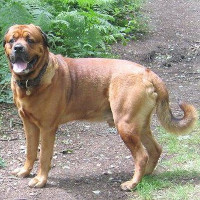
Italian Mastweiler |
|
He is not recognized by the F.C.I. |
Origin |
Italy <> Germany -> U.S.A. | |
Translation |
Francis Vandersteen |
A brief presentation of the Italian Mastweiler |
| The Italian Mastweiler is a combination of the Italian Corso dog and the Rottweiler. As both dogs are large, your Italian Mastweiler will also be large and should weigh around 34-55 kilos as an adult. They like to work as well as play, and prefer to be busy at all times. Although the Italian Mastweiler is a loyal and affectionate pet, they are also excellent guard dogs because of their strength, size and courage. They need early socialization and thorough training as they are very strong and can be a deadly force to be reckoned with in the wrong hands. |
History of the Italian Mastweiler |
| To find out about your Italian Mastweiler's personality and background, you'll need to look at the history of the parent breeds. |
A little of the Italian Corso dog |
||
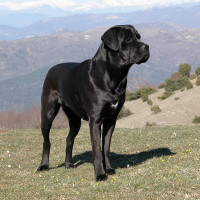
| The Italian Corso dog is descended from Molassian Roman war dogs such as the Neapolitan Mastiff. They were originally used as war dogs, but after the fall of the Roman Empire, they were used around the farm as guards and to hunt game such as wild boar and bear. The breed almost disappeared after the Second World War. By the 1970s, only a few Italian Corso dogs remained in Italy, and a breeding program was launched in 1974 by Dr. Paolo Breber and Giovanni Bonnetti. In the 1990s, the Italian Corso dog was recognized by the International Federation of Kennel Clubs. The Fédération Internationale de Italian Corso dog was founded in America in 1993 and accepted by the American Kennel Club in 2010. | ||
 |
||
| Standard of the Italian Corso dog | ||
A little of the Rottweiler |
||
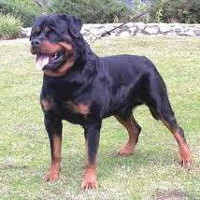
| The Rottweiler has been around since the first century and was bred in Germany from the German Shepherd, the Roman Drover Dog and several different types of Great Dane. It is thought that the Roman soldiers of the 11th Legion of the Roman Empire developed the Rottweiler breed in Württemberg, Germany, to guard their camps and herds and protect their livestock. Their name comes from the town of Rottweil, which was a town in Germany that had many of these dogs. They were kept busy at all times, pulling carts and guarding livestock during the day and guarding camps at night. In the 1800s, the breed began to be less useful because driving cattle was banned, but butchers started using them to pull carts full of meat and they were nicknamed the Rottweil Butcher Dog or Rottweiler Metzgerhund. They soon proved to be excellent police dogs and were even used as guards during the First World War. In 1931, the American Kennel Club took notice and accepted the Rottweiler, where it is still the 8th most popular breed in the USA. | ||
 |
||
| Standard of the Rottweiler |
Appearance of the Italian Mastweiler |
| Your Italian Mastweiler is a muscular, powerful dog that is a little shorter in height than it is in length. Their short coat is straight and can have a variety of colors such as liver, golden, white, brindle, sandy, red, brown or black. Its fine, elegant coat highlights its handsome physique and accentuates its strength, with strong, well-muscled legs and a deep chest supporting its thick neck and thick head. The Italian Mastweiler has a massive jaw with a scissor bite, a black nose, brown or amber eyes and triangular floppy ears. Their intelligent expression shows their interest in everything you do. |
Temperament of the Italian Mastweiler |
| The Italian Mastweiler is a pack dog that likes to be active and prefers to be with its family or other pets at all times. They get bored when they're alone and need a good trainer to know who's boss. This breed is capable of causing serious physical damage to people and other animals, so they need to be thoroughly trained and you need to be firm with him at all times. Never leave your Italian Mastweiler alone with young children or pets, and be sure to socialize your dog early and often so that he gets along with others. |
Needs and activities of the Italian Mastweiler |
| Your Italian Mastweiler loves to work as well as play, and prefers to be on the move at all times. They need an hour or more of exercise every day and prefer to go for a walk at least once a day. However, be sure to keep them on a leash so they don't chase other animals. Because they're so strong, it's best to make sure your dog is well trained before trying to walk him in an off-leash area. Once you lose control of such a powerful dog, it's hard to get it back. They love to swim, run, play with toys and go to the dog park. |
Maintenance of the Italian Mastweiler |
| Although the Italian Mastweiler has a short coat, it sheds, so you need to brush your dog regularly. A smoother brush or detangling tool is about all you should need to avoid too much shedding, but you may need to brush him more often during shedding seasons. While you're brushing your dog, you should check his skin for wounds or abnormalities and clean his ears and teeth. In addition, you can shampoo your dog from time to time as needed with a mild dog shampoo, but be sure to dry him thoroughly to prevent him from getting cold. |



 English (United Kingdom)

Comments