 |
Italian Papihound |
|
He is not recognized by the F.C.I. |
Origin |
Italy <> France and Belgium -> U.S.A. | |
Translation |
Francis Vandersteen |
A brief presentation of the Italian Papihound |
| The Italian Papihound is a hybrid dog. Its parent breeds are the Italian Greyhound and the Continental Toy Spaniel. The parent breed, the Italian Greyhound, is affectionate and active. Originally bred for hunting, they also make excellent companion dogs. The courageous parent Continental Toy Spaniel is also a small dog that should be indoors with its loving family. Both breeds are sensitive to anesthesia, so it's likely that the hybrid offspring will be too. The Italian Papihound is a highly intelligent dog, although it can be difficult to domesticate. This hybrid may be inclined to chase cars and bikes due to the Greyhound heritage. He needs lots of love and attention and will be happy to give you the same in return. |
History of the Italian Papihound |
| Although there isn't much information on the Italian Papihound, we can learn more about the parent breeds to determine what the hybrid offspring will look like. The Italian Papihound is recognized by the American Canine Hybrid Club, the Dog Registry of America and the International Designer Canine Registry. |
A little of the Italian Greyhound |
||
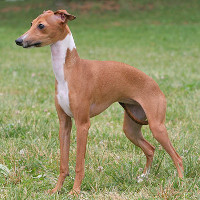
| The exact origin of the Italian Greyhound is unknown, however, we do have artwork dating back to 2,000 depicting the breed. It is thought that the Phoenicians brought the Italian Greyhound to Europe, where it was developed strictly as a pet. The Greeks, Egyptians and Romans favored the dog; in fact, the Romans helped cultivate the development of the Italian Greyhound. Many members of the royal family were deeply devoted to their dogs of this breed. Rumor has it that Frederick the Great of Prussia was buried next to his beloved Italian Greyhound. Around 1900, the breed began to decline in numbers and popularity. Some breeders tried to reduce the size of the already miniature dog, which also led to a decline in the breed's health. Italian Greyhounds were brought to America in the late 1800s, and today the breed is once again gaining in popularity. | ||
 |
||
| Standard of the Italian Greyhound | ||
A little of the Continental Toy Spaniel |
||
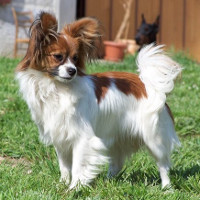
| The Continental Toy Spaniel has a history dating back to the 16th century. Portraits from this period, including works by Rembrandt and Rubens, feature this beautiful, elegant companion dog. Throughout Europe, noble ladies cited them as their favorite companions, and merchants carried the little dogs in baskets on mules as they traveled through Spain, France and Italy. Louis XIV helped develop the breed into the dog we know today. | ||
 |
||
| Standard of the Continental Toy Spaniel |
Appearance of the Italian Papihound |
| The Continental Toy Spaniel is a small dog. Its head is long and narrow, with a muzzle that tapers to a point. The teeth meet in a scissor bite. It has medium-sized eyes, with ears that fold back along the head. The color of the Italian Greyhound is varied: gray, slate gray, red, fawn, blue, black, white or cream are all acceptable in the show ring. Continental Toy Spaniels have long, flowing, straight coats that are silky to the touch. It has no undercoat. On his chest is a ruffle of hair, and his ears are also trimmed with hair. He also has a feathered tail that curls over his back. He is generally white with colored spots. It will usually have a definitive white blaze and a nasal stripe. Based on parental characteristics, your Italian Papihound's coat can be in a range of colors, but most often there are white markings on his chest and feet. The head is generally small and has a muzzle similar to that of the parent Italian Papihound. It will have small, dark eyes and they will sparkle with mischief, giving you an idea of the fun-loving, feisty personality of this hybrid. Most often, the Italian Papihound's coat is not as long as the coat seen on the Continental Toy Spaniel parent, but dogs, even within the same hybrid litter, can have coats of varying lengths. Ears can also differ completely. |
Temperament of the Italian Papihound |
| The Italian Papihound is cheerful, alert and friendly. At times, this hybrid can be somewhat submissive, but really wants to please. Although they don't respond to harsh discipline, they won't listen to a manager who isn't firm and consistent. Obedience classes are suggested as this will give your dog the opportunity to get used to rules, people and other dogs in a neutral setting. The Italian Papihound is a very peaceful dog and can be somewhat dependent on its owner. However, too much care can cause the Italian Papihound to experience Small Dog Syndrome, a condition in which he may think he rules the house. You need to be firm and calm for your hybrid to see you as a pack leader. This little dog is very active, fast and can even climb on your furniture. |
Needs and activities of the Italian Papihound |
| The Italian Papihound is likely to be a fairly active dog due to the energy level typical of the Continental Toy Spaniel parent breed. The parent breed Continental Toy Spaniel likes to go out in a fenced-in yard, of course, and enjoys running and playing. The Continental Toy Spaniel loves to climb, so don't be surprised if your Italian Papihound is also a climber. The parent breed Little Italian Greyhound is also very energetic. However, being outdoors requires a certain amount of preparation. The Italian Papihound has a thin skin, so in winter he'll need a sweater, and in the warmer months he'll need sunscreen. A daily walk will be enough to help your dog expend his energy. If you put the Italian Papihound in a fenced-in area, remember that both parents are excellent climbers. Don't leave him unattended, not even for a minute. |
Maintenance of the Italian Papihound |
| The Italian Papihound should be a low-maintenance dog. Although it may have the longer hair of the Continental Toy Spaniel, you should only need to brush it once or twice a week, as the coat should have a texture that the pincushion brush glides through. Sometimes a comb can be used to make sure the coat doesn't tangle. Bathe your dog only when necessary; he shouldn't smell like a dog, as his parents rarely do. His ears will need weekly cleaning with a vet-recommended cleaning solution and a cotton ball. You should brush your Italian Papihound's teeth at least three times a week, as small dogs are known to have dental problems. Trim your dog's nails every two weeks. |



 English (United Kingdom)

Comments