 |
Bluetick Coonoodle |
|
He is not recognized by the F.C.I. |
Origin |
U.S.A. <> France -> U.S.A. | |
Translation |
Francis Vandersteen | |
This breed is also known as |
Bluetick Coonpoo |
A brief presentation of the Bluetick Coonoodle |
| A Bluetick Coonoodle is a cross between a Bluetick Coonhound and a Poodle. These dogs are bred to be highly intelligent, relatively large human companions. This breed is generally known for being discreet (except when its hunting impulse is triggered), friendly and devoted to its owners. Bluetick Coonoodles require a moderate amount of exercise and lots of human attention. They have an average lifespan of 11 to 14 years, a weight of 20.5 to 38.5 kilos and a height of 38 to 76 centimeters. Bluetick Coonoodles generally resemble Poodles, but without the shaggy coat and with hound-like features. As their name suggests, they often have a molten or mottled "blue" coat. Because they are a relatively new hybrid breed, their appearance and personality are not completely stabilized. As a result, they are not recognized by the American Kennel Club's (AKC) list of purebred dogs. |
History of the Bluetick Coonoodle |
| The name Bluetick Coonoodle is a nod to the breed color it inherits from the Bluetick Coonhound and the name of its other parent breed, the Poodle. |
A little of the Bluetick Coonhound |
||
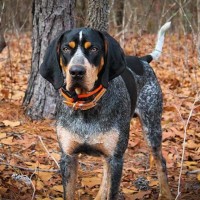
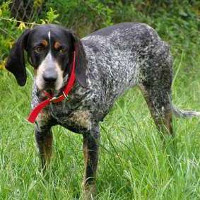
| The Bluetick Coonhound originated in the southern United States and is descended from the Grand Bleu de Gascogne, also known as the French Staghound, and the English Foxhound. It was classified as an English Coonhound and used for tracking and hunting. However, in the mid-1940s, American breeders in Louisiana and Tennessee began to breed it to be larger and better at cold flight. Finally, the Bluetick Coonhound was recognized by the United Kennel Club in 1946, but only recently by the AKC in 2009. | ||
 |
||
| Presentation of the Bluetick Coonhound | ||
A little of the Poodle |
||
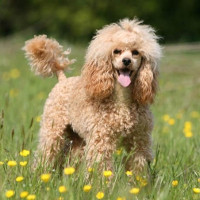
| The Bluetick Coonhound's other parent breed, the Poodle, originated in Germany, but the French developed it into the breed we know today. The name "Poodle" is an Anglicized version of "pfudel", which means "splash" or "puddle" in German. As a result, Poodles were originally bred to hunt waterfowl. Eventually, Poodles became popular throughout Europe, particularly with elite French families, who began breeding smaller versions. Because of the breed's remarkable intelligence, Poodles were widely used for hunting, guiding, military service and circus performances. The AKC recognized Poodles in 1886, but the breed was rare in the USA before World War II. By the 1950s, however, Poodles were the country's most popular breed. | ||
 |
||
| Standard of the Poodle |
Appearance of the Bluetick Coonoodle |
| Bluetick Coonoodles generally resemble a Poodle without a shaggy coat and with certain characteristics similar to those of a hunting dog. They have a relatively square, gangly, but athletic build. Bluetick Coonoodles are generally medium to large-sized dogs. Their average weight ranges from 20.5 to 38.5 kilos, and their average height from 38 to 76 centimeters. Their coat is reminiscent of its Bluetick Coonhound parent breed, blue (marbled or spotted) or black and white with tan markings. However, depending on the color of the Poodle parent, the coat can also be influenced by silver, gray, cream, apricot and various browns. Bluetick Coonoodles have an alert, intelligent expression, with low-set floppy ears, a long muzzle ending in a black nose and round, usually brown eyes. It has a tapered, medium-length tail and sturdy, rounded legs with tough pads for walking outdoors. |
Temperament of the Bluetick Coonoodle |
| The Bluetick Coonoodle is known for being discreet (as long as its hunting instincts haven't manifested themselves), friendly, intelligent and devoted to its owners. They are people-oriented, eager to please, and love to relax with their owners and other family members. On the other hand, Bluetick Coonoodles can be nervous, like their Poodle ancestors. They are also quite vocal, having inherited the barking of both parent breeds. Bluetick Coonoodles can be reticent towards strangers or aggressive towards small pets and children, so it's best to supervise your Bluetick Coonoodle when introducing it to new people and pets. Given their hunting heritage, Bluetick Coonoodles have a strong impulse to wander and follow, so they need to be supervised when off-leash. Because this breed is so intelligent, early training and socialization can help eliminate some of these negative traits. Overall, a well-adapted Bluetick Coonoodle has the potential to be a lovable, obedient family dog. |
Needs and activities of the Bluetick Coonoodle |
| Because the Bluetick Coonoodle comes from a high-energy breed and a medium-energy breed, it falls somewhere in the middle. Bluetick Coonoodles should have at least one moderate to long walk a day, combined with attention and play time with their owners. This breed thrives in all climates and will be happy in any type of environment (urban, suburban or rural) as long as it benefits from human companionship and moderate exercise. Note that the Bluetick Coonoodle has a tendency to wander and becomes very excited when its hunting impulse is triggered. As such, owners should keep an eye on their pet in off-leash areas, especially if small pets and animals are nearby. Although Bluetick Coonoodles enjoy outdoor activities, they love spending time indoors with their owners and family members. |
Maintenance of the Bluetick Coonoodle |
| Bluetick Coonoodles are moderate excretors and require a moderate level of regular grooming. They are not completely hypoallergenic, but produce fewer allergens due to the hair-like coat they inherit from their Poodle parent. Owners can reduce shedding and matting by brushing occasionally and giving their Bluetick Coonoodle monthly baths. Owners should pay particular attention to cleaning their dog's floppy ears every time they are washed. Like all dog breeds, Bluetick Coonoodles should have their teeth brushed daily and their nails trimmed 1-2 times a month. Trimming the coat around the head, ears, tail and feet is suggested, but not necessary. Note that this breed has an occasional tendency to drool and salivate. |



 English (United Kingdom)

Comments