 |
Bluetick Coonhound Harrier |
|
He is not recognized by the F.C.I. |
Origin |
U.S.A. <> Great Britain -> U.S.A. | |
Translation |
Francis Vandersteen | |
This breed is also known as |
Harrier Coonhound
|
A brief presentation of the Bluetick Coonhound Harrier |
| The Bluetick Coonhound Harrier is a cross between a Bluetick Coonhound and a Harrier. These dogs are pack-oriented pets bred to be outgoing, friendly and devoted to their owners. They require a moderate amount of exercise and lots of human attention. They have an average lifespan of 11 to 12 years, weigh 20.5 to 45 kilos and stand 48 to 76 centimeters tall. Bluetick Coonhound Harriers resemble sporting dogs with a short-haired coat that is of course blue, melted or mottled, with strong brown and white markings. They are moderate excretors and tend to drool. Because the Bluetick Coonhound Harrier is a relatively new breed, it is not completely stabilized in appearance and personality. Consequently, it is not recognized by the American Kennel Club's (AKC) list of purebred dogs. |
History of the Bluetick Coonhound Harrier |
| The name Bluetick Coonhound Harrier is a combination of the two parent breed names: the Bluetick Coonhound and the Harrier. There is no exact date of origin for the Bluetick Coonhound Harrier, but its parent breeds were probably mated some time after the 1940s in the USA. Bluetick Coonhounds are generally large to medium-sized, good-natured dogs like their Harrier and Coonhound ancestors. At present, the Bluetick Coonhound Harrier is not recognized by the AKC. As such, breeders should be thoroughly researched if you are considering buying a Bluetick Coonhound Harrier puppy through them. |
A little of the Bluetick Coonhound |
||
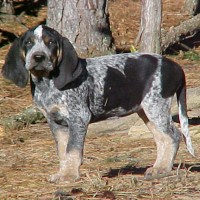
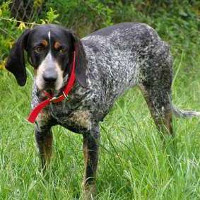
| The Bluetick Coonhound originated in the southern United States and is descended from the Grand Bleu de Gascogne, also known as the French Staghound, and the English Foxhound. It was classified as an English Coonhound and used for tracking and hunting. However, in the mid-1940s, American breeders in Louisiana and Tennessee began to reproduce it to make it bigger and better at cold flight. Finally, the Bluetick Coonhound was recognized by the United Kennel Club in 1946, but only recently by the AKC in 2009. | ||
 |
||
| Presentation of the Bluetick Coonhound | ||
A little of the Harrier |
||
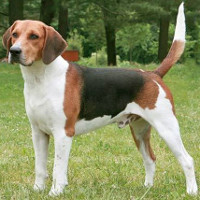
| There are many theories about how the Bluetick Coonhound Harrier's other parent, the Harrier, came into being. Many believe that the first Harrier came from a mix of Blood, Talbot and Basset Hounds. In England, where the Harrier breed was developed for hunting hares and foxes, a pack of Harrier-type dogs was established as early as 1260. Somewhere along the line, Harriers were bred with English Foxhounds. Harriers arrived in North America as early as the 1700s and were registered by the AKC in 1885, but never became a popular breed despite their friendly disposition. | ||
 |
||
| Standard of the Harrier |
Appearance of the Bluetick Coonhound Harrier |
| Bluetick Coonhound Harriers are taller than they are long, with muscular hindquarters. Generally, they are medium to large in size and resemble sporting dogs. Their average weight varies widely from 20.5 to 45 kilos, as does their average height from 48 to 76 centimeters. Their coats, like Bluetick Coonhounds, are blue, marbled or spotted, or black and white with brown markings. However, the Harrier's traditionally lighter color base generates more white and brown elements in the hybrid breed. Bluetick Coonhound Harriers have attentive, gentle expressions, soft ears, a slightly rectangular muzzle that ends in a dark nose, and medium-sized eyes that are generally brown. They have medium-length tails that are completely covered by their short coats, and rounded paws with thick pads for chasing game through the woods. |
Temperament of the Bluetick Coonhound Harrier |
| The Bluetick Coonhound Harrier is known for being outgoing, friendly and devoted to its owners. They are very humane and pack-oriented. This breed likes moderate exercise, but enjoys being at home with its owner and other family members playing or relaxing. These dogs tend to get bored due to their intelligence and require a little interaction, both playful and affectionate, to keep them entertained. They can also be very vocal, having inherited the barking of both parent breeds. In this respect, the Bluetick Coonhound Harrier will tell you if he's not happy with the situation. This breed can be hesitant with strangers or chase small pets and children, so it's best to supervise them with new friends, furry or otherwise. Early training and socialization can help eliminate some of these undesirable traits. Overall, Bluetick Coonhound Harriers are lovable family dogs who speak their minds but are eager to please their packs. |
Needs and activities of the Bluetick Coonhound Harrier |
| Because the Bluetick Coonhound Harrier comes from a high-energy breed and a medium-energy breed, it falls somewhere in the middle. They should have at least one moderate to long walk a day, coupled with attention and recreation with their owners. The Bluetick Coonhound Harrier thrives in all climates and can be happy in urban, suburban or rural environments if given sufficient attention and moderate exercise. This breed has a strong impulse to roam and chase animals, so it should be closely supervised in off-leash areas. Bluetick Coonhound Harriers are very people-oriented and like to bond with their owners and family members by relaxing and playing whenever they get the chance. |
Maintenance of the Bluetick Coonhound Harrier |
| Bluetick Coonhound Harriers shed moderately and are not hypoallergenic. As a result, they require regular weekly brushing and monthly baths to remove dead hairs and keep their coats in top condition. Because ear infections are a common concern for this breed, owners should pay particular attention to inspecting and cleaning their soft ears every time they are bathed. Like all dog breeds, the Bluetick Coonhound Harrier should let its teeth be brushed daily and its nails trimmed 1-2 times a month. This breed has a tendency to drool, which should be taken into account if you're thinking of owning a Bluetick Coonhound Harrier. |

 Français (France)
  Deutsch (Deutschland)
  English (United Kingdom)
  Español (España)
  Nederlands (nl-NL)

Comments