
 |
Akita Shepherd |
|
He is not recognized by the F.C.I. |
Origin |
Japan <> Germany -> U.S.A. | |
Translation |
Francis Vandersteen | |
This breed is also known as |
Aki Shepherd |
A brief presentation of the Akita Shepherd |
| Akita Shepherds take their name from the stoic parent breeds, the German Shepherd and the Akita Inu, and are known as independent, loyal and protective pets. As adults, these large dogs can weigh up to 40 kg and stand up to 40 cm tall. They need a good dose of maintenance and exercise. Akita Shepherds form strong bonds with their owners and can be perfect dogs for families, couples and individual owners who wish to invest a lot of time and energy in raising a well-balanced dog. Not surprisingly, Akita Shepherds are not typical hybrids; they are not bred on a large scale and are not recognized by the American Kennel Club as purebreds. |
History of the Akita Shepherd |
| The German Shepherd and the Akita Inu were mated to create this hybrid breed. |
A little of the Akita Inu |
||
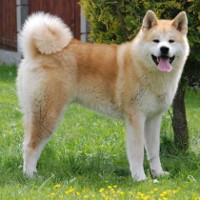
| The Akita Inu is an ancient breed from the Odate region of Japan. In the mid-1900s, Akita Inus were declared Japan's national treasure. Today, Akitas Inus are still considered spiritual symbols of protection, health, happiness and longevity in the country. Akitas Inus were originally bred to hunt medium-sized and large animals, such as elk, wild boar and small bears. American historical figure Helen Keller became infatuated with the breed in the mid-20th century and brought the first Akita to North America. The Akita population subsequently grew steadily in the United States, and the breed was recognized by the AKC in 1972. The combination of these two related breeds gave rise to the stoic, devoted Akita Shepherd. This hybrid could be bred as early as the mid-1900s due to the history of its parent breeds in the same geographical areas. Nevertheless, it has not gained in popularity and is not recognized by the AKC. | ||
 |
||
| Standard of the Akita Inu | ||
A little of the German Shepherd Dog |
||
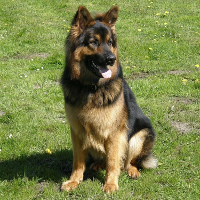
| The German Shepherd was born in the 1800s and bred in Germany to guard sheep. The Germans quickly recognized the breed's intelligence and employed it as a messenger dog in the German army during the two world wars. German Shepherds were perfected in Germany under the direction of the Verein fur Deutsche Scharferhunde SV, which was founded in 1899 with the specific aim of shaping the breed's development. Over the course of the 20th century, German Shepherds gained popularity not only in their homeland, but also in North America as working and guard dogs, as well as loyal pets. The American Kennel Club recognized the German Shepherd in 1908, and it remains a popular dog in the USA and Europe, particularly in Germany. | ||
 |
||
| Standard of the German Shepherd Dog |
Appearance of the Akita Shepherd |
| The Akita Shepherd has the body of a German Shepherd and the face and tail of an Akita Inu. Bear in mind, however, that as this breed is not stabilized, it can inherit any combination of physical traits from its parent breeds. Nevertheless, Akita Shepherds generally have medium-sized erect ears, dark triangular eyes and a scissor-like muzzle. They also have the characteristic Spitz tail, which curls upwards and is covered in plush. Their body is muscular and strong, with the sloping back of a German Shepherd. The Akita Shepherd's dense coat is generally of medium length and comes in several colors common to both parent breeds. Dogs with shepherd heritage also inherit light or heavy dark markings around the face and muzzle. |
Temperament of the Akita Shepherd |
| The Akita Shepherd is a very serious breed, reserved and aloof like both its parents. He has a natural inclination to guard and protect, and his personality reflects this impulse in most situations. However, when at ease, Akita Shepherds can be very energetic and playful. Nevertheless, these dogs are not very good with strangers, other animals or young children. Although they are loyal and gentle with their loved ones, they can be aggressive if they feel threatened or unsure of themselves. As pets, Akita Shepherds need to be trained firmly and consistently, otherwise this highly nervous breed will dominate those around them. For the same reason, early socialization is very important in raising a well-adapted Akita Shepherd. In addition, Alaskan Shepherds are quite intelligent and can be trained to respond to relatively complex commands and tasks. They value their independence, but are happy to relax alongside their owners at the end of an ideally active day. |
Needs and activities of the Akita Shepherd |
| Shepherd and Spitz breeds are known for their strength of character and work ethic; the Akita Shepherd is no exception. Ideally, Akita Shepherds will spend at least 60 minutes a day exercising in a cool climate. They like to have a task to accomplish. That's why these dogs will happily follow their owners on hikes, runs or other expeditions. Because they're so adventurous, Akita Shepherds adapt best to rural or suburban areas where they have access to large tracts of land to explore and roam. Akita Shepherds are also highly intelligent and require a certain level of mental stimulation. Indoor games and activities can satisfy this need. |
Maintenance of the Akita Shepherd |
| Akita Shepherds are not hypoallergenic and are not suitable for pet owners with allergies. Their coats shed moderately and require weekly brushing (at least) to stay clean, shiny and well-groomed. For grooming, owners can use a variety of tools, including a long-hair brush or a pimple brush, depending on the length of their pet's coat (pimple brushes are designed for longer coats). Apart from that, Akita Shepherds are fairly easy to care for, needing only occasional baths and monthly or fortnightly nail trims. The most difficult part of caring for an Akita Shepherd is regularly checking its coat and ears for debris, and brushing its teeth daily. |



 English (United Kingdom)

Comments