
 |
Alaskan Goldenmute |
|
He is not recognized by the F.C.I. |
Origin |
U.S.A. <> Great Britain -> U.S.A. | |
Translation |
Francis Vandersteen | |
This breed is also known as |
Alaskan Golden
|
A brief presentation of the Alaskan Goldenmute |
| The Alaskan Goldenmute is a descendant of two great dog breeds: the Alaskan Malamute and the Golden Retriever. Its origins probably date back to the mid-1800s, when both parents became popular in North America. This hybrid mix is not for the faint-hearted dog owner; it requires a great deal of attention, exercise and coat maintenance. Although they make excellent family companions, Alaskan Goldenmutes are uncommon in most parts of the world, and are not recognized by the American Kennel Club as purebreds. Nevertheless, this breed amazes dog lovers with its lively energy, affectionate character and incredible sense of adventure. |
History of the Alaskan Goldenmute |
| The Alaskan Malamute and Golden Retriever were crossed to create the Alaskan Goldenmute hybrid. However, as the Alaskan Malamute is not a common breed, this hybrid is relatively unusual and is not recognized by the AKC. |
A little of the Alaskan Malamute |
||
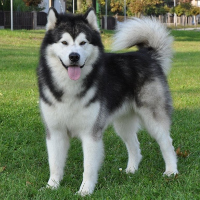
| The Alaskan Malamute, a descendant of the first dogs associated with mankind, was born over 4,000 years ago. It was named after its first owners, the Mahlemuts Innuit tribe of present-day northwest Alaska. This breed was used to hunt large animals such as seals and bears, and to pull the sleds of tribal members. In the 1800s, explorers from other parts of North America realized that Alaskan Malamutes would make excellent working dogs in the American Wild West. These explorers began to value the breed as an aid to the gold rush expeditions of the time. Eventually, American breeders began mixing the breed with smaller dogs for racing and entertainment purposes, thus weakening the purebred lineage. In the 1920s, however, efforts were made to revive this declining breed and the purebred population rebounded. In 1935, the American Kennel Club officially recognized the Alaskan Malamute, and in 2003, it became the official dog of Alaska. | ||
 |
||
| Standard of the Alaskan Malamute |
A little of the Golden Retriever |
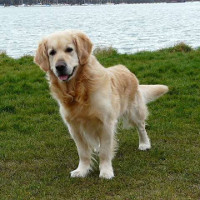
| The Golden Retriever, born in Victorian England, was developed for hunting and - fittingly - retrieving game and waterfowl. It became famous for its sporting abilities and extremely affable character. English families began to take notice and keep Golden Retrievers as pets. Golden Retrievers eventually arrived in North America, and the AKC recognized the breed shortly afterwards, in 1932. Since then, the breed has become one of the most popular breeds in the United States and has been featured in mainstream Hollywood films such as Homeward Bound, Air Bud and Marly and Me. Alaskan Goldenmutes may have been bred since the mid-1900s, when both parent breeds had growing populations in the United States. |
 |
| Standard of the Golden Retriever |
Appearance of the Alaskan Goldenmute |
| The appearance of the Alaskan Goldenmute is not completely stabilized, so it can inherit any combination of physical traits from its parent breeds. Normally, however, Alaskan Goldenmutes resemble Alaskan Malamutes with golden fur and facial features. The breed is powerful and athletic, with a glossy, medium-length double coat that comes in many color combinations common to both parent breeds. Some Alaskan Goldenmutes even have slight black markings around the face and muzzle, like their Malamute relative. Its tail is relatively long and feathered, while its almond-shaped eyes can be blue, hazel or brown. The breed's ears are a true compromise between its two parent breeds - they are semi-erect and slightly pointed. Finally, the Alaskan Goldenmute has large, heavily padded legs, perfectly suited to tramping outdoors. |
Temperament of the Alaskan Goldenmute |
| Alaskan Goldenmutes are charming, hardy animals that are very attached to humans. They also love other animals and adapt well to multi-pet households. They are ideal for active owners who enjoy outdoor adventures. Because Goldenmutes are very attached to humans, they are prone to separation anxiety and do best with a regular schedule and constant companionship. When young, Goldenmutes can be hyperactive, especially if they don't receive enough exercise or attention; however, if owners give them a firm, consistent education from an early age, this breed can be extremely well trained as adults. What's more, Alaskan Goldenmutes are highly sensitive animals that react strongly to positive (and negative) statements. Overall, this dog needs lots of love and exercise to stay happy and healthy. |
Needs and activities of the Alaskan Goldenmute |
| Alaskan Goldenmutes are very energetic, especially when less than three years old. This hybrid is known for its playful nature and love of vigorous exercise. They enjoy playing games with humans, such as ball games, as well as with other dogs. What's more, Alaskan Goldenmutes love adventure, and will be delighted to go for a long hike or run with their owners. Overall, this breed needs at least one hour of activity a day. Alaskan Goldenmutes can also entertain themselves by learning tricks and commands. They prefer homes with access to large outdoor spaces, but do well in any type of climate. |
Maintenance of the Alaskan Goldenmute |
| Alaskan Goldenmutes are not a hypoallergenic breed and are not suitable for pet owners with allergies. They have a dense, medium-length coat that sheds a lot, especially during seasonal changes. Owners can use a variety of tools to control shedding, including a pimpled or long-haired brush, a detangler and/or a comb. Daily brushing will help owners keep their Alaskan Goldenmute's coat clean and groomed. Because they have such ample natural coats, some owners trim their Alaskan Goldenmute, while others opt for professional grooming. Alaskan Goldenmutes should also be bathed from time to time, their ears cleaned regularly, their teeth brushed daily to prevent dental problems, and their nails trimmed once or twice a month. |



 English (United Kingdom)

Comments