
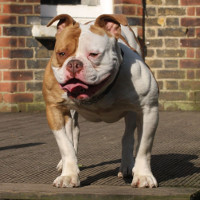
American Bulldog

He is not recognized by the F.C.I.

Origin
U.S.A.
Translation
Francis Vandersteen
This breed is also known as
Am Bulldog
Old Country Bulldog

A brief presentation of the American Bulldog

The American Bulldog was developed as a general-purpose farm dog in the southern United States, with a specialty in catching pigs and cattle. The breed is a direct descendant of the old English Bulldog, now extinct, and is widely regarded as the modern breed in appearance, temperament and use closest to its ancestor. The American Bulldog was almost extinct by the middle of the 20th century, but was revived by the efforts of two breeders, John D. Johnson and Alan Scott, who subsequently developed two distinct lines that were named for them. In recent years, the American Bulldog has experienced a massive increase in popularity and is one of the fastest-growing breeds in the USA. Many have classified this breed as a type of Pit Bull, a member of a group of dogs collectively known as Bully Breeds, but this is totally inaccurate and regarded with great distaste by the vast majority of lovers of both American Bulldog and American Pit Bull Terrier. The two varieties of American Bulldog are sometimes referred to as the Southern White, Old Southern Whites and American Pit Bulldogs. The Scott type is also known as the Standard or Performance type, and the Johnson type is also called the Bully or Classic type.

History of the American Bulldog

Because the American Bulldog and its ancestors developed in an era before records of dog breeding were kept, there is still a great deal of mystery surrounding its origins. What is clear is that the breed's origins began with the English Mastiff or Bandog. Although the exact origin of the Mastiff is unknown, it has certainly been present in England for at least two thousand years. The Mastiff was first used as a war dog and guardian of noble estates, but English farmers soon discovered that the breed could also be used for agricultural work. At the time, it was common practice for English farmers to let their livestock run free on common land. Cattle and pigs raised in this way were half wild and almost impossible to work. The great strength and massive jaws of the Dogue enabled the dog to seize these beasts and hold them in place until they could be rounded up or killed. Eventually, the agricultural necessity of bull hunting became an incredibly popular sport. In bullfighting competitions, a bull would be chained to a stake in the middle of a ring or pit. Pepper would be forced up the bull's nose to enrage it, and dogs would be sent to fight it. The dog would have to guard the bull until it stopped fighting, a process that could last over an hour and often resulted in the death of one or both combatants. Bull baiting remained one of the most popular sports in England for many centuries.

Unfortunately, the Mastiff is not ideally suited to bullfighting. Its large size meant that it had a high center of gravity and was easily constrained by the bull's power, while offering a large surface for the bull to gore or kick. As most Dogue were bred to spend their lives at the end of a chain, the breed lacked ideal athleticism. Overtime, a distinct line of Mastiffs was developed that were smaller, more aggressive, more athletic and more energetic than the Mastiffs guarding the property. These lines were probably distinct for centuries, but regularly interbred. Until 1576, the famous dog writer Johannes Caius never mentioned the Bulldog, although he did mention Mastiffs. From the 1630s onwards, numerous references appear that clearly distinguish between the Dogue and the Bulldog, and it's highly likely that the two breeds were completely separate by this time. Some have suggested that the difference could be the result of the addition of Spanish Alano and/or German Bullenbeiser blood, but no one can say for sure. This is only the part of the history of the Dogue and the Old English Bulldog that most closely relates to that of the American Bulldog.

Due to the popularity of bull baiting, the Bulldog became one of the most popular and recognizable dogs in England. The breed's popularity first soared in the 17th and 18th centuries, just as the American colonies were being colonized. Many old English Bulldogs were brought to the New World by British settlers. Bull-baiting was never considered a sport in America, but these dogs were widely used. In the early 1500s, Spanish explorers released pigs and cattle in Florida and Texas to provide food and leather for future settlers. Unlike most domestic animals, which can't survive without human protection, these beasts returned to the wild and became wild hogs and Cracker and Pineywoods cattle. These creatures developed long horns and tusks and became extremely aggressive. Originally, English settlers regarded these animals as a valuable source of food, but they soon became agricultural pests. A few pigs could completely destroy an entire year's harvest in one night. This was a financial problem for the big plantation owners, whose crops were often worth the equivalent of several million dollars today, but risked starvation for the families who farmed for food. Old English Bulldogs were almost immediately put in charge of hunting and capturing wild pigs and cattle in America, as their ancestors had done for centuries in England. Scenthounds were used to locate the animal, then the Bulldogs were released to catch it and stay put until the hunters could kill it with knives or subdue it with ropes and chains.

Eventually, most of the cattle were captured and subjected to further gestation, but this was not the case with the pigs. Among the most intelligent, hardy and adaptable animals on the planet, feral pig numbers continued to grow at a rapid pace and spread northwards. At the time, the Bulldog was the only living dog in the USA capable of hunting hogs without a very high risk of death, and the breed was widely used wherever hogs were found. Until recent decades, feral hogs were almost entirely confined to the southern states, and working Bulldogs were almost entirely confined to the southern USA, although a much smaller number also worked as hunting dogs on Midwestern farms. Plantation owners eventually realized that their Bulldogs also made excellent guard dogs for their homes and estates, and the breed came to serve this purpose too.

Working Bulldogs were widespread in the southern USA until the 1830s, when a series of events began. During this decade, Bull and Terriers were introduced to America for the first time, almost immediately after their development in England. Bull and Terriers are the result of crossing old English Bulldogs with rat-killing Terriers. They are considered the ultimate competitors, as they combine the size, power, courage and tenacity of the Bulldog with the speed, intense aggression and ferocity of the dog, and the willingness to fight to the death with little provocation of the Terrier. In America, Bull and Terrier eventually interbred and became known as American Pit Bull Terriers. American farmers soon discovered that the characteristics that made the American Pit Bull Terrier an excellent dog fighter also made it a first-rate hog-hunting dog. The breed eventually became widely recognized as the best hog-hunting dog in the world, and began to replace the Bulldog. In addition, a very large number of working Bulldogs were used to develop the American Pit Bull Terrier, preventing them from perpetuating their own breed. Perhaps even more detrimental to the active American Bulldog was the American Civil War, which began in 1861. Although both sides still argue about why the war started, all agree that it ended with a decisive victory in the North. The war put an end to legal slavery in America and definitively destroyed the plantation system. In addition, countless farms were destroyed by fire in an attempt to destroy the South's will to war. The Bulldog suddenly found itself homeless and without masters, and the breed's numbers began to fall. Fortunately for the breed, traditions die hard in the American South, and many enthusiasts continued to keep their beloved Bulldogs, often at great expense to themselves and their families.

At the same time as the Bulldog was experiencing problems in America, the breed was undergoing a major transformation in England. After the Bulldog and Terrier had stabilized and no longer needed regular infusions of Bulldog blood, the breed began to disappear. A number of enthusiasts determined that this was unacceptable and began breeding Bulldogs for the ring and for companionship. The animal they created was so radically different from its ancestor that it is now considered a totally different breed. The modern English Bulldog quickly became very popular in the USA and began to replace the older type. In England, this process was completed shortly after the turn of the century and the old English Bulldog was lost forever. In America, it was never fully completed, and a number of older Bulldogs continued to work as farm and hunting dogs in the rural South and Midwest. The most popular show and companion Bulldog is known as the English Bulldog or simply Bulldog. Ironically, the Old English Bulldog was only found in rural America and was known as the American Pit Bulldog or Old Southern White.

Although the breed retained a number of breeders, the working bulldog continued to decline. By the end of World War II, the breed was on the verge of disappearing from the country. Fortunately for the breed, it found a champion in John D. Johnson. Johnson, who spent his entire life in Summersville, Georgia, with the exception of Word War II, owned his first American Pit Bulldog in 1927, at the age of three. Named Prince, the dog accompanied him on countless adventures throughout his childhood and definitely won his love for the breed. At that time, the breed was still well known in the region, even if it was becoming increasingly rare. Johnson acquired his first American Pit Bulldog at the age of 14 and began breeding the same year. Initially, he sold puppies for $5 each. The first sire Johnson used was Prince's brother from a later litter. Johnson continued to breed Bulldogs until he entered World War II, placing his dogs in the care of his family while he was away. On his return, Johnson realized that his beloved breed was in danger of extinction. He decided to save the American Pit Bulldog and began collecting what he considered to be the best surviving examples. He spent virtually all his money to do so, but with limited resources, he was only able to buy a limited number of dogs.

Johnson began breeding his dogs, trying to keep them as pure as possible. To maintain genetic diversity, he refused to breed dogs closer than half their siblings and never bred dogs sharing more than one grandparent if he could. After the Second World War, Johnson bred almost exclusively from his own bloodlines, although he did introduce one of Alan Scott's dogs and a single English Bulldog registered in the northern AKC, considered by Johnson to be atavistic. Johnson used his dogs for hog hunting, livestock capture, personal companionship and protection. By the 1960s, Johnson had inspired several other hobbyists to continue his work. Many of these breeders used Johnson's dogs in their bloodlines, but also collected their own working Bulldogs throughout the South. Alan Scott was perhaps the most famous and influential of these breeders. Alan Scott began his breeding efforts with two Johnson dogs, but soon acquired other animals from Georgia and Alabama. While Johnson preferred a more traditional Bulldog look, Scott favored a more muscular, long-nosed dog. Although the two men initially worked together, their relationship quickly deteriorated. Johnson claimed that Scott wasn't selective enough about the dogs he entered into his lines, and that many of them were heavily influenced by the American Pit Bull Terrier and other breeds such as the Great Dane. Scott and his supporters countered that Johnson had introduced the Bullmastiff and other breeds, which Johnson always denied. Scott also claimed that Johnson cared too much about appearance and not enough about working ability. Johnson replied that Scott didn't care enough about looks and purity. Both parties found enthusiasts to continue their work, and to this day, there are two main American Bulldog lines.

In the 1970s, John D. Johnson registered his breed with the National Kennel Club (NKC) under the name American Pit Bulldog. However, he soon became dissatisfied with this organization and transferred his allegiance to the Animal Research Foundation (ARF). After changing registries, Johnson decided to change the breed name to American Bulldog to avoid confusion with the American Pit Bull Terrier, which he considered a breed in its own right. Although he had no problems with his dogs entering the ring, and indeed entered many himself, Johnson's aim was always to maintain the American Bulldog as a working dog whose body and temperament matched. John D. Johnson remained a committed RAF breeder until the day he died, having bred his beloved American Bulldogs for over 80 years. His kennel continues to operate under the watchful eye of his many admirers. A few years before his death, John D. Johnson had provided David Leavitt with dogs that would become part of the founding stock of the Olde English Bulldogge.

Thanks to the work of Johnson, Scott and other dedicated breeders, the American Bulldog began a slow comeback in the 1980s. The breed built both population and reputation. Numerous bloodlines were founded and many different registries were formed for the breed. Not all breeders were as committed to purity as Johnson, and several other breeds probably entered American Bulldog lines unofficially at this time, such as the American Pit Bull Terrier, Bullmastiff, English Mastiff, Dogue de Bordeaux and Boxer, albeit very controversially. The American Bulldog continues to forge a reputation as a hard-working, willing, affectionate companion and fearless protector. By the end of the 1990s, the American Bulldog had dozens of different breed registries and even more breed clubs dedicated to these dogs. All the registries essentially treat the Johnson and Scott lines as different varieties of the same breed, and often include other lines. In 1998, the American Bulldog was fully recognized by the United Kennel Club (UKC), the second largest purebred registry in Canada and the USA.

Unfortunately, the popularity of the American Bulldog has not waned. Although relatively large, the high value attached to purebred American Bulldogs means that some commercial breeders have used the breed in puppy mills. These commercial breeders care little for temperament, conformation or health, but only for the money they can make. Although generally better-intentioned, the inexperience of so-called backyard breeders has caused similar problems. In addition, many people have acquired American Bulldogs based on the breed's fame and reputation, without considering whether the dog is really right for them. The American Bulldog is very energetic, highly motivated and often dominant and indifferent. Many unprepared families decide to leave their American Bulldogs on the street or surrender them to animal shelters. More and more breed members are now being euthanized.

The American Bulldog is more concerned about breed-specific legislation, which places restrictions on the ownership of certain dog breeds or bans them altogether. Due to a series of high-profile, and often inaccurately reported, attacks allegedly committed by Pit Bull-type dogs, as well as a link to dog fighting and organized crime, Pit Bull-type dogs have acquired a largely unfair reputation for perverse legal scrutiny. At some point in the 1980s, the American Bulldog became closely associated with the American Pit Bull Terrier, although the two dogs are very different, as an owner and considering himself a fan of both breeds, the author personally attests to these differences . This connection is probably due to the fact that many unscrupulous Pit Bull breeders have crossed their dogs with American Bulldogs to develop guard dogs, and many Pit Bull owners have been forced to lie about their dog's breed to avoid punishment. As a result, the American Bulldog is often included in Pit Bull bans, and many supporters of such legislation insist that it is a type of Pit Bull, even though enthusiasts and breeders of both dogs strongly insist that the opposite is not true. When Pit Bull bans that include the breed are counted, the American Bulldog is now the second or third most commonly legislated breed in the USA, after only Pit Bull-type dogs and possibly the Rottweiler. In addition to legal bans, American Bulldogs are often expressly prohibited in apartment complexes, housing developments, airline flights, dog parks and by insurance policies.

Largely due to the immense and growing popularity of the American Pit Bull Terrier abroad, but also partly due to the breed's reputation as an exceptionally good animal for hog hunting and personal protection, American Bulldogs are becoming very popular internationally. American Bulldogs can now be found all over the world, in dozens of countries and on every continent except Antarctica, where all dogs are banned. The American Bulldog is now banned in many countries, even those where it has never been found, due to its link with the American Pit Bull Terrier. However, the breed is banned far less often than the Pit Bull, and its numbers continue to grow.

Over the years, the Johnson and Scott lines have become increasingly mixed and, with the possible exception of Johnson's Kennel, there are probably no purebred dogs left. There are also many hybrid lines between the two that are more or less recognized depending on the line and organization. The two types remain quite distinct, even if they continue to interbreed regularly. Although both types have their admirers, there is very little discussion of either division of the breed. Most enthusiasts believe that both types have good qualities that can benefit the other and, in any case, feel that a high degree of genetic diversity is always desirable. Until now, there has been virtually no interest in registering the American Bulldog with the American Kennel Club (AKC) on behalf of AKC or American Bulldog enthusiasts. The multiple varieties of American Bulldog mean that the breed could almost never have a unified standard that complied with AKC rules and guidelines. Moreover, American Bulldog enthusiasts, who are always primarily concerned with working ability and temperament, are among the most vocal and critical critics of the AKC, which many believe ruins the health, working, ability and temperament of breeds with breeding practices designed to promote appearance over conformation. Although no official poll has been conducted, it is virtually certain that a large majority of American Bulldog enthusiasts would strongly oppose AKC recognition, which is unlikely to happen in the near future.

The American Bulldog has proved extremely influential in the development of other dog breeds. From the 1800s onwards, it was used to develop the American Pit Bull Terrier, and consequently its descendant the American Staffordshire Terrier. In recent years, interest in Molosser-type dogs in general, and Bulldog-type dogs in particular, has risen sharply. Numerous breeding programs have sought to develop entirely new breeds or to recreate older ones. The American Bulldog is probably the most popular breed in these efforts, as it is widely regarded as the closest survivor of the old English Bulldog, in addition to its reputation as a hunting and protection animal. American Bulldogs have definitely embarked on the development of the Blue Blood Bulldog, Antebellum Bulldog, Olde English Bulldogge and Banter Bulldogge. American Bulldogs are also frequently crossed with Catahoula Leopard dogs to create Catahoula Bulldogs, which are now considered by many to be the ideal dogs for catching pigs. The breed is also one of the most commonly used species in the development of so-called specific crossbreed dogs, which are essentially just crosses between two purebred dogs. The American Bulldog is generally only crossed with other molossers to develop hybrid dogs, but has occasionally been crossed with other types of dog.

Although generally considered a rare breed because it is not recognized by the AKC, American Bulldogs are now considerably more popular and numerous in the USA than many AKC-registered breeds. The breed is currently one of the most dynamic, and perhaps even the fastest-growing, in the USA, and all indications are that growth is set to continue for the foreseeable future. At current growth rates, the American Bulldog is likely to become one of America's most popular breeds, although it probably won't overtake the likes of the American Pit Bull Terrier, Labrador, Golden Retriever and Beagle. Unlike most modern breeds, a very large number of American Bulldogs are still used for their original purpose, and countless members of this breed still catch pigs and cattle on the farm or in the field. However, the breed's primary purpose has almost certainly shifted to protecting people and property, tasks for which this dog is also very well suited. In addition, this highly intelligent and adaptable breed is increasingly employed in search and rescue, law enforcement, military and therapy. American Bulldogs have also competed successfully at the highest levels in a number of canine competitions, particularly weight pulling, schutzhund, competitive obedience, agility and conformation shows. Although the American Bulldog continues to be bred primarily for its working ability, more and more families are keeping members of the breed exclusively as pets or as companion and protection animals. For families able and willing to meet the substantial exercise and stimulation requirements of American Bulldogs, the dog is often a very affectionate and intensely devoted animal.

Appearance of the American Bulldog

The American Bulldog is one of the most variable breeds in terms of appearance. The breed varies enormously in size, shape, head size and shape, muzzle length and shape, and coloring. There are two distinct lines of American Bulldog, the Scott and Johnson types, but the two lines have been so mixed up that almost every member of the breed displays characteristics of both. In general, the Johnson type is taller, stockier, with a larger head and shorter muzzle, while the Scott type is smaller, more athletic, with a smaller head and longer muzzle. While many breed enthusiasts may not like the comparison, Johnson-type American Bulldogs are more like English Bulldogs, and Scott-type American Bulldogs are more like American Pit Bull Terriers.

Regardless of type, the American Bulldog is a very large dog. On average, male American Bulldogs measure between 56 and 69 centimeters in height at the shoulder, and females between 51 and 64 centimeters. It's far from uncommon for individual dogs to be up to 5 centimeters taller or shorter, and it's not uncommon for the difference to be as great as 10 centimeters. Both varieties of American Bulldog are extremely powerful and extremely muscular. The Johnson type tends to be much bulkier than the Scott type, but the individual dogs are robust, yet lean and dense. However, under no circumstances should any of these dogs appear overweight. American Bulldog weight is strongly influenced by size, sex, build and type, and varies more wildly than almost any other dog breed. Males generally weigh between 70 and 150 kilos, and females between 60 and 120 kilos. American Bulldogs' natural tail is long and whip-like. A significant majority of owners keep the dog's natural tail, as recommended by most standards, although some choose to shorten it.

The head and face are the main differences between the two main types of American Bulldog. The heads of both varieties are very large and broad, but not as large as the English Bulldog. The head is generally flat and fairly square in Johnson-type dogs, but often slightly wedge-shaped in Scott-type dogs. The muzzle and head connect very abruptly, almost at right angles. Muzzle and top of skull must be straight and parallel. The main difference lies in the muzzle. Johnson-type dogs have a very short muzzle, very reminiscent of the English Bulldog, about 25 to 30% of the length of the skull. Scott-type dogs have a considerably longer muzzle, more like that of the American Pit Bull Terrier, and should measure around 30 to 40% of the length of the skull. The lips of both varieties are thick and loose, but not too pendulous. Most American Bulldogs have a slight underbite which is considered preferable, but a little even is considered acceptable.

Both varieties tend to have a few facial wrinkles, although the Johnson type often has many more. The American Bulldog's nose is large with wide nostrils. Black is the preferred nose color, but some dogs may also have a red or brown nose. The American Bulldog's eyes are medium-sized and should not be hindered by wrinkles or hair. Although all eye colors are acceptable, dark brown is strongly preferred in written standards, but blue is preferred by many enthusiasts. Some owners choose to clip the ears of their American Bulldogs, but this is highly disadvantageous. The natural ears of this breed are small to medium-sized and extremely variable in shape and direction. They can be turned forwards, sideways or even almost backwards and present a rose, drop or semi-pitched shape. The general expression of most American Bulldogs is toughness, intensity, intelligence and courage.

The American Bulldog's coat is short, narrow and varies in texture from soft to spiny. Ideally, the coat should be 2.5 centimeters or less in length. American Bulldogs can come in all colors and patterns, with the exception of solid black, solid blue, all merle colors and three colors, white with tan markings and black. All these dogs must have some white on their coat, at least 10% of the total body surface. In addition, a full black mask on the muzzle is a disqualification. In practice, most breeders and owners prefer dogs as white as possible, and most breed members are strongly or entirely white. Occasionally, an American Bulldog will be born with inappropriate coloration. These dogs are either penalized or disqualified in the show ring and should not be bred, but make equally suitable working dogs and pets.

Temperament of the American Bulldog

American Bulldogs are bred primarily as working dogs, and have the temperament you'd expect from such an animal. American Bulldogs are intensely devoted to their masters, with whom they tend to form very close bonds. This is a breed of incredible loyalty, and one that would unhesitatingly give its life to its loved ones. When raised in an individual home, American Bulldogs tend to become one-person dogs, but when raised in a family, they generally form bonds as strong as any member of the family. This dog wants to be in the constant company of its family, which can often lead to separation anxiety. American Bulldogs are generally big softies with their loved ones, and can even be incredibly gentle. Many of these dogs think they're rabbits, which can be a problem if someone doesn't want a 70-kilo dog on their lap. When properly socialized, most American Bulldogs are trustworthy around children. However, members of a breed that have not been properly introduced can be nervous around children or mistake them for a potential threat. What's more, most American Bulldogs never realize that young children can't play as roughly as adults, and may accidentally injure a small child during boisterous play.

American Bulldogs are very protective and most breed members are very wary of strangers. Good socialization is absolutely vital for this breed, otherwise they may come to regard any new person as a potential threat and develop aggression problems. Once socialization is complete, most of these dogs will be polite and tolerant of strangers, but will generally remain aloof and wary. This breed often takes some time to prepare for a new partner, such as a spouse or roommate, but usually comes to form close friendships. American Bulldogs make excellent guard dogs because they are protective, alert and territorial, and their appearance is more than enough to deter most would-be wrongdoers. This breed also makes an excellent watchdog that will not allow any intruder to enter their territory unchallenged. Although this breed generally offers a very persuasive display in an attempt to intimidate intruders, they are certainly willing to use force if they deem it necessary. Under no circumstances would one of these dogs tolerate physical harm to a family member, and this breed is totally fearless and absolutely relentless in its defense. American Bulldogs don't generally do well with other animals. In particular, breed members of both sexes frequently exhibit very high levels of dog aggression. These dogs suffer from all forms of canine aggression, including territorial, possessive, dominant, prey-pulling and same-sex. Very carefully trained and socialized from an early age, most American Bulldogs will have fewer aggression problems, but some members of the breed are never reliable with other dogs. Most American Bulldogs do best as a single dog or with a single member of the opposite sex. Owners should be aware that even the least aggressive American Bulldogs will certainly never back down from a confrontation that finds them. American Bulldogs are even more aggressive towards non-dog animals. This dog has been bred to bite down hard on some of the world's most dangerous animals and never let go. Most members of the breed are highly prey-driven and will pursue any creature brought to light. If left alone in the yard for any length of time, an American Bulldog will likely bring its owner gifts of dead animals ranging in size from cockroaches to raccoons. This breed has a well-deserved reputation as a cat killer, but most won't bother the individual cats they've been raised with, although strange or new pet cats probably won't be safe.

Needs and activities of the American Bulldog

American Bulldogs are extremely intelligent dogs, and many who own them swear they are the most intelligent dogs they've ever known. This intelligence can be very problematic, as it's not uncommon for a 12-week-old puppy to discover how to open a door or jump on a counter. It also means that this breed gets bored very quickly. Many of these dogs get bored so quickly that they become destructive within minutes of their family's departure. American Bulldogs have such a high need for mental stimulation that they perform better at tasks such as hunting, competitive obedience or regular Frisbee games.

This high intelligence, combined with a strong will to work, means that American Bulldogs are highly trainable dogs. This breed excels at the highest levels of many dog sports such as schutzhund, competition and agility, and is probably capable of learning any task a dog is capable of, other than those requiring a total lack of dominance and defense. The American Bulldog is generally thought to be one of the most trainable of Molosser-type dogs. However, inexperienced owners will find this breed very difficult to train. American Bulldogs are generally very dominant and will absolutely not obey anyone they feel is weaker in the package than themselves. Owners who are unable to maintain a position of constant, firm dominance will probably end up with an uncontrollable dog. This can create a tricky situation where the dog completely obeys one owner and totally refuses to respond to another.

This breed is perhaps the most energetic and athletic of all Molosses, and is one of the few that can perform hours of vigorous activity. Consequently, American Bulldogs have very high exercise requirements. This breed should have at least 45 minutes to an hour of vigorous physical activity every day, but would preferably have more. This breed tends to want to exercise in short bursts and will run madly for 15 minutes and then collapse completely. An under-used American Bulldog will almost certainly develop behavioral problems such as destructiveness, excessive barking, hyperactivity, over-excitability, nervousness and aggression. Once an American Bulldog gets the exercise it needs, this breed tends to be very relaxed at home and will spend hours hanging out.

Potential owners should be aware that this breed is among the doggiest of all dogs and that they can have a handful. American Bulldogs love to dig in the dirt and will destroy a garden in a matter of moments. They'll drop a tennis ball in your lap for hours, bark loudly, chase cars, knock over the trash can, snore, whip your legs with their tail and have regular episodes of flatulence. This breed is an excellent companion for the good family, but is certainly not a refined, gentle aristocrat.

Maintenance of the American Bulldog

American Bulldogs have very few grooming needs. This breed should never need to see a professional groomer, only regular brushing is necessary. These dogs shed, and many of them shed very heavily. Many members of the breed leave an avalanche of white hair in their wake throughout the year, and this dog would be a very poor choice for allergy sufferers or for those who simply hate the idea of cleaning their hair. The stiffer hair of some American Bulldogs clings elastically to fabric, even after vacuuming, and can even stick to the foot like a chip.

Due to the large number of American Bulldog registries, it's virtually impossible to conduct accurate health surveys on the breed. As a result, it's difficult to make generalizations about the breed's health. Most sources seem to believe that the breed is relatively healthy compared to other Molosser breeds. However, due to the lack of genetic testing and screening by many American Bulldog breeders, hip dysplasia has become a major problem in the breed. It's impossible to know what percentage of American Bulldogs suffer from this disease, although it's probably very high.

Hip dysplasia is caused by a malformation of the hip joint that prevents the connection between the leg bone and the hip. Over time, this problem causes discomfort, pain, arthritis, difficulty in moving and sometimes even lameness. Although hip dysplasia is genetically inherited, environmental factors can influence the timing and severity of its onset. Hip dysplasia is not a commonly accepted treatment, but there are a number of treatments available for its symptoms. As most of these treatments are lifelong and expensive, they can become tedious. There are several screening tests for hip dysplasia, and responsible breeders are beginning to use them in an attempt to reduce the prevalence of the disease.

Comments

Latest page updates

  • Toy Trawler Spaniel

    Toy Trawler Spaniel He is not recognized by the F.C.I. Origin United Kingdom Translation Francis Vandersteen En français, cette race se dit Epagneul Miniature Trawler Diese Norm ist in deutscher Sprache sichtbar Miniatur-Trawler-Spaniel En español, esta raza se dice Spaniel de Trawler en miniatura In het Nederlands, wordt dit ras gezegd Miniatuur...
  • Cão de Fila da Terceira

    Cão de Fila da Terceira He is not recognized by the F.C.I. Origin Terceira Island in the Azores Translation Francis Vandersteen The Terceira Mastiff (Portuguese : Cão de Fila da Terceira) is a local Portuguese dog breed, also known as the Rabo Torto (rabo = tail, torto = twisted). Neither the Fédération Cynologique Internationale nor the Local...
  • Talbot Hound

    Talbot Hound He is not recognized by the F.C.I. Origin France Translation Francis Vandersteen En français, cette race se dit Chien de Talbot Diese Norm ist in deutscher Sprache sichtbar Talbot-Hund En español, esta raza se dice Sabueso Talbot In het Nederlands, wordt dit ras gezegd Talbot-hond This breed is also known as Talbot BloodhoundFrench...
  • English Staghound

    English Staghound He is not recognized by the F.C.I. Origin England Translation Francis Vandersteen En français, cette race se dit Staghound anglais Diese Norm ist in deutscher Sprache sichtbar Englischer Staghound En español, esta raza se dice Staghound inglés In het Nederlands, wordt dit ras gezegd Engelse Staghound   The Staghound is an extinct...
  • Southern Hound

    Southern Hound He is not recognized by the F.C.I. Origin Great Britain Translation Francis Vandersteen En français, cette race se dit Chien du Sud Diese Norm ist in deutscher Sprache sichtbar Südlicher Laufhund En español, esta raza se dice Sabueso del sur In het Nederlands, wordt dit ras gezegd Zuidelijke Hond   The Southern Hound was a large...
  • St. John's Water Dog

    St. John's Water Dog He is not recognized by the F.C.I. Origin Canada Translation Francis Vandersteen En français, cette race se dit Chien d’eau de St. John's Diese Norm ist in deutscher Sprache sichtbar St. John's Wasserhund En español, esta raza se dice Perro de aguas de San Juan In het Nederlands, wordt dit ras gezegd St. John's Water Dog The St...
  • Rache Hound

    Rache Hound He is not recognized by the F.C.I. Origin Middle Ages Translation Francis Vandersteen En français, cette race se dit Chien courant Rache Diese Norm ist in deutscher Sprache sichtbar Rache-Laufhund En español, esta raza se dice Sabueso Rache In het Nederlands, wordt dit ras gezegd Rache-hond This breed is also known as RacchRachRatch   The term...
  • Welsh Grey Sheepdog

    Welsh Grey Sheepdog He is not recognized by the F.C.I. Origin Wales Translation Francis Vandersteen En français, cette race se dit Chien de berger gallois gris Diese Norm ist in deutscher Sprache sichtbar Waliser Grauer Schäferhund En español, esta raza se dice Pastor Gris Galés In het Nederlands, wordt dit ras gezegd Welsh Grey Herdershond This breed is...
  • Old Croatian Sighthound

    Old Croatian Sighthound He is not recognized by the F.C.I. Origin Croatia Translation Francis Vandersteen En français, cette race se dit Lévrier croate ancien Diese Norm ist in deutscher Sprache sichtbar Alter kroatischer Windhund En español, esta raza se dice Viejo lebrel croata In het Nederlands, wordt dit ras gezegd Oude Kroatische Windhond This...
  • Norman Hound

    Norman Hound He is not recognized by the F.C.I. Origin France Translation Francis Vandersteen En français, cette race se dit Chien normand Diese Norm ist in deutscher Sprache sichtbar Normannischer Laufhund En español, esta raza se dice Sabueso Normando In het Nederlands, wordt dit ras gezegd Normandische Brak   Little is known about the origins of...
  • Moscow Water Dog

    Moscow Water Dog He is not recognized by the F.C.I. Origin Russia Translation Francis Vandersteen En français, cette race se dit Chien d'eau de Moscou Diese Norm ist in deutscher Sprache sichtbar Moskauer Wasserhund En español, esta raza se dice Perro de agua de Moscú In het Nederlands, wordt dit ras gezegd Moskou-waterhond This breed is also...
  • Tracking Hound

    Tracking Hound He is not recognized by the F.C.I. Origin Middle Ages Translation Francis Vandersteen En français, cette race se dit Chien pisteur Diese Norm ist in deutscher Sprache sichtbar Spürhund En español, esta raza se dice Sabueso de rastro In het Nederlands, wordt dit ras gezegd Speurhond This breed is also known as LimerLymerLyam...
  • Laconian

    Laconian He is not recognized by the F.C.I. Origin Ancient Laconia, Greece Translation Francis Vandersteen En français, cette race se dit Laconien Diese Norm ist in deutscher Sprache sichtbar Lakonier En español, esta raza se dice Laconio In het Nederlands, wordt dit ras gezegd Laconisch This breed is also known as SpartanCastorian   The Laconian is an...
  • Halls Heeler

    Halls Heeler He is not recognized by the F.C.I. Origin Australia Translation Francis Vandersteen En français, cette race se dit Halls Heeler Diese Norm ist in deutscher Sprache sichtbar Halls Heeler En español, esta raza se dice Halls Heeler In het Nederlands, wordt dit ras gezegd Halls Heeler   The Halls Heeler is the presumed ancestor of two...
  • Dogo Cubano

    Dogo Cubano He is not recognized by the F.C.I. Origin Cuba Translation Francis Vandersteen The Dogo Cubano, also known as the Cuban Dogue, Cuban Bloodhound and Cuban Mastiff, is an extinct breed of dog from Cuba. It was of the Bullmastiff type and was used for bull and dog fighting. The breed was introduced to Cuba to capture runaway slaves...
  • Dalbo Dog

    Dalbo Dog He is not recognized by the F.C.I. Origin Sweden Translation Francis Vandersteen En français, cette race se dit Chien de Dalbo Diese Norm ist in deutscher Sprache sichtbar Dalbo-Hund En español, esta raza se dice Perro Dalbo In het Nederlands, wordt dit ras gezegd Dalbo-hond This breed is also known as DalbohundDalsland Mastiff   Icelandic...
  • Cordoba Fighting Dog

    Cordoba Fighting Dog He is not recognized by the F.C.I. Origin Argentina Translation Francis Vandersteen En français, cette race se dit Chien de combat de Cordoue Diese Norm ist in deutscher Sprache sichtbar Córdoba-Kampfhund En español, esta raza se dice Perro de pelea de Córdoba In het Nederlands, wordt dit ras gezegd Cordoba-vechthond This breed is...
  • Celtic Greyhound

    Celtic Greyhound He is not recognized by the F.C.I. Origin Celtic Mythology Translation Francis Vandersteen En français, cette race se dit Lévrier celte Diese Norm ist in deutscher Sprache sichtbar Keltische Windhund En español, esta raza se dice Lebrel celta In het Nederlands, wordt dit ras gezegd Keltische windhond   The Celtic Greyhound is an...
  • Belgian Mastiff

    Belgian Mastiff He is not recognized by the F.C.I. Origin Belgium Translation Francis VandersteenOrigin SRSH-KMSH - Belgian Royal Canine SocietyAuthentic language FR Group Group 2 : Pinscher and Schnauzer - Molossoid and Swiss Mountain and Cattle Dogs Section Section 2.1 : Molossoids, mastiff type Working Without working trial En français, cette...
  • Argentine polar dog

    Argentine polar dog He is not recognized by the F.C.I. Origin Argentina Translation Francis Vandersteen The Argentine polar dog (perro polar argentino) was a breed of Argentine dog that is now extinct. Argentine polar dogs were developed by the Argentine army to provide sled dogs for their Antarctic bases. The breed was the result of a cross...
  • Alaunt

    Alaunt He is not recognized by the F.C.I. Origin Central Asia Translation Francis Vandersteen This breed is also known as Kavkaz AlauntCaucasian AlauntAlan DoggePersian AlauntContinental AlauntEnglish AlauntFrench AlauntSpanish AlauntAlan DogArnaut Dogge The legendary Alaunt is one of the most important Molosse breeds in history, but also one of...
  • Small Dutch Hound

    Small Dutch Hound He is not recognized by the F.C.I. Origin The Netherlands Translation Francis Vandersteen En français, cette race se dit Petit Chien courant néerlandais Diese Norm ist in deutscher Sprache sichtbar Kleiner niederländischer Brackenhund En español, esta raza se dice Sabueso holandés pequeño In het Nederlands, wordt dit ras gezegd Kleine...
  • Sri Lankan Hound

    Sri Lankan Hound He is not recognized by the F.C.I. Origin Sri Lankan Translation Francis Vandersteen En français, cette race se dit Chien courant du Sri Lanka Diese Norm ist in deutscher Sprache sichtbar Sri-Lanka-Hund En español, esta raza se dice Sabueso de Sri Lanka In het Nederlands, wordt dit ras gezegd Sri Lankaanse Brak This breed is also...
  • Bulgarian Tricolour Hound

    Bulgarian Tricolour Hound He is not recognized by the F.C.I. Origin Bulgaria Translation Francis Vandersteen En français, cette race se dit Chien courant tricolore bulgare Diese Norm ist in deutscher Sprache sichtbar Bulgarischer Dreifarbiger Laufhund En español, esta raza se dice Sabueso tricolor búlgaro In het Nederlands, wordt dit ras gezegd Bulgaarse...
  • Međimurje Small Dog

    Međimurje Small Dog He is not recognized by the F.C.I. Origin Northwestern Croatia Translation Francis Vandersteen En français, cette race se dit Petit chien du Međimurje Diese Norm ist in deutscher Sprache sichtbar Međimurje-Kleinhund En español, esta raza se dice Perro pequeño de Međimurje In het Nederlands, wordt dit ras gezegd Međimurje-hondje This...
  • Serbian Yellow Hound

    Serbian Yellow Hound He is not recognized by the F.C.I. Origin Serbia (Balkans, Southeast Europe) Translation Francis Vandersteen En français, cette race se dit Chien jaune serbe Diese Norm ist in deutscher Sprache sichtbar Serbischer Gelber Laufhund En español, esta raza se dice Sabueso Amarillo Serbio In het Nederlands, wordt dit ras gezegd Servische...
  • Gotland Hound

    Gotland Hound He is not recognized by the F.C.I. Origin Sweden Translation Francis Vandersteen En français, cette race se dit Chien de chasse de Gotland Diese Norm ist in deutscher Sprache sichtbar Gotlandhund En español, esta raza se dice Sabueso de Gotland In het Nederlands, wordt dit ras gezegd Gotlandhond This breed is also known as Gotland...
  • Westerwald Mountain Dog

    Westerwald Mountain Dog He is not recognized by the F.C.I. Origin Germany Translation Francis Vandersteen En français, cette race se dit Bouvier du Westerwald Diese Norm ist in deutscher Sprache sichtbar Westerwalder Sennenhund En español, esta raza se dice Perro de Montaña de Westerwald In het Nederlands, wordt dit ras gezegd Westerwaldse...
  • Carnia Hound

    Carnia Hound He is not recognized by the F.C.I. Origin Italy Translation Francis Vandersteen En français, cette race se dit Chien courant de Carnia Diese Norm ist in deutscher Sprache sichtbar Carnia-Hund En español, esta raza se dice Sabueso de Carnia In het Nederlands, wordt dit ras gezegd Carnia-hond This breed is also known as Segugio Carnico   The...
  • Kemmer Feist

    Kemmer Feist He is not recognized by the F.C.I. Origin Southern United States Translation Francis Vandersteen En français, cette race se dit Kemmer Feist Diese Norm ist in deutscher Sprache sichtbar Kemmer Feist En español, esta raza se dice Kemmer Feist In het Nederlands, wordt dit ras gezegd Kemmer Feist   The Kemmer Feist originates from the...
  • Alpine Spaniel

    Alpine Spaniel He is not recognized by the F.C.I. Origin Switzerland Translation Francis Vandersteen En français, cette race se dit Epagneul Alpin Diese Norm ist in deutscher Sprache sichtbar Alpenspaniel En español, esta raza se dice Spaniel Alpino In het Nederlands, wordt dit ras gezegd Alpenspaniël   Alpine Spaniels were bred by canons in Alpine...
  • Alpine Mastiff

    Alpine Mastiff He is not recognized by the F.C.I. Origin Switzerland Translation Francis Vandersteen En français, cette race se dit Mâtin alpin Diese Norm ist in deutscher Sprache sichtbar Alpenmastiff En español, esta raza se dice Mastín Alpino In het Nederlands, wordt dit ras gezegd Alpenmastiff   The Alpine Mastiff was an ancient, giant working...
  • Hairless Chihuahua

    Hairless Chihuahua He is not recognized by the F.C.I. Origin Mexico Translation Francis Vandersteen En français, cette race se dit Chihuahua nu Diese Norm ist in deutscher Sprache sichtbar Nackter Chihuahua En español, esta raza se dice Chihuahua sin pelo In het Nederlands, wordt dit ras gezegd Haarloze Chihuahua   The Chihuahua is a small, lively,...
  • Argentine Pila

    Argentine Pila He is not recognized by the F.C.I. Origin Argentina Translation Francis Vandersteen En français, cette race se dit Pila Argentin Diese Norm ist in deutscher Sprache sichtbar Argentinischer Pila En español, esta raza se dice Pila Argentino In het Nederlands, wordt dit ras gezegd Argentijnse Pila This breed is also known as Perro...
  • Ecuadorian Hairless Dog

    Ecuadorian Hairless Dog He is not recognized by the F.C.I. Origin Ecuador Translation Francis Vandersteen En français, cette race se dit Chien nu équatorien Diese Norm ist in deutscher Sprache sichtbar Ecuadorianischer Nackthund En español, esta raza se dice Perro sin pelo ecuatoriano In het Nederlands, wordt dit ras gezegd Ecuadoriaanse...
  • Tesem

    Tesem He is not recognized by the F.C.I. Origin Egypt Translation Francis Vandersteen En français, cette race se dit Tesem Diese Norm ist in deutscher Sprache sichtbar Tesem En español, esta raza se dice Tesem In het Nederlands, wordt dit ras gezegd Tesem   The Tesem was a hunting dog from ancient Egypt. Now extinct, its ancestry is believed to...
  • Salish Woolly Dog

    Salish Woolly Dog He is not recognized by the F.C.I. Origin British Columbia, Canada Translation Francis Vandersteen En français, cette race se dit Chien laineux Salish Diese Norm ist in deutscher Sprache sichtbar Salish-Wollhund En español, esta raza se dice Perro Lanudo Salish In het Nederlands, wordt dit ras gezegd Salish wollige hond This...
  • Tierra del Fuego Dog

    Tierra del Fuego Dog He is not recognized by the F.C.I. Origin South America Translation Francis Vandersteen En français, cette race se dit Chien de Terre de Feu Diese Norm ist in deutscher Sprache sichtbar Feuerlandhund En español, esta raza se dice Perro de Tierra del Fuego In het Nederlands, wordt dit ras gezegd Tierra del Fuego-hond This...
  • Techichi

    Techichi He is not recognized by the F.C.I. Origin Mexico Translation Francis Vandersteen En français, cette race se dit Techichi Diese Norm ist in deutscher Sprache sichtbar Techichi En español, esta raza se dice Techichi In het Nederlands, wordt dit ras gezegd Techichi   The Techichi was an indigenous dog of Mesoamerica, specifically associated...
  • Hare Indian Dog

    Hare Indian Dog He is not recognized by the F.C.I. Origin Canada Translation Francis Vandersteen The Hare Indian Dog is an extinct domesticated dog; possibly a breed of domestic dog, hybrid coyote/dog or domestic coyote; previously found and originally bred in northern Canada by the Hare Indians for hunting. It had the speed and certain...
  • Tahitian Dog

    Tahitian Dog He is not recognized by the F.C.I. Origin Tahiti Translation Francis Vandersteen En français, cette race se dit Chien de Tahiti Diese Norm ist in deutscher Sprache sichtbar Tahiti-Hund En español, esta raza se dice Perro Tahitiano In het Nederlands, wordt dit ras gezegd Tahitiaanse hond   The Tahitian Dog is an extinct Polynesian breed,...
  • Polynesian Dog

    Polynesian Dog He is not recognized by the F.C.I. Origin Polynesia Translation Francis Vandersteen En français, cette race se dit Chien polynésien Diese Norm ist in deutscher Sprache sichtbar Polynesischer Hund En español, esta raza se dice Perro polinesio In het Nederlands, wordt dit ras gezegd Polynesische hond   The term "Polynesian dog" does...
  • Marquesan Dog

    Marquesan Dog He is not recognized by the F.C.I. Origin Marquesas Islands Translation Francis Vandersteen En français, cette race se dit Chien des Marquises Diese Norm ist in deutscher Sprache sichtbar Marquesas-Hund En español, esta raza se dice Perro Marquesano In het Nederlands, wordt dit ras gezegd De Marquesaanse hond This breed is also...
  • Kuri

    Kuri He is not recognized by the F.C.I. Origin New Zealand, between "Waikava" & Mataura plains, Catlins Translation Francis Vandersteen This breed is also known as Maori dog Kurī, or Pacific dog, were a unique breed, brought to Aotearoa New Zealand by ancestors of Māori. These animals were prized – not necessarily as friends, but as valuable...
  • Chiribaya Dog

    Chiribaya Dog He is not recognized by the F.C.I. Origin Peru Translation Francis Vandersteen The Chiribaya Dog (perro Chiribaya) or Peruvian Shepherd Dog (perro pastor Peruano) was a pre-Columbian breed of dog from southwestern Peru, identified by the 42 mummies discovered by anthropologist Sonia Guillén Oneglio in the Ilo district, Moquegua...
  • Philippine Forest Dog

    Philippine Forest Dog He is not recognized by the F.C.I. Origin Philippines Translation Francis Vandersteen En français, cette race se dit Chien des forêts des Philippines Diese Norm ist in deutscher Sprache sichtbar Philippinischer Waldhund En español, esta raza se dice Perro del Bosque Filipino In het Nederlands, wordt dit ras gezegd Filipijnse...
  • Lai Dog

    Lai Dog He is not recognized by the F.C.I. Origin Vietnam Translation Francis Vandersteen En français, cette race se dit Chien de Lai Diese Norm ist in deutscher Sprache sichtbar Lai-Hund En español, esta raza se dice Perro Lai In het Nederlands, wordt dit ras gezegd Lai-hond   With its unique appearance and hunting dog origins, the Lai Dog is...
  • Pampas Hound

    Pampas Hound He is not recognized by the F.C.I. Origin Brazil, Argentina, and Uruguay Translation Francis Vandersteen En français, cette race se dit Chien de chasse des Pampas Diese Norm ist in deutscher Sprache sichtbar Pampashund En español, esta raza se dice Sabueso de las Pampas In het Nederlands, wordt dit ras gezegd Pampashond   The Pampas Hound...
  • Zerdava

    Zerdava He is not recognized by the F.C.I. Origin Turkey and Georgia Translation Francis Vandersteen En français, cette race se dit Zerdava Diese Norm ist in deutscher Sprache sichtbar Zerdava En español, esta raza se dice Zerdava In het Nederlands, wordt dit ras gezegd Zerdava This breed is also known as Eastern Black Sea SpitzKapi Kopegi   The...
  • I-Twina

    I-Twina He is not recognized by the F.C.I. Origin Southern/Eastern Africa Translation Francis Vandersteen En français, cette race se dit I-Twina Diese Norm ist in deutscher Sprache sichtbar I-Twina En español, esta raza se dice I-Twina In het Nederlands, wordt dit ras gezegd I-Twina   The I-Twina is a specific variety of Africanis, an ancient dog breed...
  • Greek Greyhound

    Greek Greyhound He is not recognized by the F.C.I. Origin Greece Translation Francis Vandersteen En français, cette race se dit Lévrier grec Diese Norm ist in deutscher Sprache sichtbar Griechischer Windhund En español, esta raza se dice Galgo Griego In het Nederlands, wordt dit ras gezegd Griekse Windhond   The Greek Greyhound is medium-sized, and its...
  • Khoikhoi Hottentot Dog

      Khoikhoi Hottentot Dog He is not recognized by the F.C.I. Origin South Africa Translation Francis Vandersteen En français, cette race se dit Chien Khoïkhoï Hottentot Diese Norm ist in deutscher Sprache sichtbar Khoikhoi-Hottentottenhund En español, esta raza se dice Perro Hotentote Khoikhoi In het Nederlands, wordt dit ras gezegd Khoikhoi...
  • Santal Hound

    Santal Hound He is not recognized by the F.C.I. Origin India Translation Francis Vandersteen En français, cette race se dit Chien de chasse Santal Diese Norm ist in deutscher Sprache sichtbar Santal-Hund En español, esta raza se dice Sabueso Santal In het Nederlands, wordt dit ras gezegd Santal jachthond   The Santal Hound is an indigenous Indian...
  • Middle Eastern Village Dog

    Middle Eastern Village Dog He is not recognized by the F.C.I. Origin Middle East Translation Francis Vandersteen En français, cette race se dit Chien de village du Moyen-Orient Diese Norm ist in deutscher Sprache sichtbar Dorfhund aus dem Nahen Osten En español, esta raza se dice Perro de aldea de Oriente Medio In het Nederlands, wordt dit ras...
  • Avuvi

    Avuvi He is not recognized by the F.C.I. Origin Ghana and Togo Translation Francis Vandersteen En français, cette race se dit Avuvi Diese Norm ist in deutscher Sprache sichtbar Avuvi En español, esta raza se dice Avuvi In het Nederlands, wordt dit ras gezegd Avuvi This breed is also known as Ghana Stray Dog   Ghana stray dogs are free-roaming dogs that...
  • Old Spanish Pointer

    Old Spanish Pointer He is not recognized by the F.C.I. Origin Spain Translation Francis Vandersteen En français, cette race se dit Braque espagnol ancien Diese Norm ist in deutscher Sprache sichtbar Altspanischer Vorstehhund En español, esta raza se dice Pointer Español Antiguo In het Nederlands, wordt dit ras gezegd Oude Spaanse Pointer This breed...
  • Paisley Terrier

    Paisley Terrier He is not recognized by the F.C.I. Origin Scotland Translation Francis Vandersteen The Paisley Terrier is a descendant of its ancestor, the Skye Terrier, with a similar temperament and appearance.Records from 1440 use the word terrier, telling us that the Skye Terrier was not the first of this group, although we have little...
  • Blue Bay Shepherd

    Blue Bay Shepherd He is not recognized by the F.C.I. Origin U.S.A. Translation Francis Vandersteen En français, cette race se dit Berger de la Baie Bleue Diese Norm ist in deutscher Sprache sichtbar Blue Bay Schäferhund En español, esta raza se dice Pastor Azul de la Bahía In het Nederlands, wordt dit ras gezegd Blauwe Baai Herdershond   The Blue...
  • Tweed Water Spaniel

    Tweed Water Spaniel He is not recognized by the F.C.I. Origin Great Britain Translation Francis Vandersteen En français, cette race se dit Epagneul d'eau du Tweed Diese Norm ist in deutscher Sprache sichtbar Tweed Wasserspaniel En español, esta raza se dice Spaniel de Agua del Tweed In het Nederlands, wordt dit ras gezegd Tweed Waterspaniël   The...
  • Old English Terrier

    Old English Terrier He is not recognized by the F.C.I. Origin Great Britain Translation Francis Vandersteen En français, cette race se dit Terrier anglais ancien Diese Norm ist in deutscher Sprache sichtbar Alte Englische Terrier En español, esta raza se dice Terrier Inglés Antiguo In het Nederlands, wordt dit ras gezegd Oude Engelse Terriër   Also...
  • Old English Bulldog

    Old English Bulldog He is not recognized by the F.C.I. Origin Great Britain Translation Francis Vandersteen En français, cette race se dit Bouledogue anglais ancien Diese Norm ist in deutscher Sprache sichtbar Altenglische Bulldogge En español, esta raza se dice Bulldog Inglés Antiguo In het Nederlands, wordt dit ras gezegd Oude Engelse Bulldog   When...
  • North Country Beagle

    North Country Beagle He is not recognized by the F.C.I. Origin Great Britain Translation Francis Vandersteen Few records remain describing the appearance of the North Country Beagle, except that it resembled the Southern Hound, the English Foxhound and the modern Harrier. It has been said that the North Country Beagle was shorter than the...
  • Norfolk Spaniel

    Norfolk Spaniel He is not recognized by the F.C.I. Origin Great Britain Translation Francis Vandersteen The Norfolk Spaniel or Shropshire Spaniel is a dog breed that has been extinct since the early 20th century. It was originally thought to have originated from the work of one of the Dukes of Norfolk, but this theory was disproved after being...
  • English White Terrier

    English White Terrier He is not recognized by the F.C.I. Origin Great Britain Translation Francis Vandersteen This breed is also known as White TerrierOlde English White TerrierEnglish WhiteOld White Manchester TerrierBirmingham White Terrier A brief presentation of the English White Terrier The English White Terrier was one of the first, if not...
  • English Water Spaniel

    English Water Spaniel He is not recognized by the F.C.I. Origin Great Britain Translation Francis Vandersteen En français, cette race se dit Epagneul d'eau anglais Diese Norm ist in deutscher Sprache sichtbar Englischer Wasserspaniel En español, esta raza se dice Spaniel de Agua Inglés In het Nederlands, wordt dit ras gezegd Engelse Waterspaniël   The...
  • Cur Dog

    Cur Dog He is not recognized by the F.C.I. Origin U.S.A. Translation Francis Vandersteen En français, cette race se dit Chien Cur Diese Norm ist in deutscher Sprache sichtbar Cur-Hunde En español, esta raza se dice Perros Cur In het Nederlands, wordt dit ras gezegd Curhond   Cur dogs are a diverse group of intelligent, energetic, and loyal working breeds...
  • Cumberland Sheepdog

    Cumberland Sheepdog He is not recognized by the F.C.I. Origin Great Britain Translation Francis Vandersteen En français, cette race se dit Berger de Cumberland Diese Norm ist in deutscher Sprache sichtbar Cumberland Shepherd En español, esta raza se dice Pastor de Cumberland In het Nederlands, wordt dit ras gezegd Cumberland Shepherd   The...
  • Buckhound

    Buckhound He is not recognized by the F.C.I. Origin Great Britain Translation Francis Vandersteen En français, cette race se dit Buckhound Diese Norm ist in deutscher Sprache sichtbar Buckhound En español, esta raza se dice Buckhound In het Nederlands, wordt dit ras gezegd Buckhound   The Buckhound is an extinct breed of English hound, formerly...
  • Miniature Bulldog

    Miniature Bulldog He is not recognized by the F.C.I. Origin Great Britain Translation Francis Vandersteen En français, cette race se dit Bouledogue Miniature Diese Norm ist in deutscher Sprache sichtbar Zwergbulldogge En español, esta raza se dice Bulldog Miniatura In het Nederlands, wordt dit ras gezegd Miniatuur Bulldog   The Toy Bulldog was a...
  • Bullenbeisser

    Bullenbeisser He is not recognized by the F.C.I. Origin Germany and the Netherlands Translation Francis Vandersteen The Bullenbeisser was a Molosser-type dog native to Germany and the Netherlands. Bred for a variety of purposes, the Bullenbeisser specialized in bull-baiting and wild boar hunting. Also known as the Barenbeiszer, Bullenbijter,...
  • Panda German Shepherd

    Panda German Shepherd He is not recognized by the F.C.I. Origin Germany Translation Francis Vandersteen En français, cette race se dit Berger Allemand Panda Diese Norm ist in deutscher Sprache sichtbar Panda-Schäferhund En español, esta raza se dice Pastor Alemán Panda In het Nederlands, wordt dit ras gezegd Panda Duitse Herder   Panda German...
  • Russian Shepherd Dog

    Russian Shepherd Dog He is not recognized by the F.C.I. Origin Russia Translation Francis Vandersteen En français, cette race se dit Chien de berger russe Diese Norm ist in deutscher Sprache sichtbar Russischer Schäferhund En español, esta raza se dice Pastor Ruso In het Nederlands, wordt dit ras gezegd Russische Herdershond This breed is also known...
  • Sulimov Dog

    Sulimov Dog He is not recognized by the F.C.I. Origin Russia Translation Francis Vandersteen En français, cette race se dit Chien Sulimov Diese Norm ist in deutscher Sprache sichtbar Sulimov-Hund En español, esta raza se dice Perro Sulimov In het Nederlands, wordt dit ras gezegd Sulimov-hond This breed is also known as Shalaika   The Sulimov dog is a...
  • Kamchatka Sled Dog

    Kamchatka Sled Dog He is not recognized by the F.C.I. Origin Russia Translation Francis Vandersteen En français, cette race se dit Chien de traîneau du Kamtchatka Diese Norm ist in deutscher Sprache sichtbar Kamtschatka-Schlittenhund En español, esta raza se dice Perro de trineo de Kamchatka In het Nederlands, wordt dit ras gezegd Kamtsjatka-sledehond This...
  • Chukotka Sled Dog

    Chukotka Sled Dog He is not recognized by the F.C.I. Origin Russia Translation Francis Vandersteen En français, cette race se dit Chien de traîneau de Tchoukotka Diese Norm ist in deutscher Sprache sichtbar Tschukotkas Schlittenhund En español, esta raza se dice Perro de Trineo de Chukotka In het Nederlands, wordt dit ras gezegd Tsjoekotka-sledehond   The...
  • Dupuy Pointing Dog

    Dupuy Pointing Dog FCI standard Nº 178 Origin France Translation Mrs. Peggy Davis Group Group 7 Pointing Dogs Section Section 1.1 Continental Pointing Dogs « Braque » Type Working With working trial Acceptance on a definitive basis by the FCI Friday 21 June 1963 Publication of the official valid standard Friday 07 August 1998 En français, cette race...
  • Sanyo Dog

    Sanyo Dog He is not recognized by the F.C.I. Origin Japan Translation Francis Vandersteen En français, cette race se dit Chien de Sanyo Diese Norm ist in deutscher Sprache sichtbar Sanyo-Hund En español, esta raza se dice Perro de Sanyo In het Nederlands, wordt dit ras gezegd Sanyo-hond   The dogs of the Sanyo region more closely resemble those of...
  • Satsuma Dog

    Satsuma Dog He is not recognized by the F.C.I. Origin Japan Translation Francis Vandersteen En français, cette race se dit Chien de Satsuma Diese Norm ist in deutscher Sprache sichtbar Satsuma-Hund En español, esta raza se dice Perro Satsuma In het Nederlands, wordt dit ras gezegd Satsuma-hond   The Satsuma Dog was used as a hunting dog in the...
  • Neri Dog

    Neri Dog He is not recognized by the F.C.I. Origin Japan Translation Francis Vandersteen En français, cette race se dit Chien Neri Diese Norm ist in deutscher Sprache sichtbar Neri-Hund En español, esta raza se dice Perro Neri In het Nederlands, wordt dit ras gezegd Neri-hond   This dog breed originated in the village of Akagin, Tone district...
  • Kumano Dog

    Kumano Dog He is not recognized by the F.C.I. Origin Japan Translation Francis Vandersteen En français, cette race se dit Chien de Kumano Diese Norm ist in deutscher Sprache sichtbar Kumano-Hund En español, esta raza se dice Perro de Kumano In het Nederlands, wordt dit ras gezegd Kumano-hond   This is apparently a map of the estimated distribution...
  • Kurosakaishi Dog

    Kurosakaishi Dog He is not recognized by the F.C.I. Origin Japan Translation Francis Vandersteen En français, cette race se dit Chien de Kurosakaishi Diese Norm ist in deutscher Sprache sichtbar Kurosakaishi-Hund En español, esta raza se dice Perro Kurosakaishi In het Nederlands, wordt dit ras gezegd Kurosakaishi-hond   Three or four ri (12 to 16 km)...
  • Hane Dog

    Hane Dog He is not recognized by the F.C.I. Origin Japan Translation Francis Vandersteen En français, cette race se dit Chien de Hane Diese Norm ist in deutscher Sprache sichtbar Hane-Hund En español, esta raza se dice Perro de Hane In het Nederlands, wordt dit ras gezegd Hane-hond This breed is also known as Hane Inu   A local dog from the city of...
  • Amami Dog

    Amami Dog He is not recognized by the F.C.I. Origin Japan Translation Francis Vandersteen En français, cette race se dit Chien d'Amami Diese Norm ist in deutscher Sprache sichtbar Amami-Hund En español, esta raza se dice Perro de Amami In het Nederlands, wordt dit ras gezegd Amami-hond   Boar hunting is a common practice on the Amami Islands...
  • Iwate Dog

    Iwate Dog He is not recognized by the F.C.I. Origin Japan Translation Francis Vandersteen En français, cette race se dit Chien d'Iwate Diese Norm ist in deutscher Sprache sichtbar Iwate-Hund En español, esta raza se dice Perro de Iwate In het Nederlands, wordt dit ras gezegd Iwate-hond   Historically, the term "Iwate dog" refers to the medium-sized...
  • Yayoi Dog

    Yayoi Dog He is not recognized by the F.C.I. Origin Japan Translation Francis Vandersteen En français, cette race se dit Chien Yayoi Diese Norm ist in deutscher Sprache sichtbar Yayoi-Hund En español, esta raza se dice Perro Yayoi In het Nederlands, wordt dit ras gezegd Yayoi-hond   An ancient breed, the Yayoi is one of the two main ancestors of...
  • Yamakariya Dog

    Yamakariya Dog He is not recognized by the F.C.I. Origin Japan Translation Francis Vandersteen En français, cette race se dit Chien de Yamakariya Diese Norm ist in deutscher Sprache sichtbar Yamakariya-Hund En español, esta raza se dice Perro Yamakariya In het Nederlands, wordt dit ras gezegd Yamakariya-hond This breed is also known as Yamakariya...
  • Yakushima Hound

    Yakushima Hound He is not recognized by the F.C.I. Origin Japan Translation Francis Vandersteen En français, cette race se dit Chien de Yakushima Diese Norm ist in deutscher Sprache sichtbar Yakushima-Hund En español, esta raza se dice Sabueso de Yakushima In het Nederlands, wordt dit ras gezegd Yakushima-hond   Originating from Shimagai Island, where dogs...
  • Tsugaru Dog

    Tsugaru Dog He is not recognized by the F.C.I. Origin Japan Translation Francis Vandersteen En français, cette race se dit Chien de Tsugaru Diese Norm ist in deutscher Sprache sichtbar Tsugaru-Hund En español, esta raza se dice Perro Tsugaru In het Nederlands, wordt dit ras gezegd Tsugaru-hond This breed is also known as Aomori Dog   The Tsugaru...
  • Sendai Dog

    Sendai Dog He is not recognized by the F.C.I. Origin Japan Translation Francis Vandersteen En français, cette race se dit Chien de Sendai Diese Norm ist in deutscher Sprache sichtbar Sendai-Hund En español, esta raza se dice Perro de Sendai In het Nederlands, wordt dit ras gezegd Sendai-hond   The Sendai Dog (from Sendai Prefecture) is a land dog...
  • Sekishu Dog

    Sekishu Dog He is not recognized by the F.C.I. Origin Japan Translation Francis Vandersteen En français, cette race se dit Chien Sekishu Diese Norm ist in deutscher Sprache sichtbar Sekishu-Hund En español, esta raza se dice Perro Sekishu In het Nederlands, wordt dit ras gezegd Sekishu-hond   Originally, the Shiba Inu Sanin consisted of two lines. The...
  • Sanin-Tora

    Sanin-Tora He is not recognized by the F.C.I. Origin Japan Translation Francis Vandersteen En français, cette race se dit Sanin-Tora Diese Norm ist in deutscher Sprache sichtbar Sanin-Tora En español, esta raza se dice Sanin-Tora In het Nederlands, wordt dit ras gezegd Sanin-Tora   The term "Sanin-Tora" refers to the Kai Ken (also called Tora Inu...
  • Mikawa Land Dog

    Mikawa Land Dog He is not recognized by the F.C.I. Origin Japan Translation Francis Vandersteen En français, cette race se dit Chien terrestre de Mikawa Diese Norm ist in deutscher Sprache sichtbar Mikawa-Erdhund En español, esta raza se dice Perro de Tierra de Mikawa In het Nederlands, wordt dit ras gezegd Mikawa Aardhond This breed is also known...
  • Mikawa Dog

    Mikawa Dog He is not recognized by the F.C.I. Origin Japan Translation Francis Vandersteen En français, cette race se dit Chien Mikawa Diese Norm ist in deutscher Sprache sichtbar Mikawa-Hund En español, esta raza se dice Perro Mikawa In het Nederlands, wordt dit ras gezegd Mikawa-hond This breed is also known as Mikawa InuMikawa KenAichi Dog   The...
  • Maeda Dog

    Maeda Dog He is not recognized by the F.C.I. Origin Japan Translation Francis Vandersteen En français, cette race se dit Chien Maeda Diese Norm ist in deutscher Sprache sichtbar Maeda-Hund En español, esta raza se dice Perro Maeda In het Nederlands, wordt dit ras gezegd Maeda-hond This breed is also known as Maeda KenKaga Dog   The Maeda dog is a...
  • Koyasu Dog

    Koyasu Dog He is not recognized by the F.C.I. Origin Japan Translation Francis Vandersteen En français, cette race se dit Chien de Koyasu Diese Norm ist in deutscher Sprache sichtbar Koyasu-Hund En español, esta raza se dice Perro Koyasu In het Nederlands, wordt dit ras gezegd Koyasu-hond This breed is also known as Koyasu InuTakayasu Inu   The...
  • Koshino Dog

    Koshino Dog He is not recognized by the F.C.I. Origin Japan Translation Francis Vandersteen En français, cette race se dit Chien Koshino Diese Norm ist in deutscher Sprache sichtbar Koshino-Hund En español, esta raza se dice Perro Koshino In het Nederlands, wordt dit ras gezegd Koshino-hond This breed is also known as Koshino InuTateyama...
  • Koshikiyama Dog

    Koshikiyama Dog He is not recognized by the F.C.I. Origin Japan Translation Francis Vandersteen En français, cette race se dit Chien de Koshikiyama Diese Norm ist in deutscher Sprache sichtbar Koshikiyama-Hund En español, esta raza se dice Perro Koshikiyama In het Nederlands, wordt dit ras gezegd Koshikiyama-hond   Koshikiyama dogs originated on the...
  • Karafuto Dog

    Karafuto Dog He is not recognized by the F.C.I. Origin Japan Translation Francis Vandersteen En français, cette race se dit Chien de Karafuto Diese Norm ist in deutscher Sprache sichtbar Karafuto-Hund En español, esta raza se dice Perro Karafuto In het Nederlands, wordt dit ras gezegd Karafuto-hond   This breed is a spitz-type dog related to other...
  • Jōmon Dog

    Jōmon Dog He is not recognized by the F.C.I. Origin Japan Translation Francis Vandersteen En français, cette race se dit Chien Jōmon Diese Norm ist in deutscher Sprache sichtbar Jōmon-Hund En español, esta raza se dice Perro Jōmon In het Nederlands, wordt dit ras gezegd Jōmon-hond   The term "Jōmon dog" refers to the ancestral canine ancestor of...
  • Iki Dog

    Iki Dog He is not recognized by the F.C.I. Origin Japan Translation Francis Vandersteen En français, cette race se dit Chien d'Iki Diese Norm ist in deutscher Sprache sichtbar Iki-Hund En español, esta raza se dice Perro Iki In het Nederlands, wordt dit ras gezegd Iki-hond This breed is also known as Iki Inu   An ancient Japanese dog breed. The Iki...
  • Hyuga Dog Okufru Nitta

    Hyuga Dog Okufru Nitta He is not recognized by the F.C.I. Origin Japan Translation Francis Vandersteen En français, cette race se dit Chien Hyuga Okufuru Nitta Diese Norm ist in deutscher Sprache sichtbar Hyuga-Hund Okufru Nitta En español, esta raza se dice Perro Hyuga Okufru Nitta In het Nederlands, wordt dit ras gezegd Hyuga-hond Okufru Nitta   Its...
  • Hinata Dog of Hyuga

    Hinata Dog of Hyuga He is not recognized by the F.C.I. Origin Japan Translation Francis Vandersteen En français, cette race se dit Chien Hinata de Hyuga Diese Norm ist in deutscher Sprache sichtbar Hinata-Hund der Hyuga En español, esta raza se dice Perro Hinata de Hyuga In het Nederlands, wordt dit ras gezegd Hinata-hond van de Hyuga-clan   Probably not...
  • Azusayama Dog

    Azusayama Dog He is not recognized by the F.C.I. Origin Japan Translation Francis Vandersteen En français, cette race se dit Chien d'Azusayama Diese Norm ist in deutscher Sprache sichtbar Azusayama-Hund En español, esta raza se dice Perro Azusayama In het Nederlands, wordt dit ras gezegd Azusayama-hond This breed is also known as Azusayama InuJikkoku...
  • Higo Wolfdog

    Higo Wolfdog He is not recognized by the F.C.I. Origin Japan Translation Francis Vandersteen En français, cette race se dit Chien-loup de Higo Diese Norm ist in deutscher Sprache sichtbar Higo-Wolfshund En español, esta raza se dice Perro lobo de Higo In het Nederlands, wordt dit ras gezegd De Higo-wolfhond This breed is also known as Higo Rou...
  • Ichigo-Shiba

    Ichigo-Shiba He is not recognized by the F.C.I. Origin Japan Translation Francis Vandersteen En français, cette race se dit Ichigo-Shiba Diese Norm ist in deutscher Sprache sichtbar Ichigo-Shiba En español, esta raza se dice Ichigo-Shiba In het Nederlands, wordt dit ras gezegd Ichigo-Shiba   "Ichigo-Shiba" does not refer to a specific dog breed, but...
  • Daito Dog

    Daito Dog He is not recognized by the F.C.I. Origin Japan Translation Francis Vandersteen En français, cette race se dit Chien Daito Diese Norm ist in deutscher Sprache sichtbar Daito-Hund En español, esta raza se dice Perro Daito In het Nederlands, wordt dit ras gezegd Daito-hond This breed is also known as Daito InuDaito Ken   The Daito dog is a...
  • Chichibu Dog

    Chichibu Dog He is not recognized by the F.C.I. Origin Japan Translation Francis Vandersteen En français, cette race se dit Chien de Chichibu Diese Norm ist in deutscher Sprache sichtbar Chichibu-Hund En español, esta raza se dice Perro de Chichibu In het Nederlands, wordt dit ras gezegd Chichibu-hond   Originating from Chichibu, this dog is said to be closely related to the...
  • Ayachi Dog

    Ayachi Dog He is not recognized by the F.C.I. Origin Japan Translation Francis Vandersteen En français, cette race se dit Chien Ayachi Diese Norm ist in deutscher Sprache sichtbar Ayachi-Hund En español, esta raza se dice Perro Ayachi In het Nederlands, wordt dit ras gezegd Ayachi-hond This breed is also known as Ayachi InuAyachi Ken   The "Ayachi Dog"...
  • Awa Dog

    Awa Dog He is not recognized by the F.C.I. Origin Japan Translation Francis Vandersteen En français, cette race se dit Chien Awa Diese Norm ist in deutscher Sprache sichtbar Awa-Hund En español, esta raza se dice Perro Awa In het Nederlands, wordt dit ras gezegd Awa-hond This breed is also known as Awa KenAwa Inu   The Awa dog is a breed...
  • Atsuma Dog

    Atsuma Dog He is not recognized by the F.C.I. Origin Japan Translation Francis Vandersteen En français, cette race se dit Chien Atsuma Diese Norm ist in deutscher Sprache sichtbar Atsuma-Hund En español, esta raza se dice Perro Atsuma In het Nederlands, wordt dit ras gezegd Atsuma-hond   The term « Atsuma dog » most likely refers to the historical Atsuma...
  • Amagi Dog

    Amagi Dog He is not recognized by the F.C.I. Origin Japan Translation Francis Vandersteen En français, cette race se dit Chien Amagi Diese Norm ist in deutscher Sprache sichtbar Amagi-Hund En español, esta raza se dice Perro Amagi In het Nederlands, wordt dit ras gezegd Amagi-hond   The Amagi dog is a rare local breed of dog, originating from the...
  • Akagi dog

    Akagi dog He is not recognized by the F.C.I. Origin Japan Translation Francis Vandersteen En français, cette race se dit Chien Akagi Diese Norm ist in deutscher Sprache sichtbar Akagi-Hund En español, esta raza se dice Perro Akagi In het Nederlands, wordt dit ras gezegd Akagi-hond   Its characteristics were probably similar to those of the Shiba Inu.
  • Aizu Dog

    Aizu Dog He is not recognized by the F.C.I. Origin Japan Translation Francis Vandersteen En français, cette race se dit Chien Aizu Diese Norm ist in deutscher Sprache sichtbar Aizu-Hund En español, esta raza se dice Perro Aizu In het Nederlands, wordt dit ras gezegd Aizu hond This breed is also known as Ainu DogHokkaido Dog   The Aizu is an ancient...
  • The King's White Hound

    The King's White Hound He is not recognized by the F.C.I. Origin France Translation Francis Vandersteen En français, cette race se dit Chien Blanc du Roi Diese Norm ist in deutscher Sprache sichtbar Der Königliche Weiße Hund En español, esta raza se dice El Sabueso Blanco del Rey In het Nederlands, wordt dit ras gezegd De Koningswitte Hond   The...
  • Grey-Hound

      Grey-Hound He is not recognized by the F.C.I.     Origin   France Translation   Francis Vandersteen En français, cette race se dit Chien-gris Diese Norm ist in deutscher Sprache sichtbar Grau-Hund En español, esta raza se dice Perro-Gris In het Nederlands, wordt dit ras gezegd Grijs-hound This breed is also known as   Grey Saint-Louis Hound   The Grey-Hound was...
  • Odate Inu

    Odate Inu He is not recognized by the F.C.I. Origin Japan Translation Francis Vandersteen En français, cette race se dit Odate Inu Diese Norm ist in deutscher Sprache sichtbar Odate Inu En español, esta raza se dice Odate Inu In het Nederlands, wordt dit ras gezegd Odate Inu   The « Odate Inu » refers to a breed of Akita dog, named after the city...
  • Satsuma Inu

    Satsuma Inu He is not recognized by the F.C.I. Origin Japan Translation Francis Vandersteen En français, cette race se dit Satsuma Inu Diese Norm ist in deutscher Sprache sichtbar Satsuma Inu En español, esta raza se dice Satsuma Inu In het Nederlands, wordt dit ras gezegd Satsuma Inu This breed is also known as Satsuma Ken   The Satsuma Inu is a...
  • Sakhalin Husky

    Sakhalin Husky He is not recognized by the F.C.I. Origin Japan Translation Francis Vandersteen En français, cette race se dit Husky de Sakhaline Diese Norm ist in deutscher Sprache sichtbar Sachalin-Husky En español, esta raza se dice Husky de Sajalín In het Nederlands, wordt dit ras gezegd Sachalin Husky This breed is also known as Karafuto Ken   The...
  • Shiba Mino

    Shiba Mino He is not recognized by the F.C.I. Origin Japan Translation Francis Vandersteen En français, cette race se dit Shiba Mino Diese Norm ist in deutscher Sprache sichtbar Shiba Mino En español, esta raza se dice Shiba Mino In het Nederlands, wordt dit ras gezegd Shiba Mino   The Shiba Mino refers to a historical and regional variety of Shiba Inu...
  • Ryukyu Dog

    Ryukyu Dog He is not recognized by the F.C.I. Origin Japan Translation Francis Vandersteen En français, cette race se dit Chien Ryukyu Diese Norm ist in deutscher Sprache sichtbar Ryukyu-Hund En español, esta raza se dice Perro Ryukyu In het Nederlands, wordt dit ras gezegd Ryukyu-hond This breed is also known as Ryukyu KenRyukyu Inu   The Ryukyu...
  • Kawakami Dog

    Kawakami Dog He is not recognized by the F.C.I. Origin Japan Translation Francis Vandersteen En français, cette race se dit Chien Kawakami Diese Norm ist in deutscher Sprache sichtbar Kawakami-Hund En español, esta raza se dice Perro Kawakami In het Nederlands, wordt dit ras gezegd Kawakami-hond This breed is also known as Kawakami KenKawakami...
  • Tugou

    Tugou He is not recognized by the F.C.I. Origin China Translation Francis Vandersteen En français, cette race se dit Tugou Diese Norm ist in deutscher Sprache sichtbar Tugou En español, esta raza se dice Tugou In het Nederlands, wordt dit ras gezegd Tugou   Tugou literally means "earth dog" in Chinese. It is a diverse group of dogs originating in...
  • Fu Quan

    Fu Quan He is not recognized by the F.C.I. Origin China Translation Francis Vandersteen En français, cette race se dit Fu Quan Diese Norm ist in deutscher Sprache sichtbar Fu Quan En español, esta raza se dice Fu Quan In het Nederlands, wordt dit ras gezegd Fu Quan This breed is also known as Xiong QuanLong QuanTian QuanChinese Foo DogChinese Temple...
  • Bone-Mouth

    Bone-Mouth He is not recognized by the F.C.I. Origin China Translation Francis Vandersteen En français, cette race se dit Shar Pei à gueule osseuse Diese Norm ist in deutscher Sprache sichtbar Knochenmaul En español, esta raza se dice Shar Pei de hocico óseo In het Nederlands, wordt dit ras gezegd Botbek This breed is also known as Guzui   Both the Bone-Mouth...
  • Chuandong Hound

    Chuandong Hound He is not recognized by the F.C.I. Origin China Translation Francis Vandersteen En français, cette race se dit Chien courant de Chuandong Diese Norm ist in deutscher Sprache sichtbar Chuandong-Hund En español, esta raza se dice Sabueso Chuandong In het Nederlands, wordt dit ras gezegd Chuandong Hound   The Chuandong Hound is an...
  • Pungsan dog

    Pungsan dog He is not recognized by the F.C.I. Origin North Korea Translation Francis Vandersteen En français, cette race se dit Pungsan dog Diese Norm ist in deutscher Sprache sichtbar Pungsan dog En español, esta raza se dice Pungsan dog In het Nederlands, wordt dit ras gezegd Pungsan dog This breed is also known as PhungsanKorean PhungsanPoongsan...
  • Sanshu

    Sanshu He is not recognized by the F.C.I. Origin Japan Translation Francis Vandersteen En français, cette race se dit Sanshu Diese Norm ist in deutscher Sprache sichtbar Sanshu En español, esta raza se dice Sanshu In het Nederlands, wordt dit ras gezegd Sanshu   The Sanshu was developed in 1912 in Japan and is not recognized by the AKC/FCI. It is...
  • Alaskan Noble Companion Dog

    Alaskan Noble Companion Dog He is not recognized by the F.C.I. Origin Alaska Translation Francis Vandersteen En français, cette race se dit Chien de compagnie noble d'Alaska Diese Norm ist in deutscher Sprache sichtbar Edler Begleithund Alaskas En español, esta raza se dice Perro de Compañía Noble de Alaska In het Nederlands, wordt dit ras gezegd Edele...
  • Smithfield

    Smithfield He is not recognized by the F.C.I. Origin Great Britain, now Australia Translation Francis Vandersteen En français, cette race se dit Smithfield Diese Norm ist in deutscher Sprache sichtbar Smithfield En español, esta raza se dice Smithfield In het Nederlands, wordt dit ras gezegd Smithfield This breed is also known as Smithfield...
  • Perro Leonés de Pastor

    Perro Leonés de Pastor He is not recognized by the F.C.I. Origin Spain Translation Francis Vandersteen En français, cette race se dit Perro Leonés de Pastor Diese Norm ist in deutscher Sprache sichtbar Perro Leonés de Pastor En español, esta raza se dice Perro Leonés de Pastor In het Nederlands, wordt dit ras gezegd Perro Leonés de Pastor This breed...
  • Pencil-tailed Feist

    Pencil-tailed Feist He is not recognized by the F.C.I. Origin U.S.A., Spain Translation Francis Vandersteen En français, cette race se dit Feist à queue de crayon Diese Norm ist in deutscher Sprache sichtbar Bleistiftschwanz-Feist En español, esta raza se dice Lucha de cola de lápiz In het Nederlands, wordt dit ras gezegd Potloodstaart Feist   The...
  • Moscow Dragon

    Moscow Dragon He is not recognized by the F.C.I. Origin Russia Translation Francis Vandersteen En français, cette race se dit Dragon de Moscou Diese Norm ist in deutscher Sprache sichtbar Moskauer Drache En español, esta raza se dice Dragón de Moscú In het Nederlands, wordt dit ras gezegd Moskou Draak   Preambule The breed was created in the...
  • Hameerpura Sikar Sighthound

    Hameerpura Sikar Sighthound He is not recognized by the F.C.I. Origin India Translation Francis Vandersteen En français, cette race se dit Lévrier de Sikar d'Hameerpura Diese Norm ist in deutscher Sprache sichtbar Hameerpura Sikar Windhund En español, esta raza se dice Lebrel Hameerpura Sikar In het Nederlands, wordt dit ras gezegd Hameerpura...
  • Dhangari Kutta

    Dhangari Kutta He is not recognized by the F.C.I. Origin India Translation Francis Vandersteen En français, cette race se dit Dhangari Kutta Diese Norm ist in deutscher Sprache sichtbar Dhangari Kutta En español, esta raza se dice Dhangari Kutta In het Nederlands, wordt dit ras gezegd Dhangari Kutta This breed is also known as Maharashtra Shepherd...
  • Sarail Dog

    Sarail Dog He is not recognized by the F.C.I. Origin Bangladesh Translation Francis Vandersteen En français, cette race se dit Chien de Sarail Diese Norm ist in deutscher Sprache sichtbar Sarail-Hund En español, esta raza se dice Perro Sarail In het Nederlands, wordt dit ras gezegd Sarail Hond This breed is also known as Bengal GreyhoundSoriala...
  • Soneri Kutta

    Soneri Kutta He is not recognized by the F.C.I. Origin India Translation Francis Vandersteen En français, cette race se dit Soneri Kutta Diese Norm ist in deutscher Sprache sichtbar Soneri Kutta En español, esta raza se dice Soneri Kutta In het Nederlands, wordt dit ras gezegd Soneri Kutta   The Soneri Kutta is a rare and endangered Indian breed of...
  • Marwari Shepherd

    Marwari Shepherd He is not recognized by the F.C.I. Origin India Translation Francis Vandersteen En français, cette race se dit Berger Marwari Diese Norm ist in deutscher Sprache sichtbar Marwari-Schäferhund En español, esta raza se dice Pastor Marwari In het Nederlands, wordt dit ras gezegd Marwari Herder This breed is also known as Rajasthan...
  • Vikhan Sheepdog

    Vikhan Sheepdog He is not recognized by the F.C.I. Origin India and Pakistan Translation Francis Vandersteen En français, cette race se dit Chien de berger Vikhan Diese Norm ist in deutscher Sprache sichtbar Vikhan-Schäferhund En español, esta raza se dice Pastor Vikhan In het Nederlands, wordt dit ras gezegd Vikhan Herdershond   The Vikhan...
  • Ramanathapuram Mandai

    Ramanathapuram Mandai He is not recognized by the F.C.I. Origin India Translation Francis Vandersteen En français, cette race se dit Ramanathapuram Mandai Diese Norm ist in deutscher Sprache sichtbar Ramanathapuram Mandai En español, esta raza se dice Ramanathapuram Mandai In het Nederlands, wordt dit ras gezegd Ramanathapuram Mandai   The...
  • Haofa Tangkhul Hui

    Haofa Tangkhul Hui He is not recognized by the F.C.I. Origin India Translation Francis Vandersteen En français, cette race se dit Haofa Tangkhul Hui Diese Norm ist in deutscher Sprache sichtbar Haofa Tangkhul Hui En español, esta raza se dice Haofa Tangkhul Hui In het Nederlands, wordt dit ras gezegd Haofa Tangkhul Hui   The Haofa Tangkhul Hui is a...
  • Miniature Bullmastiff

    Miniature Bullmastiff He is not recognized by the F.C.I. Origin Great Britain Translation Francis Vandersteen En français, cette race se dit Bullmastiff miniature Diese Norm ist in deutscher Sprache sichtbar Miniatur-Bullmastiff En español, esta raza se dice Bullmastiff Miniatura In het Nederlands, wordt dit ras gezegd Miniatuur Bullmastiff   This...
  • Durmitor Shepherd

    Durmitor Shepherd He is not recognized by the F.C.I. Origin Montenegro Translation Francis Vandersteen En français, cette race se dit Berger du Durmitor Diese Norm ist in deutscher Sprache sichtbar Durmitor-Schäferhund En español, esta raza se dice Pastor Durmitor In het Nederlands, wordt dit ras gezegd Durmitor Herdershond This breed is also...
  • Kopaonik Guard Dog

    Kopaonik Guard Dog He is not recognized by the F.C.I. Origin Serbia Translation Francis Vandersteen En français, cette race se dit Chien de garde Kopaonik Diese Norm ist in deutscher Sprache sichtbar Kopaonik-Wachhund En español, esta raza se dice Perro Guardián Kopaonik In het Nederlands, wordt dit ras gezegd Kopaonik waakhond This breed is also...
  • Kurdish Shepherd Dog

    Kurdish Shepherd Dog He is not recognized by the F.C.I. Origin Kurdistan Translation Francis Vandersteen En français, cette race se dit Berger kurde Diese Norm ist in deutscher Sprache sichtbar Kurdischer Schäferhund En español, esta raza se dice Pastor Kurdo In het Nederlands, wordt dit ras gezegd Koerdische Herdershond This breed is also known...

© 2026 Groupe Milouchouchou ASBL. Tous droits réservés. En savoir plus

Protected by Copyright01

