 |
Schnau-Tzu |
|
He is not recognized by the F.C.I. |
Origin |
Germany <> Tibet -> U.S.A. | |
Translation |
Francis Vandersteen |
A brief presentation of the Schnau-Tzu |
| The Schnau-Tzu is a cross between a Miniature Schnauzer and a Shih Tzu. This hybrid is a small dog with shaggy fur and floppy ears. The Schnau-Tzu is generally very intelligent and friendly to people and other dogs. Schnau-Tzus do well with children and love to spend time exercising and playing with their owners and other dogs. Generally quite active, it will need regular activity for its physical and emotional health. This hybrid will require moderate maintenance and regular brushing. The Schnau-Tzu sheds a lot; investing in a quality vacuum cleaner will help. |
History of the Schnau-Tzu |
| The Schnau-Tzu is a relatively new hybrid, although the two breeds that make up this intelligent canine have a long history that we can examine. |
A little of the Miniature Schnauzer |
||
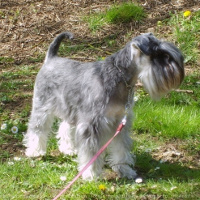
| The origins of the Schnauzer are thought to date back to medieval Germany, where the breed was often depicted in wooden works of art carved by Albrecht Durer. Schnauzers were originally bred to help on the farm and in hunting, but the dogs also protected farmers on their way to market. The Schnauzer's name is a literal German translation of "mustache", and the breed is thought to be a mix of German Poodles, Wolf Spitz and Wirehaired Pinschers. The Miniature Schnauzer was developed in Germany in the 1800s as a farm dog and became popular as a companion dog. The Miniature Schnauzer was introduced to the United States in 1924 and accepted into the American Kennel Club in 1926. | ||
 |
||
| Standard of the Miniature Schnauzer |
A little of the Shih Tzu |
| The Shih Tzu has been around for many years; although it has not been confirmed, experts believe the breed is a cross between the Lhassa Apso of Tibet and a small Chinese dog, probably the Pekingese. The Shih Tzu was already popular among Chinese royalty during the Tang dynasty, from 618 to 907. The dog's popularity also increased among the common people during the Ming dynasty. Sadly, the breed almost became extinct during the Chinese Revolution, when seven males and seven females were rescued. Modern breeds are all descendants of these fourteen dogs. The Shih Tzu made its way to other countries in the early 1900s, but was often called Apsos. Many World War II veterans brought these dogs back from England, and the breed was recognized by the American Kennel Club in 1969. |
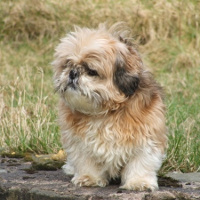 |
| Standard of the Shih Tzu |
Appearance of the Schnau-Tzu |
| The Schnau-Tzu inherits traits from both its parent breeds; as with all mixed breeds, you can expect it to inherit more physical characteristics from either parent breed, or a relatively equal combination of traits from each. The Schnau-Tzu will be a small dog, usually weighing less than 7 kilos, with a curled tail. This lively hybrid can be seen in black, black and white, brown, fawn and silver. Its coat will generally be straight, soft and fine, and of medium to long length. You can expect the Schnau-Tzu to have short legs and floppy ears. Typically a very cute dog, the Schnau-Tzu resembles a teddy bear or stuffed animal. |
Temperament of the Schnau-Tzu |
| The Schnau-Tzu inherits its behavioral traits from its parent breeds, the Miniature Schnauzer and the Shih Tzu. The Schnau-Tzu is generally highly intelligent and, thanks to this and its desire to please its owners, is often easy to train. As the Schnau-Tzu is friendly to other people and other dogs, and behaves well with young children, this hybrid will make an excellent family pet. Most Schnau-Tzus are very playful and enjoy spending time with their owners doing physical activities. Hybrids are likely to be affectionate towards their humans and enjoy the opportunity to be held. A very sociable breed, the Schnau-Tzu loves attention, even if it can occasionally be moody. |
Needs and activities of the Schnau-Tzu |
| The Schnau-Tzu's activity requirements vary according to the dog and the characteristics it has inherited from its parents. This hybrid is generally quite active and will need regular exercise to ensure its physical and mental health. Daily exercise can include several walks a day, indoor play and trips to the dog park. As the Schnau-Tzu is such a small dog, it's advisable to keep a close eye on it when it's playing with other dogs to ensure its safety. As the Schnau-Tzu is a small dog, it can live well in an apartment, as long as you make sure it gets the exercise it needs. If you have a house with a garden, be sure to keep an eye on him when he's outside, as he may enjoy trying to dig his way under the fence. |
Maintenance of the Schnau-Tzu |
| The Schnau-Tzu is a dog with low to moderate shedding, which means you can concentrate your maintenance efforts on your dog rather than on removing hair from your sofa. We recommend brushing your dog several times a week and/or taking him to the groomer regularly to maintain his coat. As his hair is of medium to long length, his coat can easily mat or tangle. To preserve your dog's long-term dental health, you should brush his teeth two or three times a week. As with any dog, you should keep an eye on his nails and trim them when they become too long. |



 English (United Kingdom)

Comments