
 |
Schnauffen |
|
He is not recognized by the F.C.I. |
Origin |
Germany -> U.S.A. | |
Translation |
Francis Vandersteen |
A brief presentation of the Schnauffen |
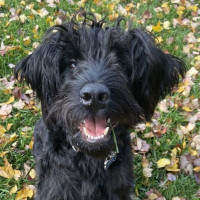
| The Schnauffen is a hybrid dog. Its parent breeds are the Affenpinscher and the Miniature Schnauzer. The Schnauffen is a small dog weighing no more than 7 kilos at maturity. They are generally healthy dogs that can live to at least 12 years of age. They are suited to living in an apartment, or in a house with or without a fenced yard. It should never be left outside for long periods. He is energetic and alert. He will need plenty of grooming to maintain a healthy coat. It makes an excellent family pet, and is considered good with children. They also get on well with other animals, provided they are properly socialized. |
History of the Schnauffen |
| Although there isn't much information on the Schnauffen, we can study its parent breeds to understand its origins. |
A little of the Miniature Schnauzer |
||
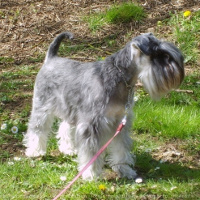
| The Miniature Schnauzer originated in Germany. It was developed as a ratter and guard dog on farms. It is thought that the Schnauzer was crossed with the Miniature Pinscher, Affenpinscher and Poodle to develop the Miniature Schnauzer we know today. It's likely that these breeds were introduced to make the Schnauzer a smaller dog. Although both World Wars were difficult for dog breeds, the Miniature Schnauzer gained great popularity after the First World War, and has remained just as popular to this day. | ||
 |
||
| Standard of the Miniature Schnauzer |
A little of the Affenpinscher |
| The Affenpinscher dates back to 17th-century Germany. It was developed to catch rats. Over time, the Affenpinscher was bred into a smaller dog that eventually became a companion dog. It's not clear which dogs contributed to the creation of the Affenpinscher we know today. It's possible that the Pug was crossed with the Affenpinscher to reduce its original size, as were the German Pinscher and the German Silky Pinscher. Like the Miniature Schnauzer, it has a coarse coat and a bearded face. The Affenpinscher was officially accepted by the American Kennel Club in 1936. |
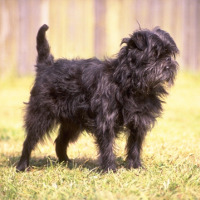 |
| Standard of the Affenpinscher |
Appearance of the Schnauffen |
| The Schnauffen will probably look very much like its parent breed, the Affenpinscher. It is small, well balanced, square but solidly built. Its compact body is still quite strong. He'll probably stand no taller than 36 centimeters, and weigh up to 7 kilos at maturity. Its color is most often black, but there are variations: black and silver, black and tan, salt and pepper, white or multicolored. Its coat is often dense and rough, with a hard outer coat and a short, soft undercoat. They have the characteristic dwarf Schnauzer beard and may have hair that seems to obstruct their eyes. |
Temperament of the Schnauffen |
| The Schnauffen is a highly intelligent dog. They are energetic and alert. They never meet strangers and make friends easily. They get on well with other animals, especially if they've grown up with them. He also makes friends easily with humans. He loves spending time with his human family, and would rather be with you than anywhere else. He's very eager to please his master and, for this reason, he's very easy to train. Simple repetition and routine will help your Schnauffen understand what you want from him. He's very affectionate. He's also feisty and fun-loving. Although he can be somewhat independent, he'll want to sit on your lap and may prefer to sleep in bed with you. |
Needs and activities of the Schnauffen |
| The Schnauffen doesn't need much exercise to be happy. However, it will follow you from room to room, and enjoys running freely around the house. He may be happy in an apartment because of its size, but if your apartment is small, you can give him at least one or two short periods of exercise, such as a brisk walk around the neighborhood, every day. He needs forty-five minutes to an hour of activity a day. This will keep him healthy and prevent boredom and mischief. He'll enjoy outings to the dog park and get on well with the other dogs there. He'll also be a winner if you have a small fenced-in garden where you can let him play. Make sure you provide him with toys that encourage mental stimulation as well as physical play. |
Maintenance of the Schnauffen |
| The Schnauffen will probably need a moderate amount of maintenance. It should be brushed daily to remove excess hair and dirt from its coat. Only bathe him if necessary. His natural oils will keep his coat shiny and healthy-looking. Brush his teeth two or three times a week to prevent tartar build-up; brush them daily to avoid cavities and bad breath. Trim his nails every two weeks. Dogs often get rid of their nails on their own. However, if you hear his nails clicking on the tiles, you know it's time to trim them. The Schnauffen should never be trimmed. You may need to trim the hair around his eyes from time to time. Keep in mind that the Schnauffen may suffer from entropion, so be sure to check his eyelashes for signs of internal growth. |



 English (United Kingdom)

Comments