
 |
Rottle |
|
He is not recognized by the F.C.I. |
Origin |
Germany <> France -> Germany | |
Translation |
Francis Vandersteen | |
This breed is also known as |
Rotti-poo
|
A brief presentation of the Rottle |
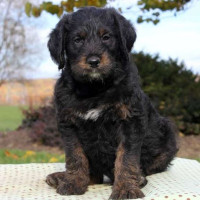
| The Rottle is a designer dog, a cross between the Poodle and the Rottweiler. Since the parent Poodle can be a standard or a miniature, the size of the Rottle can vary from medium to large. Either way, they're wonderful, friendly family pets that also make good watchdogs. Rottles are gentle and loving, as well as brave and loyal, so you can trust them with your home and the protection of your family. They are quick to learn and aim to please so they are exceptionally easy to train. What's more, because of their Poodle genes, they don't shed much so they can be hypoallergenic. |
History of the Rottle |
| The Rottle hybrid has been around for around 30 years and originated in Germany. However, not much is known about the breed's history, so the best way to get general information about the Rottle is to look at the parent breeds. |
A little of the Rottweiler |
||
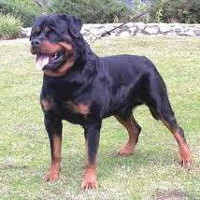
| The Rottweiler originated in 74 AD when soldiers of the Roman Empire crossed Mastiffs or Roman dogs with German Shepherds to guard their camp and herd cattle. The Rottweiler was named after the town in which it originated, Rottweil, which used to be called Das Rote Wil because of the small villas with red roofs. At first, they were simply used to herd cattle during the day and guard camps at night, but later they became accustomed to hunting and pulling wagons. Eventually, the Rottweiler was no longer needed for these tasks and they became popular with butchers for pulling their meat carts so that they were eventually called Rottweiler Metzgerhunds, meaning Rottweil butcher dogs. Nevertheless, the breed almost became extinct until Rottweiler enthusiasts founded the International Club for Leonbergers and Rottweilers in 1899. Shortly afterwards, in 1901, the first Rottweiler standard was created. It took another 30 years for the American Kennel Club to recognize the breed, where they are now the 8th most popular breed in America. | ||
 |
||
| Standard of the Rottweiler |
A little of the Poodle |
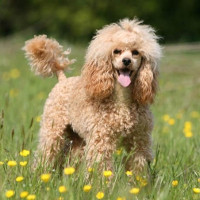
| The Poodle originated in Germany and is one of the oldest dog breeds, dating back to the first century. The Poodle was bred from various types of water dog, including Hungarian, Russian, French, Spanish, Portuguese and German, as well as the North African Barbet. Others say they may be descendants of dogs bred in Asia. The Poodle was originally bred to be a water retriever for hunting, but when it was discovered how pleasant and good the breed was, they became popular pets. There are three types of Poodle, which include standard, miniature and toy sizes. The two smaller Poodle types were designed in the 15th century to impress middle-class Parisians. They were created by crossing small Poodles with other small Poodles rather than crossing Poodles with other small dog breeds as was originally suspected. The standard and miniature sizes were used to hunt ducks and truffles, but the Toy Poodle was more of a lap dog. They also proved to be highly intelligent dogs who could easily learn tricks, so they became popular in the circus and with street performers. In the late 1880s, the Poodle was accepted into the American Kennel Club, where they are now the 7th most popular dog in the USA. |
 |
| Standard of the Poodle |
Appearance of the Rottle |
| This hybrid is medium to large with a well-muscled stature, round hairy head, hanging ears, oval brown eyes and flattened muzzle with black nose. They may vary a little in size depending on whether the parent Poodle was a miniature or standard size. For this reason, Rottles vary in height from 25.5 to 69 centimeters, and in weight from 22.5 to 45.5 kilos. Their coat is usually gray, blue, red, brown, white, black or partial, which is a combination of two or more colors. It can be single- or double-layered, and is usually thick and curly. |
Temperament of the Rottle |
| Your Rottle is an incredibly brave and gentle dog who loves to play with everyone, including other pets and children. They are generally very affectionate and fun-loving with a gentle disposition and funny personality. They are loyal to their family and need to be trained properly because they can be protective around strangers. The Rottle has a hunting instinct and may chase local wildlife, but, if properly socialized, should not disturb indoor pets. They will bark to let you know of an intruder, but are otherwise quiet and calm. Training them is easy, and they pick up commands quickly. |
Needs and activities of the Rottle |
| The Rottle has a high energy requirement, so your dog will need intense exercise every day. The recommended amount of activity for this breed is around 60 to 90 minutes a day, but you can adjust this amount according to your dog's needs. This breed tends to put on weight if not exercised enough to ensure you get at least half an hour of activity twice a day. Some of their favorite activities include long walks, running, swimming, Flyball or Frisbee, agility training and hiking. Another good activity for your Rottle is playing with other dogs in a dog park, which also helps teach social skills. |
Maintenance of the Rottle |
| Due to the Poodle's genes, the Rottle can sometimes be hypoallergenic, but they do need a bit of grooming due to their thick, curly coat. They'll need a thorough brushing with a pin brush and combing at least several times a week. You should also bathe your Rottle once every two weeks, or as needed. Be sure to use a mild dog shampoo or something recommended by your vet so it doesn't irritate or dry the skin. You may also need to take your Rottle to be professionally groomed, or do it yourself if necessary. Also, trim your dog's nails and clean his ears once a month or as needed. |



 English (United Kingdom)

Comments