
 |
Pushon |
|
He is not recognized by the F.C.I. |
Origin |
China <> France / Belgium -> U.S.A. | |
Translation |
Francis Vandersteen |
A brief presentation of the Pushon |
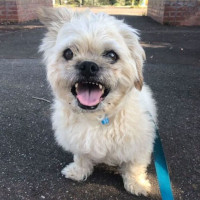
| The Pushon is an adorable little dog that combines the best features of the Pug with the fluffy softness of the Bichon frise. Although their size may be small, they have big personalities. They love being around people and are the ideal house dog, adapting easily to apartment life. These are dogs that need to be with their family, not outdoor dogs. Pushons love attention so much they'll play games or do tricks to get it. Your lap will be theirs, so be warned, they're loving and affectionate and want that physical contact. These little furballs can vocalize loudly when strangers appear, but can be trained to bark only once as a warning. Loving and adorable, these ready-to-please dogs still need a firm hand to prevent small-dog syndrome in which they think they're the boss. Like many spoiled little dogs, they can become bossy, mean and demanding. A true friend of the family, little Pushon is an indispensable character. |
History of the Pushon |
| The Pushon is a rare hybrid dog with little data on its beginnings, but by looking at the history of the parent dog, we can see what they have in common. |
A little of the Pug |
||
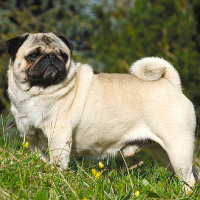
| The Pug dog is an ancient breed that originated around 400 BC in Asia, where they were the pets of Tibetan monasteries. The Pug became popular in royal households in the 19th century and made its way to Japan and Europe, where it became the pet of royalty and even became the official dog of the House of Orange in Holland. Pugs belonged to Prince William ll, and a dog is said to have saved his life in 1572 after the dog warned him of approaching Spaniards. In France, Napoleon's wife Josephine owned a Pug and used her pet to send secret messages to her husband when in prison, hiding notes under her collar. When the British took control of the Chinese imperial palace in 1860, they discovered several Pug dogs and took them back to England, where the rest is history, as they say. The American Kennel Club accepted the Pug dog in 1885. | ||
 |
||
| Standard of the Pug |
A little of the Bichon frise |
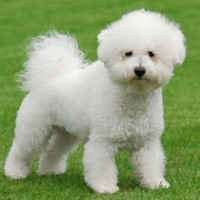
| The Bichon frise traces its origins back to the 13th century. The breed is a descendant of the Barbet Water Spaniel and the Poodle. Spanish sailors exchanged the little dog as they traveled around the world, as they were popular shipmates. The Bichon frise became a favorite of French royal courts in the 16th century due to its attractive appearance and willingness to please. This trait was used in the 19th century when they worked as organ grinder dogs, and also as circus performers. Their ability to learn new tricks and their courageous social nature made them a natural performer. Today, this little dog is a companion and show dog, often winning hearts by performing his tricks. Soft white fur and adorable eyes have made it a popular dog. The Bichon frise was first recognized in 1972 by the American Kennel Club. |
 |
| Standard of the Bichon frise |
Appearance of the Pushon |
| The Pushon is undeniably a cute little dog that can melt your heart with just one look. Small but well-proportioned, they can be a little husky like the Pug, or more streamlined like the Bichon frise. Their bodies are longer than they are tall, with short, strong but slender legs. Tiny, rounded legs mean they can turn on a dime and move quickly. Their faces are rounded, they often have a medium-sized muzzle and their eyes are round, dark and bright with anticipation. The ears are wide-set and triangular in shape, drooping while held out and framing the head somewhat. The Pushon's tail can be straight or curled over its back. Attractive in appearance and with genuine cute appeal, the Pushon puppy is hard to ignore, and once in your home, he's forever in your heart. |
Temperament of the Pushon |
| The Pushon can be a bit of a clown, entertaining his family or just showing off in general. They love attention and will perform to get it. They are true companion dogs, they love people and expect people to love them. Gentle-tempered, they are ideal pets, gentle with children as well as other pets. They often form strong bonds with other animals they grow up with, such as a cat or even a rabbit. They're lively and nosy, wanting to know what everyone's doing so they can help. You won't be alone with a Pushon around. They adapt well to small houses or apartments, but can also do well in a country setting, as long as they live indoors. They are not outdoor dogs. If your Pushon dog inherits the Pug's sunken face and muzzle, he'll suffer from high temperatures, so make sure he has a cool air hole in the house where he can retreat during a heat wave. These brave little dogs will warn you when strangers are around, and bark to warn you when they're defending your territory. Pushon loves praise and will respond well to kind words and small treats when asked to learn a new trick. Patience, calm and affection are all that's needed to make this little cutie behave. |
Needs and activities of the Pushon |
| Pushons are active little dogs who are always ready for a game or a walk. They love to play with their toys, often destroying them in the process. These lively dogs are ideal playmates for children, having a beautiful nature and lots of energy for play. Although they'll get most of their exercise simply by being busy around the house, they'll still need a daily walk for exercise and socialization purposes. They'll love spending time in the dog park and they're not shy, so they'll jump into bigger dog games without hesitation. They can be affected by hot weather, especially if they've inherited the Pug's pushed-up face, so take them out during the cooler part of the day. These small, ready-to-please dogs respond well to training and happily learn new tricks to show. When they tire, they'll land on your lap, ready for kisses and cuddles. |
Maintenance of the Pushon |
| Pushon maintenance needs depend very much on how their genetics have gifted them, with some inheriting the short coat of the Pug or the long, fluffy coat of the Bichon frise. The short coat requires minimal maintenance, while the long, fluffy coat needs daily brushing and occasional trimming to keep it at its best. The Pushon will appreciate grooming time; any kind of attention is welcome with them, even if it's just to brush their teeth. Although they don't need to bathe frequently, they will appreciate the care of a warm bath, gentle dog soap and shampoo, and the drying process. Don't forget to carefully dry any folds or wrinkles in the skin. Check eyes and ears regularly to make sure they're in good health. Then, a quick trim of the nails may be necessary to complete the grooming session. Of course, your Pushon will expect lots of praise and perhaps a little treat for behaving so well. |



 English (United Kingdom)

Comments