
 |
Miniature Golden Retriever |
|
He is not recognized by the F.C.I. |
Origin |
Great Britain <> France -> U.S.A. | |
Translation |
Francis Vandersteen | |
This breed is also known as |
Comfort Retriever |
A brief presentation of the Miniature Golden Retriever |
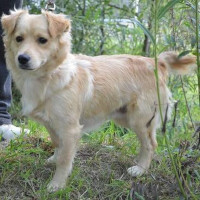
| The Miniature Golden Retriever, also commonly known as the Comfort Retriever, is a specific cross between the Golden Retriever and the Poodle, usually with a handful of Cocker Spaniel as well. This hybrid should be a friendly, intelligent and trainable dog with excellent retrieving instincts, but due to the large number of breeders developing this dog, it's essential that you do your homework. The inclusion of certain Cocker Spaniel lines can trigger lively or aggressive behavior, and both the Golden Retriever and Poodle have high rates of hip dysplasia, so a full history of your puppies' parents to check for problem behaviors, incidents of hip dysplasia, and even Heart disorders are an integral part of choosing your Miniature Golden Retriever. |
History of the Miniature Golden Retriever |
| The Miniature Golden Retriever is a deliberate hybrid of the Golden Retriever, a retriever breed developed in Scotland in the mid-to-late 1800s, and the Poodle, a multi-talented dog capable of excelling at activities as varied as water retrieving, circus sideshows, police work and truffle hunting. This is done with the intention of developing a dog with the appearance, instincts and temperament of the Golden Retriever in a much larger dog, usually about half the size. Several breeders have been working independently to develop this breed since the early 2000s. Those working to refine the Miniature Golden Retriever have frequently incorporated genetics from the Cocker Spaniel, a dog expert at hunting game. This was more common in the early days of development, but many breeders noticed an increase in snarling behavior when Cocker Spaniel heritage was introduced and stopped including this breed. Even miniature Golden Retrievers that incorporate no Cocker Spaniel genetics are considered a distinct hybrid of the Goldendoodle cross, as they are selectively bred to look and act like the traditional Golden Retriever, but are much smaller and less likely to be hypoallergenic than the Goldendoodle. Goldendoodle breeders are more likely to incorporate genetics from larger Poodles, while Miniature Golden Retriever breeders prefer to include smaller or miniature Poodles. Although the majority of breeders develop these dogs as pets or therapy dogs, some people who breed Miniature Golden Retrievers specialize in breeding hunting dogs instead. |
A little of the Golden Retriever |
||
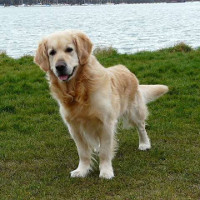
| The Golden Retriever is a gentle, loyal dog that responds well to training. Their breed began in the 19th century with a Lord Tweedmouth in Scotland, who wanted a dog that was attentive, loyal yet retained the ability to retrieve waterfowl without damaging the bird. Refinements continued until it was officially named in 1920. Their ability to be both a working dog and a loyal companion was the secret of their success. In 1932, the Golden Retriever was recognized by the American Kennel Club and the breed became one of the most popular pure breeds. They are known to be great pets, devoted and loyal to their owners, and love children and clowning around with them. | ||
 |
||
| Standard of the Golden Retriever | ||
A little of the Poodle |
||
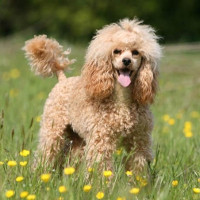
| The Poodle originated in Germany, where it was known as the Pudelhund, meaning water dog. The Poodle is thought to be descended from the North African and French Barbet, as well as the French, Russian, Hungarian, Spanish, German and Portuguese Water Dog. They are one of the oldest dog breeds and have been seen in drawings and statues from Egyptian tombs and Roman artifacts dating back to the first century. The breed was popular with duck hunters and even used to hunt truffles. Miniature and toy Poodles were later created by crossing smaller Poodle breeds. Gypsies trained these talented dogs to perform tricks and they were used as circus dogs for many years. The AKC registered the Poodle in 1887 and it is now the 7th most popular dog breed in America. | ||
 |
||
| Standard of the Poodle | ||
A little of the English Cocker Spaniel |
||
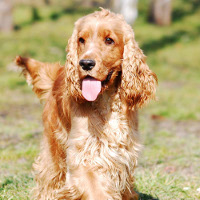
| The American Cocker Spaniel is closely related to the English Cocker Spaniel and they were once considered to belong to the same breed. American Cockers are smaller and lighter than English Cockers and were bred as show dogs and companions more than anything else. English Cockers were traditionally bred for hunting and were used as hounds, taking advantage of their superior sense of smell to seek out prey in low-lying areas and hunt it for the hunter. Although the American Cocker Spaniel was once the most popular companion dog in America, it has faced stiff competition in recent years and now has a chance to make the Top 20 list. | ||
 |
||
| Standard of the English Cocker Spaniel |
Appearance of the Miniature Golden Retriever |
| The Miniature Golden Retriever is a small to medium-sized athletic dog with a fairly broad skull and a slightly long, straight muzzle. The eyes will most often be slightly slanted and brown like those of the Golden Retriever, but they can sometimes be more oval in shape and, on very rare occasions, unusual eye colors such as amber or blue can be passed on from the Poodle, and their medium length to short ears folded forward and falling close to the cheek. This hybrid generally inherits the Golden Retriever's double coat and is also selectively bred to display the Golden Retriever's characteristic colors, which come in many shades of deep, brilliant gold. The distinctive coat of the Miniature Golden Retriever is made up of a thick undercoat protected by an outer layer of hard, medium-length guard hairs that usually have a slight wave, although sometimes a Miniature Golden will develop the curly hairs of the Poodle breed. |
Temperament of the Miniature Golden Retriever |
| This hybrid is specifically designed to have a temperament similar to that of the parent Golden Retriever breed, so they're generally gentle, trustworthy animals. They don't always make the best guard dogs, as they tend to be a little too friendly and trusting of everyone in this particular role. They get on well not only with people of all ages, but also with new dogs or even other animals, and are generally excellent companions even for the smallest of children, although interactions between small children and even the most well-adjusted canines must always be supervised, for the safety of both child and dog. The Golden Retriever is an athletic and intelligent animal, and the addition of the Poodle does nothing to diminish these traits and, in some cases, can even reinforce them. It is an extremely responsive and intelligent animal that generally displays the same multi-faceted trainability as its parent breeds. The inclusion of Cocker Spaniel in the mix makes this hybrid a little more likely to follow its nose, and can sometimes inspire protective or snarling behavior. |
Needs and activities of the Miniature Golden Retriever |
| This crossbreed is a very active and athletic animal and, as such, requires a lot of exercise compared to many other dog breeds. Around 90 minutes to two hours a day are needed to ensure that this dog gets enough exercise to maintain its fitness and expend its energy, so that it doesn't resort to noisy, destructive behavior out of boredom. Fortunately, there are many ways to prevent these dogs from becoming bored, as they can enjoy activities as varied as swimming, agility training, nose work, rally training and even canine acrobatic dance. |
Maintenance of the Miniature Golden Retriever |
| The Miniature Golden Retriever, like the Golden Retriever it's based on, has moderate grooming requirements. Golden Retrievers are prone to some doggy odor and require monthly baths, although the inclusion of the cleaner-smelling Poodle may reduce the odor somewhat. While Goldendoodles are often hypoallergenic due to the contribution of the Poodle coat, this is rarely the case with the Miniature Golden Retriever, although they may shed slightly less than their purebred counterpart. Daily brushing is necessary to avoid tangles and mats in their dense undercoat, as well as to prevent the formation of tangles in the feathers of their face, ears, tail and paws, and their ears should be checked regularly to ensure they are clean, dry and free from infection. |



 English (United Kingdom)

Comments