
 |
Frenchie Labrador |
|
He is not recognized by the F.C.I. |
Origin |
France <> Canada -> U.S.A. | |
Translation |
Francis Vandersteen |
A brief presentation of the Frenchie Labrador |
| Frenchie Labradors are gentle, intelligent medium-sized family dogs that get along with everyone. They are moderately active and very sensitive to their owners' assertions. Frenchie Labradors have an average lifespan of 9 to 15 years, weigh between 16 and 23 kilos and stand between 40.5 and 46 centimeters tall. They have a short, smooth, dense coat that comes in combinations of black, chocolate, yellow, cream, white and fawn with the possibility of a brindle pattern and ticked markings. This mix is not widely recognized and there is no exact date of its origin. Owners of this friendly hybrid say it's easy to care for and always ready to have fun. |
History of the Frenchie Labrador |
| The Frenchie Labrador is a relatively new hybrid. It is not widely recognized and lives in the shadow of the more popular Labrador Retriever and French Bulldog hybrids. Nevertheless, this breed is known for being too gentle. |
A little of the French Bulldog |
||
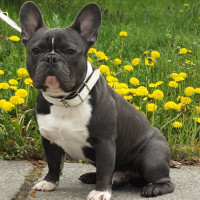
| The English Industrial Revolution replaced many workers with machines. By the 1850s and 1860s, lacemakers were out of work. English lacemakers began moving to France to find work. They brought their dogs, which were small, miniature Bulldogs. Eventually bred with the native French Bulldog, today's French Bulldog was born. In 1885, a breeding program for American French Bulldogs was launched. Once in America, the breed became popular with society women. The breed was shown at the Westminster Kennel Club dog show in 1896. The only winners in the French Bulldog group were those with "pink ears", not breed members with "erect bat ears". The ladies of the society disagreed with the judge's decision. They formed the French Bulldog Club of America, which went on to create the breed standard. The "erect bat ear" was the correct type. In the early 20th century, the breed was owned by the Rockefeller family and the J.P. Morgan family. The American Kennel Club recognized the breed in 1898. By 1906, the French Bulldog was the 5th most popular dog breed in America. | ||
 |
||
| Standard of the French Bulldog | ||
A little of the Labrador Retriever |
||
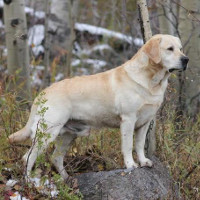
| The Labrador Retriever originated in Newfoundland, Canada, and is a cousin of the Newfoundland breed. It was bred in Canada to be able to swim and retrieve objects, such as fishing nets, from cold water. Eventually, its population declined in Newfoundland due to a tax on dogs, but boomed in the UK, where it had been imported for decades in the early 1800s for hunting. Eventually, Labrador Retrievers were introduced to North America in the late 19th century and have long been one of the most popular breeds in the USA. The Labrador Retriever was recognized by the AKC in 1917. | ||
 |
||
| Standard of the Labrador Retriever |
Appearance of the Frenchie Labrador |
| Frenchie Labradors resemble small Labrador Retrievers with French Bulldog facial features. They are medium-sized with a robust, athletic build and weigh between 16 and 23 kilos. At maturity, Frenchie Labradors weigh between 40.5 and 46 centimeters. Their coats are short and smooth and come in combinations of black, chocolate, yellow, cream, white and fawn with the possibility of brindle pattern and ticked markings. They can have either "bat" ears, like their Frenchie parent, or semi-pierced ears that sit high on the head. Frenchie Labradors have large, dark, friendly eyes and a short muzzle that gives their faces a distinctive Bulldog look. |
Temperament of the Frenchie Labrador |
| You won't find a sweeter hybrid mix. Frenchie Labradors are gentle and affectionate with everyone they meet. This naturally cheerful breed gets along with strangers, children and other furry friends. They love to play games with anyone who will engage with them, and will never turn down a cuddle session. Frenchie Labradors are also a highly intelligent hybrid. They respond well to obedience training, not to mention learning commands and tricks. In fact, they love to entertain an audience and thrive on social activity. This breed is very loyal to its owners and, although not needy, requires constant attention and affirmation from those around them. If Frenchie Labradors become bored or restless, they will also become destructive in the home. Nevertheless, this breed is suited to any type of living environment as long as it has a loving family to look after its exercise and emotional needs. |
Needs and activities of the Frenchie Labrador |
| The Frenchie Labrador's energy and activity levels vary considerably, depending on the parent breed it most desires. On average, Frenchie Labradors with more Retriever should have around 45 to 60 minutes of daily activity, while Frenchie Labradors with more French Bulldog should have around 30 to 45 minutes of daily activity. Either way, this breed loves walks, trips to the dog park and playing with toys and friends indoors. Frenchie Labradors also enjoy cuddling with their owners and consider downtime an important part of their day. They are best suited to cool, temperate climates due to their dense coats and potential respiratory problems. |
Maintenance of the Frenchie Labrador |
| Frenchie Labradors don't shed much, but owners may notice peaks in shedding on a seasonal basis. This hybrid is not hypoallergenic and is not suitable for owners with allergies. As these puppies are short-haired, they only require occasional grooming with a pin or a smoother brush, depending on the thickness of the coat. They should be bathed from time to time, taking care to keep their ears clean to avoid infection. Beyond that, owners should brush their Frenchie Labrador's teeth daily, as well as trim its nails once a month. If a Frenchie Labrador resembles its French Bulldog parent, it may have skin folds around the face; if so, owners should clean between the folds regularly to avoid skin irritation. |



 English (United Kingdom)

Comments