 |
Euro Mountain Sheparnese |
|
He is not recognized by the F.C.I. |
Origin |
Germany <> Switzerland -> U.S.A. | |
Translation |
Francis Vandersteen | |
This breed is also known as |
Euro Mountain Shepanese |
A brief presentation of the Euro Mountain Sheparnese |
| The Euro Mountain Sheparnese is a hybrid of the German Shepherd and the Bernese Mountain Dog. The Bernese Mountain Dog is giant in size, while the German Shepherd is large. The Euro Mountain Sheparnese often retains much of the appearance of the Bernese Mountain Dog, however, the size and weight of your Euro Mountain Sheparnese may vary considerably according to the standard parents. The Euro Mountain Sheparnese is a specific crossbreed dog bred as a companion, but also makes an excellent watchdog given its size and alertness. Determining the potential traits of this hybrid can be difficult given the lack of detailed information, and many owners examine the parent breeds for more details on possible dispositions. The Euro Mountain Sheparnese is not a well-known hybrid, but it is recognized by the American Canine Hybrid Club, the Designer Breed Registry, the Designer Dogs Kennel Club and the Dog Registry of America. |
History of the Euro Mountain Sheparnese |
| The Euro Mountain Sheparnese is a hybrid of the German Shepherd and the Bernese Mountain Dog. The mix is a specific modern crossbreed designed as a companion dog and does not have a long, well-known history. However, the German Shepherd is a long-time favorite and is often crossed with other dogs to obtain a healthier mix. Without a detailed history of this hybrid, owners should examine the parent breeds to understand the history and potential characteristics of the mix. |
A little of the German Shepherd |
||
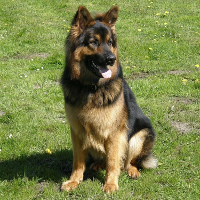
| The German Shepherd is a relatively young breed, developed in the late 19th century in Germany by Captain Max von Stephanitz, whose aim was to develop a versatile herding and breeding dog in the region. Stephanitz spent years perfecting the program and eventually recognized more useful traits, such as guarding and protection. After the First World War, the dog's popularity soared, which in America was partly due to Hollywood German Shepard personality Rin Tin Tin. The dog known as Rin Tin Tin was rescued from a bombed-out kennel in France by an American corporal and returned home with his new owner to Los Angeles, where he went on to star in 26 films. Anti-German sentiment forced the German Shepherd to change its name for several years, but the American Kennel Club, which had recognized the breed in 1908, restored the name in 1931. The British Kennel Club restored the name only in 1977, maintaining the Alsatian, the wolfhound's name for many years. The popularity of the German Shepherd in America led to a decline in breeding standards and an increase in diseases and hereditary conditions. Bad temperaments began to appear as more and more people desired the German Shepherd. American breeding programs then imported German Shepherd strains to restore the bloodlines in America. Today, German Shepherds are a healthy, capable working breed. | ||
 |
||
| Standard of the German Shepherd | ||
A little of the Bernese Mountain Dog |
||
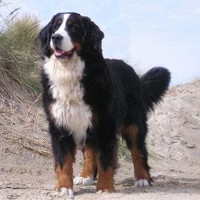
| The Bernese Mountain Dog is a member of the Molosser family, brought to the Swiss Alps over 2,000 years ago with the Roman invaders. Over time, Swiss Mountain Dogs, later named Bernese Mountain Dogs, developed into excellent shepherds and farm helpers while nestled in the Alps. By the end of the 19th century, agriculture in the region was considerably reduced, and the Bernese Mountain Dog faced a sharp decline. Fortunately, interest in preserving national breeds grew, and the Swiss Mountain Dog was first called "Bernese" in 1902. Bernese Mountain Dog breeding programs slowed down during the First World War, but resumed after the war with imports to the USA and other European countries. However, breeding slowed down again in Europe during the Second World War, and the breed died out in several countries outside Switzerland and the USA. Importation resumed in 1945, and the American Kennel Club recognized the breed in 1981, adopting the current breed standards in 1991. | ||
 |
||
| Standard of the Bernese Mountain Dog |
Appearance of the Euro Mountain Sheparnese |
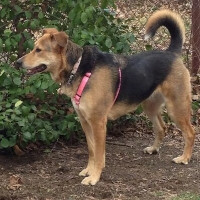
| The appearance of the Euro Mountain Sheparnese can vary depending on which parent breed the hybrid most closely resembles, but most hybrids are larger than a German Shepherd but not as large as the Bernese Mountain Dog. The Euro Mountain Sheparnese has a double coat with medium-long hair that often resembles Bernese. The white markings on the chest and feet often lead people to believe that the hybrid is mixed with a Rottweiler. The head is proportional to the body but large, with a long muzzle and medium-sized almond-shaped eyes. The eye color is dark and the ears are pointed with feathers. The front legs are often shorter than the hind legs, and the feet are short and compact with large paws. |
Temperament of the Euro Mountain Sheparnese |
| The Euro Mountain Sheparnese is an active, friendly dog that is affectionate with its family and requires daily interaction. Early socialization is important for this hybrid, as the German Shepherd parent can be distant. The Euro Mountain Sheparnese is not particularly wary of strangers but may bark in alarm, and this hybrid may not be suited to other dogs. Socialization with people, places, other dogs and things will help this hybrid adapt much more quickly. The Euro Mountain Sheparnese is an intelligent, easy-to-train mix, but its size and potential temperaments don't make it ideal for novice dog owners. Both parents are large dogs with high energy and intensive needs, so you can expect the Euro Mountain Sheparnese to have high exercise requirements. |
Needs and activities of the Euro Mountain Sheparnese |
| The Euro Mountain Sheparnese is a mix of two high-energy breeds and needs a good amount of daily exercise to support its size and health. You can divide the exercise time into a few 30-45 minute sessions with daily jogs or Frisbee in the park. However, you should avoid vigorous exercise after eating or drinking large quantities to avoid bloating. It's a smart mix, and mental stimulation is just as important in preventing destructive behavior. Plan to play games or give your Euro Mountain Sheparnese a challenging task to engage its mind. The Euro Mountain Sheparnese is not well suited to life in a small space, given its size and exercise requirements, and does much better in the countryside with a large backyard. This mix also prefers cooler temperatures and has a high tolerance for cold weather. |
Maintenance of the Euro Mountain Sheparnese |
| The Euro Mountain Sheparnese is not a hypoallergenic dog and is known to shed all year round. Daily brushing, especially during the warmer months, will help remove dead and loose hair and keep your Euro Mountain Sheparnese's coat in good health. The hair around the ears of this hybrid is soft and long, so check and clean your dog's ears as needed to remove any wax, dirt or debris. Some lines of US-born German Shepherds are prone to dental disease and can be mixed with Euro Mountain Sheparnese, so frequent cleaning and brushing of teeth will help prevent periodontal disease. Euro Mountain Sheparnese nails are strong and grow quickly. Bi-monthly trimming is necessary to avoid tearing or splitting the nails if they don't wear naturally. |



 English (United Kingdom)

Comments