
 |
Dane Shepherd |
|
He is not recognized by the F.C.I. |
Origin |
Germany -> U.S.A. | |
Translation |
Francis Vandersteen |
A brief presentation of the Dane Shepherd |
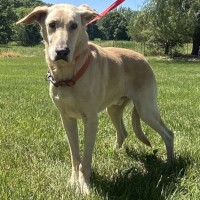
| The Dane Shepherd is a cross between a Great Dane and a German Shepherd. It's a large dog that also makes an excellent watchdog and supreme companion. It is a moderate excreter and requires little maintenance. It tends to have a short coat like the Great Dane, but can have a double coat like the parent breed of the German Shepherd. He doesn't like to be left alone for long periods and can suffer from separation anxiety if left alone for long periods. He may chew or be destructive if he becomes anxious. He barks only occasionally, but that doesn't stop him from being an excellent watchdog. Often, its size is enough to intimidate would-be burglars. |
History of the Dane Shepherd |
| There isn't much information on the Dane Shepherd breed itself, but we can learn more about the parent breeds to understand what to expect from the hybrid breed. |
A little of the Great Dane |
||
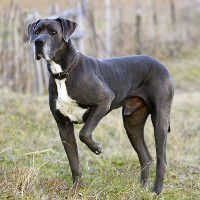
| The Great Dane can trace its origins back to a large dog found in Tibet. Illustrations of dogs similar to the Great Dane have been found in Egyptian artifacts and Babylonian temples. It is thought that the Assyrians traded the dogs to the Greeks and Romans, who then crossed them with other breeds. Some believe that Mastiffs or Irish Wolfhounds may also be descended from Great Danes. Great Danes were originally called Boar Hounds because they were bred to hunt wild boar. In the 16th century, the breed name was changed to English Dogges. In the 1600s, German nobles began keeping Great Danes in their homes, referring to them as Kammerhunde (chamber dogs). These dogs were pampered and wore velvet-lined collars. In the 1800s, the name Great Dane became associated with the breed when a French traveler saw a version of the Boar Hound that looked slimmer and more like a Greyhound, and referred to the dog as the Great Dane, which eventually became the "Great Dane". The name stuck. At one time, the Great Dane actually had a more aggressive temperament, but German breeders strove to reproduce it from the dog. Eventually, they succeeded. The Great Dane Club of America was formed in 1889, although we don't know exactly when the Great Dane was brought to America. | ||
 |
||
| Standard of the Great Dane | ||
A little of the German Shepherd |
||
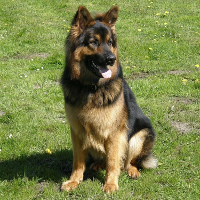
| The German Shepherd is a relatively new breed, with origins dating back to 1899, when Captain Max von Stephanitz decided to breed the various sheepdogs across Germany into a distinct breed. Stephanitz studied the breeding techniques of the British and traveled all over Germany observing dogs at dog shows. In 1899, Stephanitz found what he thought was the perfect dog. It looked like a wolf. Stephanitz immediately bought the dog and began breeding sheep herding dogs. Even though sheep breeding was disappearing in Germany, Stephanitz would not be discouraged. He introduced the dog to police work and military service. The German government eventually adopted the breed for military service. However, some allied soldiers during World War II were able to obtain German Shepherd puppies and, in this way, the German Shepherd made its way to America. | ||
 |
||
| Standard of the German Shepherd |
Appearance of the Dane Shepherd |
| The Dane Shepherd will be a combination of the two parent breeds, the Great Dane and the German Shepherd. Although there isn't much information on the Dane Shepherd breed itself, we can study the parent breeds to determine what the Dane Shepherd will look like. The Great Dane has a short, smooth coat. It can come in a variety of six colors: fawn with black mask, brindle, blue, black, harlequin (white with irregular spots all over the body) and mantle (black and white with solid black covering on the body). German Shepherds come in many colors, although the traditional black with beige trim is most often recognized. They can be all black, black and cream, black and tan, blue, gray, liver, sable and white. White German Shepherds are not recognized as an acceptable color under AKC guidelines, but some breeders actually strive for this color. Your Dane Shepherd will be a big dog with a long muzzle and erect ears. Bright brown eyes will alert you to a curious and gentle dog. |
Temperament of the Dane Shepherd |
| The Great Dane is a gentle giant. It's often considered one of the most natural dogs to have. It is very gentle, affectionate and playful. What's more, they naturally love children. He's easy to train, and wants nothing more than to please his humans. He loves people and wants to interact with his family. The Great Dane often forgets how big he is, so he may try his hand at being a watchdog from time to time. Early socialization is recommended, especially with other animals. While he generally gets on well with other animals, it never hurts to teach him from an early age how to behave and what is expected of him. Some experts even recommend obedience classes for Great Danes. The other parent, the German Shepherd, has a reputation for aggression, much of which is undeserved. He's very alert and reserved with strangers, so he's an excellent watchdog. It takes time for him to make friends, but once he does, he's immensely loyal. He's highly intelligent and easily trained. However, he doesn't do well alone for long periods. He needs the company of his family and is extremely loyal to them. He may bark excessively or chew if bored. Early socialization is also recommended for the German Shepherd. Your Dane Shepherd will be an unfailing, intuitive and highly intelligent companion. Take him to a neighborhood get-together often, so he can show off his people skills and practice them at the same time. |
Needs and activities of the Dane Shepherd |
| The Dane Shepherd is a fairly active dog. It's recommended that he gets enough exercise to ensure he maintains a healthy weight. He may tend to put on weight if not exposed to regular activity. He tends to do best in a home with a large yard in which he can be allowed to run and play. He may also enjoy joining you for a leisurely stroll. The dog park is an ideal place for the Dane Shepherd, he'll enjoy the opportunity to get out, run and play with other dogs. He needs regular exercise so he doesn't chew or bark excessively. Mental stimulation is also important for this hybrid. An intelligent dog who listens to your wishes, he'll be eager to please but needs interaction and activities that exercise his mind and body. |
Maintenance of the Dane Shepherd |
| The Great Dane generally has a short, smooth coat. He tends to shed a lot, but with regular brushing, you're unlikely to find much hair on your furniture or clothes. The natural oils in his coat will help him look shiny and clean with regular brushing. You should also maintain regular ear cleaning as part of your maintenance routine. A bad odor or redness could signal an infection. German Shepherds have a medium-length double coat designed to protect their tender skin from snow and rain, but it's also resistant to dirt. Some German Shepherds are long-haired, but in general, they will have a medium-length coat. Sometimes, the German Shepherd's outer coat will be stiff to the touch. He can be prone to shedding as they shed all year round, he will also have a blow in which he has a major shed twice a year. Brush your Dane Shepherd two or three times a week with a smooth bristle brush. He should only be bathed when necessary. It's a good idea to take advantage of the fact that the German Shepherd parent likes to chew, so give your Dane Shepherd chews to keep his teeth clean, in addition to regular brushing and promoting overall dental health. |



 English (United Kingdom)

Comments