Chinese Crestepoo

He is not recognized by the F.C.I.

Origin
China <> France -> U.S.A.
Translation
Francis Vandersteen
This breed is also known as
Crestepoo
Crestedoodle
Poochis

A brief presentation of the Chinese Crestepoo

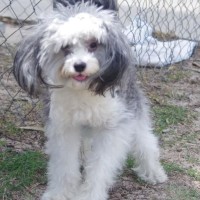
The Chinese Crestepoo is a small hybrid breed and is a cross between a Chinese Crested Dog and a Poodle. The most common colors are black, brown, chocolate, cream, white and gold, while their coats are long, soft and wavy with soft, stiff hair on legs and feet. Chinese Crestepoos generally have hairless ears and long, slender tails. Their muzzles are also fine and short, and they may have beards. They are considered low-maintenance when it comes to grooming and are playful and energetic, although they can be quite tense. They can be trained but are known to be a little stubborn.

History of the Chinese Crestepoo

The Chinese Crestepoo is a combination of a Chinese Crested Dog and a Poodle. The mix is a dog of modern design conceived as a companion dog and does not have a long, well-known history. As such, owners need to look at the history of the breed's parents to understand the history of this hybrid.
        

A little of the Chinese Crested Dog

        
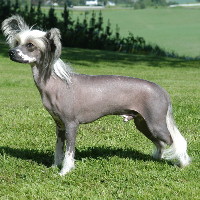
Despite the name, Chinese Crested Dogs don't come from China and are thought to have originated in Africa or Mexico. There are references to the African Hairless Terrier in the 19th century, but also genetic evidence of their link with the Mexican Hairless, so there is some debate. However, the Chinese used them aboard ships from the 1530s to catch rats. The breed has also been called the Chinese Hairless, Chinese Comestible Dog, Chinese Ship Dog and Chinese Royal Hairless. They are either hairless or shaggy with long, soft hair. The Chinese Crested Dog was officially recognized by the Kennel Club in the UK in 1981 and by the American Kennel Club in 1991. Most of today's Chinese Crested Dogs can be traced back to burlesque dancer Gypsy Rose Lee and her sister June Havoc, who gave her a rescue dog named Fu Man Chu, prompting them to start breeding the dogs.
Standard of the Chinese Crested Dog

A little of the Poodle

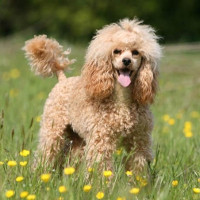
The Poodle is thought to have originated in Germany, but developed into a distinctive breed in France. The English word Poodle comes from the German Pudel or Pudelin, meaning to splash in water, while in France, dogs are called Caniche, derived from chien Canard, meaning duck dog. Egyptian and Roman artifacts and tombs dating back to the first centuries B.C. feature drawings of what looks like a Poodle breeding and retrieving game. There are three sizes of the breed: Standard, Miniature and Toy. They were popular with gypsies, who trained them to perform circus tricks, and were also favorites during the reign of Louis XVI and Queen Anne. The American Kennel Club registered its first Poodle in 1886.
Standard of the Poodle

Appearance of the Chinese Crestepoo

Chinese Crestepoos are small dogs weighing up to 5 kilos, which may vary depending on the dominant parent breed. Poodles have dense, curly, stiff hair that doesn't fall out, while the Chinese Crestepoo can be hairless, so look out for the delicate skin, or Powderpuff, where the body turns out to have long, silky hair. Chinese Crestepoo can be black, brown, chocolate, cream, white and golden while their coat is long, soft and wavy with soft, stiff hair on legs and feet. Chinese Crestepoo tend to have fairly soft, hairless ears and long, slender tails. Their muzzles are also thin and short, and they may have beards.

Temperament of the Chinese Crestepoo

The Chinese Crestepoo is considered a playful, affectionate pet that can be very protective of its family. Some can be very high-strung, but for the most part, they are friendly and good with children, making them ideal pets. They like to attract a lot of attention and, like their parent breeds, are alert and curious. Socialization and training are best started young, as they can be stubborn when it comes to training. They will respond best to positive reinforcement and rewards. The Chinese Crestepoo is generally good with other pets, including dogs and cats, but again, they are best introduced at an early age. They are active dogs, but they don't need much exercise to stay in shape. They could happily live in an apartment, provided they go out regularly for exercise. This breed doesn't bark much at all, but will do well if approached by a stranger. They don't like to be left alone.

Needs and activities of the Chinese Crestepoo

Despite being small dogs, the Chinese Crestepoo will need daily exercise to keep fit, as they tend to put on weight. They love to run, so ball games in the yard will be a good idea to keep your pet fit and entertained. A short walk will suffice, and make sure it's neither too hot nor too cold, as they're quite sensitive to extreme temperatures. They tend to do a little better when it's hot rather than cold. These dogs are perfect for apartment living, but will need to be taken out every day for exercise sessions.

Maintenance of the Chinese Crestepoo

These dogs need very little grooming to stay beautiful, and hardly shed at all. Both parent breeds are hypoallergenic, so there's a good chance the Chinese Crestepoo is too, making it a good pet for allergy sufferers. The dog will only need to be brushed once a day to remove loose hair and avoid matting, and will only need a bath if necessary. Nail and teeth care are also important elements of Chinese Crestepoo ownership, with daily tooth brushing and bi-weekly nail trimming essential. Start the regimen early in ownership and your hybrid will soon get used to the routine.The Chinaranian is a hybrid breed made up of a mix between a Chinese Crested Dog and a Spitz Toy / Pomeranian. Common colors are brown, black, cream, blue or gray, which can be solid or mixed. The coat is generally short and can be thick or thin, depending on which parent breed the dog takes most.

Comments

Latest page updates

  • Telomian

    Telomian He is not recognized by the F.C.I. Origin Malaysia Translation Francis Vandersteen A brief presentation of the Telomian The Telomian is a very rare breed of dog, and the only one native to Malaysia to have been bred outside the country. They were originally bred by the indigenous people of Malaysia to combat parasites such as snakes, rats,...
  • King Wheaten -- Cavalier King Charles Spaniel X Irish Soft Coated Wheaten Terrier

    King Wheaten He is not recognized by the F.C.I. Origin Great Britain <> Ireland -> U.S.A. Translation Francis Vandersteen A brief presentation of the King Wheaten The King Wheaten is a small dog with a heart this big and a playful disposition. Borrowing the energy and soft-coated waves of the Irish Soft Coated Wheaten Terrier and the size and...
  • Spanierd -- English Springer Spaniel X German Shepherd

    Spanierd He is not recognized by the F.C.I. Origin Great Britain <> Germany -> U.S.A. Translation Francis Vandersteen A brief presentation of the Spanierd The Spanierd is a hybrid dog. Its parent breeds are the English Springer Spaniel and the German Shepherd. They have an affable personality. He's known for entertaining family and friends with his...
  • Alaskan Goldenmute -- Alaskan Malamute X Golden Retriever

    Alaskan Goldenmute He is not recognized by the F.C.I. Origin U.S.A. <> Great Britain -> U.S.A. Translation Francis Vandersteen This breed is also known as Alaskan GoldenGoldenmuteAlaskan Gold Retriever     A brief presentation of the Alaskan Goldenmute The Alaskan Goldenmute is a descendant of two great dog breeds: the Alaskan Malamute and the Golden...
  • French pointing dog Pyrenean type

    French pointing dog Pyrenean type FCI standard Nº 134 Origin France Translation Mrs. Peggy Davis Group Group 7 Pointing Dogs Section Section 1.1 Continental Pointing Dogs « Braque » Type Working With working trial Acceptance on a definitive basis by the FCI Tuesday 18 January 1955 Publication of the official valid standard Tuesday 01 August 2023 Last...
  • French pointing dog Gascogne type

    French pointing dog Gascogne type FCI standard Nº 133 Origin France Translation Mrs. Peggy Davis Group Group 7 Pointing Dogs Section Section 1.1 Continental Pointing Dogs « Braque » Type Working With working trial Acceptance on a definitive basis by the FCI Monday 17 January 1955 Publication of the official valid standard Tuesday 01 August 2023 Last...
  • Vucciriscu

    Vucciriscu He is not recognized by the F.C.I. Origin Sicily Translation Francis Vandersteen En français, cette race se dit Vucciriscu Diese Norm ist in deutscher Sprache sichtbar Vucciriscu En español, esta raza se dice Vucciriscu In het Nederlands, wordt dit ras gezegd Vucciriscu This breed is also known as Sicilian Vucciriscu Sicilian Butcher...

© 2026 Groupe Milouchouchou ASBL. Tous droits réservés. En savoir plus

Protected by Copyright01
We use cookies

We use cookies on our website. Some of them are essential for the operation of the site, while others help us to improve this site and the user experience (tracking cookies). You can decide for yourself whether you want to allow cookies or not. Please note that if you reject them, you may not be able to use all the functionalities of the site.

Ok