
 |
Chinaranian |
|
He is not recognized by the F.C.I. |
Origin |
China <> Germany -> U.S.A. | |
Translation |
Francis Vandersteen | |
This breed is also known as |
Crested Pom |
A brief presentation of the Chinaranian |
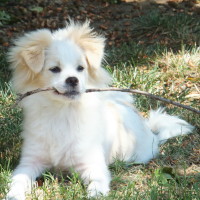
| The Chinaranian is a hybrid breed of Chinese Crested Dog and Spitz Toy/Pomeranian. Common colors are brown, black, cream, blue or gray, which can be solid or mixed. The coat is generally short and can be thick or thin, depending on which parent breed the dog takes most. The Chinaranian needs regular grooming to stay in shape. The Chinaranian, also known as the Crested Pom, is a small, affectionate dog weighing up to 4.5 kilos. Despite their small size, the breed needs regular exercise to stay in shape. They are suitable for older children, but are not recommended for families with very young children who could accidentally injure them. |
History of the Chinaranian |
| The Chinaranian is a cross between a Chinese Crested Dog and a Spitz Toy / Pomeranian, also known as a Pom or Pom Pom, and is the smallest member of the Spitz family. |
A little of the Chinese Crested Dog |
||
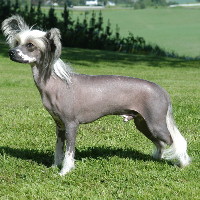
| Despite the name, Chinese Crested Dogs do not originate from China, and are thought to have originated in Africa or Mexico. There are references to the African Hairless Terrier in the 19th century, but also genetic evidence of their link with the Mexican Hairless, so there is some debate. However, the Chinese used them aboard ships from the 1530s to catch rats. The breed has also been called the Chinese Hairless, Chinese Comestible Dog, Chinese Ship Dog and Chinese Royal Hairless. They are either hairless or shaggy with long, soft hair. The Chinese Crested Dog was officially recognized by the Kennel Club in the UK in 1981 and by the American Kennel Club in 1991. Most of today's Chinese Crested Dogs can be traced back to burlesque dancer Gypsy Rose Lee and her sister June Havoc, who gave her a rescue dog named Fu Man Chu, prompting them to start breeding the dogs. | ||
 |
||
| Standard of the Chinese Crested Dog | ||
A little of the German Toy Spitz / Pomeranian |
||
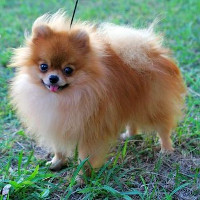
| These are feisty, intelligent dogs whose owners have included such luminaries as theologian Martin Luther, artist Michelangelo, physicist Isaac Newton and composer Mozart. They are named after the Pomerania region of Germany and Poland, where they were believed to have been bred to size. The breed was also popular with British royalty, including Queen Victoria, who bred the smallest Spitz Toy / Pomeranian variety. It is claimed that on her deathbed, she asked for her favorite Pom called Turi to be with her. Although the first Pom, called Dick, entered the American Kennel Club (AKC) record book in 1888, it wasn't until 1900 that the AKC officially recognized the breed. | ||
 |
||
| Standard of the German Toy Spitz / Pomeranian |
Appearance of the Chinaranian |
| Chinaranians are small dogs weighing up to 4.5 kilos, and may vary according to dominant parent breeds. Colors are usually brown, black, cream, blue or gray, and coats are generally short and can be thick or thin. Spitz Toy / Pomeranian can be quite fluffy dogs, while Chinese Crested can be hairless or Powderpuff, where the body is covered with long silky hair. Pom's eyes are almond-shaped, dark and shiny, and they have erect ears on top of the head. Chinese Crested Dogs also have dark, almond-shaped eyes, and their ears are quite large and erect. As both parents have very similar characteristics, your Chinaranian will certainly have eyes highlighted on a face with an alert look. almond-shaped while their ears are small and triangular falling forward. They are strong, muscular dogs. |
Temperament of the Chinaranian |
| The Chinaranian is a playful, affectionate dog that will make a good pet, but preferably in a home where the children are a little older. They are loyal and intelligent and can be trained, but owners may need patience. Like their parent breeds, Chinaranians are expressive and curious, and love nothing more than to be the center of attention. They don't like to be left alone for any length of time. Chinese Crested Dogs are known to hug their owners with their paws to show affection, while Poms also respond well to owners who spend a lot of time with them. Even though they're small dogs, they need plenty of exercise, so they'd do well in a home with a fenced yard. They could adapt to life in an apartment, provided they're regularly taken out for exercise sessions. They will get on well with other dogs as long as they are socialized at an early age. |
Needs and activities of the Chinaranian |
| Although they are small dogs, Chinaranians will need some exercise to keep fit, but it's important not to overdo it. Both parent breeds need no more than 30 minutes a day, but your dog will love going for walks or to the park to socialize with other dogs. Your dog will also enjoy ball games in a fenced-in yard, and will be happy to play indoors too. Pompons can overheat and dehydrate in summer when it's too hot, so don't exercise your dog in the middle of the day. Chinese Crested Dogs, on the other hand, fight the cold, so don't enjoy being outside when the temperature drops. |
Maintenance of the Chinaranian |
| Regular grooming will be necessary to keep your pet in good condition, but much will depend on the parent breed it takes after most. If your pet takes after a Chinese Crested Dog, it will need regular brushing to avoid mats. The hairless variety will need sunscreen when out and about, and will also need a skin moisturizer. They should also be bathed regularly with a good pet shampoo. Chinese Crested Dogs are considered hypoallergenic, so they're good for allergy sufferers. Spitz Toy / Pomeranians, known for their fox-like faces and plush coats, need fairly regular grooming to prevent their fur from matting. Both parent breeds, being small, are known for dental problems, so be sure to brush his teeth every day or at least three times a week. |



 English (United Kingdom)

Comments