
 |
China Jack |
|
He is not recognized by the F.C.I. |
Origin |
China <> Australia -> U.S.A. | |
Translation |
Francis Vandersteen |
A brief presentation of the China Jack |
| The China Jack is a hybrid dog that's a cross between a Chinese Crested Dog and a Jack Russell Terrier. They are small dogs weighing between 7.5 and 8 kilos and measuring around 35.5 centimeters in height. They take on the colors and characteristics of their parent breeds, which include white, black, brown and red. Chinese Crested Dogs can be hairless, with silky hair on the head, lower legs and tail, or have a full coat. They can be solid-colored or spotted, while Jack Russell Terriers are light brown and white, black and white or tricolor (black, beige and white). Jack Russell Terriers have three different coat types, smooth, rough and broken, which are a combination of the first two. China Jacks are fairly active dogs that make excellent pets and need moderate grooming. |
History of the China Jack |
| The China Jack is a specific cross between a Chinese Crested Dog and a Jack Russell Terrier. Little is known about the current hybrid, but the parents have colorful stories to share with the new mix. |
A little of the Chinese Crested Dog |
||
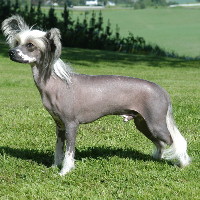
| Despite the name, Chinese Crested Dogs don't come from China and are thought to have originated in Africa or Mexico. There are references to the African Hairless Terrier in the 19th century, but also genetic evidence of their link to the Mexican Hairless, so there's some debate. However, the Chinese used them aboard ships from the 1530s to catch rats. The breed has also been called the Chinese Hairless, Chinese Comestible Dog, Chinese Ship Dog and Chinese Royal Hairless. They are either hairless or shaggy with long, soft hair. The Chinese Crested Dog was officially recognized by the Kennel Club in the UK in 1981 and by the American Kennel Club in 1991. Most of today's Chinese Crested Dogs can be traced back to burlesque dancer Gypsy Rose Lee and her sister June Havoc, who gave her a rescue dog named Fu Man Chu, prompting them to start breeding the dogs. | ||
 |
||
| Standard of the Chinese Crested Dog | ||
A little of the Jack Russell Terrier |
||
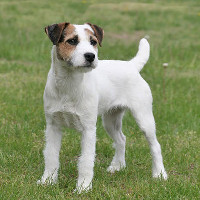
| The Jack Russell Terrier is a small Terrier that was developed in England around 200 years ago to hunt foxes by Parson John Russell. He bought a small white and tan female Terrier named Trump, which became the basis of his breeding program to develop a Terrier with high stamina for hunting. To this day, they are considered small dogs with big attitudes. Russell wanted a Terrier that would hunt with dogs, chasing foxes from their dens so the dogs could chase them. The Jack Russell was a favorite of horse hunters. In England, longer-legged dogs are called Parson Russell Terriers and shorter-legged dogs are called Jack Russell Terriers. The Jack Russell Terrier Club of America considers the Jack Russell Terrier a hunting dog and maintains an independent registry. The American Kennel Club officially recognized the Parson Russell Terrier in 1997. | ||
 |
||
| Standard of the Jack Russell Terrier |
Appearance of the China Jack |
| China Jacks are small dogs that can vary according to the parent breed they most closely resemble. Colors are usually white, black, brown and red, but coats can be long and soft like a Chinese Crested or Hairless Dog. They could also be smooth like a Jack Russell Terrier, rough or broken, which is a combination of smooth and rough. Chinese Crested Dogs are finely boned, exotic-looking dogs, while Jack Russell Terriers are solid and robust. Chinese Crested Dogs have elongated, hare-like feet and almond-shaped eyes with an alert expression. They have large, erect ears on their heads. A Jack Russell Terrier's eyes are dark, bright and almond-shaped, while their ears are small and triangular, falling forward. They are strong, muscular dogs. |
Temperament of the China Jack |
| China Jacks are loving and affectionate, and make excellent pets. Because of their small size, children will need to be supervised around them so as not to hurt them with rough play, but both parent breeds are playful and get along with children, so they should too. Jack Russell Terriers can be aggressive with other dogs, but early socialization will help. None of the parent breeds are easy to train, especially Jack Russell Terriers, which can be very stubborn but are intelligent and love to play. Your dog will need plenty of exercise and physical activity to be happy and content, otherwise he could become destructive. Both parent breeds love to dig, but as long as they're entertained and mentally stimulated, this should keep those inclinations at bay. Neither breed likes to spend too much time alone, so your dog won't suit someone who works all day. |
Needs and activities of the China Jack |
| Again, this will depend on which parent breed your dog takes to most, as Jack Russell Terriers need plenty of exercise while Chinese Crested Dogs are happy to spend time in the house with their owners and sometimes use their extended feet to cuddle. Daily walks are a good idea, as is plenty of playtime for mental stimulation. Outdoors, it will be preferable to have your dog on a leash due to the hunting instinct of the two related breeds, which will probably drive them to chase prey. Your China Jack will do best indoors with a fenced yard where he can play, but one that should be impossible for him to jump over or dig through. Both parent breeds are sensitive to the cold, so don't leave them outside when the temperature drops. |
Maintenance of the China Jack |
| Depending on your dog's coat, the amount of grooming he needs will depend. Those who take after a Jack Russell Terrier require relatively low maintenance, although regular brushing is necessary as the Jack Russell Terrier sheds a lot and this will help remove dead hairs. If your dog takes after a Chinese Crested Dog, it will need daily brushing to avoid mats. The hairless variety will need sunscreen when out and about, and will also need a skin moisturizer. They will also need to bathe regularly. Chinese Crested Dogs are considered hypoallergenic, so they're good for allergy sufferers. Try to brush your dog's teeth every day and check for dirty ears. Nails should also be checked to see if they need trimming, as a long nail will curl towards the foot pad or can break easily. |



 English (United Kingdom)

Comments