
 |
Chin-wa |
|
He is not recognized by the F.C.I. |
Origin |
China <> Mexico -> U.S.A. | |
Translation |
Francis Vandersteen | |
This breed is also known as |
Chi-Chin |
A brief presentation of the Chin-wa |
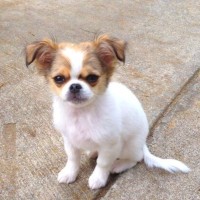
| The Chin-wa is a cross between a Japanese Spaniel and a Chihuahua, so it will adopt the characteristics of both parent breeds. Chin-wa dogs are small toy breeds that are very sociable and enjoy being with people. They are usually brown, red, cream, black, white and gray, and their coats can be short or long and straight. They don't need much grooming and don't need to be brushed more than once a week. They don't need much exercise either, but love to play. They can be stubborn when it comes to training. The breed can have erect or floppy ears. |
History of the Chin-wa |
| The Chin-wa is a combination of a Chihuahua and a Japanese Spaniel. Often, these dogs are bred to produce a smaller or hypoallergenic version of a popular breed. In this case, it introduces the friendlier nature of the Japanese Spaniel to an often aloof Chihuahua. |
A little of the Japanese Spaniel |
||
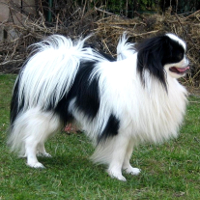
| Despite its name, the Japanese Spaniel's earliest origins lie in China. Believed to have originated in the Chinese imperial court, they were highly prized and often given as gifts. Some historians believe that the Pekingese, which also has its origins in China, was developed from the Japanese Spaniel, also known as the Japanese Spaniel. In Japan, dogs were restricted to those of royal blood. There is evidence that the first Japanese Spaniels were given as gifts by the Emperor of Japan to an American naval officer, Commodore Matthew Perry, in 1853, when he sailed into the port of Uraga near Edo, now Tokyo, and introduced Japan to international trade. He was apparently given seven dogs, two of which survived to return to the USA, where some of the owners included President Franklin Pierce, then Secretary of War Jefferson Davis, and Perry's daughter Caroline Perry Belmont. They were officially recognized by the American Kennel Club in 1888. | ||
 |
||
| Standard of the Japanese Spaniel | ||
A little of the Chihuahua |
||
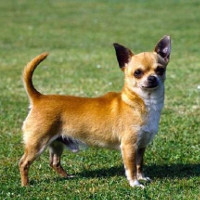
| The Chihuahua originated in Mexico and is the smallest breed of dog. The Toltecs, who date back to the 9th century, had dogs called Techichi and are said to be the ancestors of the Chihuahua. The small dogs were used as hot water bottles and sold as food. The Chihuahua is thought to be the result of crossing the Techichi with the small hairless dog brought from Asia to Alaska on what is now the Bering Strait. The American Kennel Club registered the breed in 1904. | ||
 |
||
| Standard of the Chihuahua |
Appearance of the Chin-wa |
| The Chin-wa is a cross between a Japanese Spaniel and a Chihuahua. They are toy breeds, rarely weighing more than 4 kilos and measuring around 28 centimeters in height. They are generally brown, red, cream, black, white and gray, and their coats can be short or long and straight. The tail usually curls over the dog's back. The eyes are often large, as both parent breeds are known for their expressive eyes that dominate the face. The head is often apple-shaped like the Chihuahua, and may be adorned with ears that are more floppy like the Chin, or erect like the Chihuahua. |
Temperament of the Chin-wa |
| A Chin-wa is likely to adopt many traits of the parent breeds and is therefore likely to make an excellent pet, preferably with older children. They are alert and loyal and like nothing more than to be with the family, so should not be left alone for any length of time. Because of their stubborn tendency, Chin-wa should be trained and socialized from an early age to avoid problems forming later on. The breed doesn't need much exercise to stay fit and healthy, but a walk twice a day for fresh air and play sessions will also keep your pet happy and mentally stimulated. Happy to live in an apartment, your hybrid will need to be taken out daily. They're lively dogs who like to do tricks, so they need to be encouraged. They are good with other animals, provided they are socialized early and make good pets for new owners. |
Needs and activities of the Chin-wa |
| Your Chin-wa won't need much exercise to stay happy and healthy, but it may bark if bored. It will also be good for socialization opportunities. They should be walked on a leash as they are quite stubborn and won't necessarily come when you call them. These dogs are very good for apartment dwellers as they are happy with indoor play sessions and will enjoy playing with their toys. They don't like the cold, so make sure they're warm in winter and not left outside for any length of time. |
Maintenance of the Chin-wa |
| None of the parent breeds are hypoallergenic, so your Chin-wa won't be either, which is something to bear in mind if there are allergies in the family. Your dog needs moderate grooming to keep it looking good and not shedding much, although whether it has short or long hair will also affect this. Your pet shouldn't need brushing more than once a week, but it stimulates the skin and keeps the coat healthy when you do. Smaller breeds may have teething problems and are prone to tooth decay, so it's best to brush their teeth every day. Start when your Chin-wa is young and he won't mind the short cleaning routine at all. The same goes for nails: trim them often and your hybrid will be used to the regime. |



 English (United Kingdom)

Comments