
 |
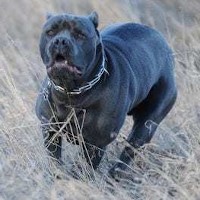
Blue Blood Cane Corso |
|
He is not recognized by the F.C.I. |
Origin |
U.S.A. <> Italy -> U.S.A. | |
Translation |
Francis Vandersteen | |
This breed is also known as |
Alapaha Corso |
A brief presentation of the Blue Blood Cane Corso |
| The Blue Blood Cane Corso is a hybrid of the Alapaha Blue Blood Bulldog and the Cane Corso. The two parent breeds are very similar in size and temperament. The Alapaha originated in southern Georgia in the United States. The Otto, as the Alapaha was often called, was the product of a line of dogs bred by Papa Buck Lane. The Alapaha can be traced back to the English Bulldog and was bred for security and companionship. It is said to be very loyal and protective of its family. The Alapaha is a rare breed, which makes the Blue Blood Cane Corso hybrid even rarer. The Cane Corso Italiano was bred for hunting big game, especially wild boar. The Cane Corso is generally even-tempered and highly trainable. The Cane Corso is generally an excellent companion, requiring minimal maintenance and a moderate amount of exercise. Because the Alapaha Blue Blood Bulldog and the Cane Corso have many characteristics in common, it's not unreasonable to believe that the Blue Blood Cane Corso will be a perfect blend of the two parent breeds. |
History of the Blue Blood Cane Corso |
| The two parent breeds are very similar in their use. They make great companions and watchdogs. They are much better with children than other Bulldog-type breeds. Both parent breeds are quite rare, and the Blue Blood Cane Corso is even rarer. |
A little of the Alapaha Blue Blood Bulldog |
||
| The rare Alapaha Blue Blood Bulldog breed originated in Rebecca, Georgia in the USA in the 1800s. Papa Buck Lane wanted to revive a breed of dog known as the Southern Georgia Plantation Dog. The dog was a great guardian and was also excellent as a hunter. According to Buck's granddaughter, Lana, only one Otto was needed as he did the work of several dogs. Otto was the father's name that Papa Buck Lane used to start breeding Alapaha, and the nickname stuck. Lana Lou Buck took over her grandfather's breeding program until his death in 2001, after which the kennels were sold. | ||
 |
||
| Presentation of the Alapaha Blue Blood Bulldog | ||
A little of the Italian Corso dog |
||
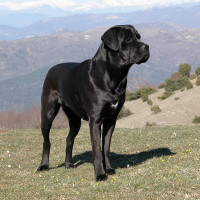
| The Italian Corso dog is a breed related to Mastiff-type dogs. It was developed in Italy from Roman war dogs. This canine breed was bred for hunting, guarding property and working with livestock. The first litter of Corsos was brought to America in 1988. | ||
 |
||
| Standard of the Italian Corso dog |
Appearance of the Blue Blood Cane Corso |
| The Alapaha Blue Blood Bulldog has distinctive features that set it apart from other Bulldog-type dogs. It is described as an exaggerated Bulldog with a broad head and muscular, robust body. The Alapaha's coat is short and stiff. It is usually blue merle, brown merle, red merle with white or chocolate and white trim. An exceptional physical characteristic of the Alapaha is its eyes. The Alapaha will often have glass eyes (blue) or marble eyes (brown and blue mixed in one eye). This breed also has cat-like paws. The Cane Corso has a short, stiff coat, so it's likely that the offspring will also have a short, stiff coat. The Cane Corso varies in color from black, gray, red or fawn. Some Corsos have a brindle pattern. The color of the Blue Blood Cane Corso will vary. He will be tall and muscular with powerful jaws and a broad skull. It may or may not have the glass eyes characteristic of the Alapaha, it may show the marble eyes that are also remarkable for the Alapaha. |
Temperament of the Blue Blood Cane Corso |
| The Alapaha is a superb guardian. It is conscientious and easily trained. It will fight to the death to defend its family, but is gentle with children. It's important to maintain a relationship with the Alapaha in which you are the leader of its pack. It is extremely loyal to its family and very protective. The Cane Corso is highly intelligent, but can be authoritarian. He needs a confident, firm and consistent handler who will be calm and quiet when giving orders. This is not an aggressive dog with the right training. In fact, they are normally docile and affectionate with all their family, including children. However, they need to be socialized from an early age. The Cane Corso can suffer from separation anxiety, so it's a good idea when he's younger to give him some time alone, perhaps in a fenced yard, so he learns that he'll be fine on his own and that his family will return. Given the personality traits of both parent breeds, it's likely that the Blue Blood Cane Corso will need early socialization in order to learn how to act properly or react to various situations. It will also need a firm, consistent and gentle handler who will always be calm when carrying out commands. He will be highly intelligent and alert, very loyal and protective of all family members. He may have a tenacious streak. Consistency is the key to maintaining a good relationship with the Blue Blood Cane Corso. |
Needs and activities of the Blue Blood Cane Corso |
| The Alapaha Blue Blood Bulldog parent breed needs a moderate amount of exercise. It will do well in an apartment if given sufficient daily exercise. Bulldogs tend to become inactive indoors, so you'll need to start some activity. The Cane Corso should never be allowed to be tied up or put on a chain. However, he does need sufficient physical activity to stay healthy. It should be walked twice a day, morning and evening. The Cane Corso also needs mental stimulation in addition to physical activity. He's always good at herding cattle, which is an excellent way of stimulating mental activity. You can also work with him on obedience commands or learning tricks. Considering the needs of each parent breed, the Blue Blood Cane Corso will probably need at least an hour of activity a day. He'll need both physical activity and mental stimulation. It's not a good idea to leave your Blue Blood Cane Corso tied up; it will need a secure, fenced-in yard to move around in. This will also ensure that any animals that may wander onto your property don't come into contact with your dog. |
Maintenance of the Blue Blood Cane Corso |
| The Blue Blood Cane Corso is likely to have a short, wiry coat, like both its parents. The Cane Corso is a dog that sheds a lot, so owners need to be prepared for this. In fact, it's likely to shed a lot at least twice a year. Weekly brushing with a stiff brush is recommended. Only bathe your Blue Blood Cane Corso when necessary, as you risk stripping the natural oils from its coat. You should brush your pet's teeth at least three times a week; however, if you want to prevent gum disease, brush your dog's teeth every day. Trim your dog's nails every two weeks. As a general rule, if you hear your dog's nails clicking on the floor, it's time to trim them. |



 English (United Kingdom)

Comments