
 |
American Bullweiler |
|
He is not recognized by the F.C.I. |
Origin |
U.S.A. <> Germany -> U.S.A. | |
Translation |
Francis Vandersteen | |
This breed is also known as |
Rottbull |
A brief presentation of the American Bullweiler |
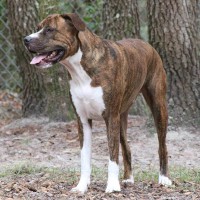
| Intelligent and observant, the American Bullweiler is a hybrid of the American Bulldog and the Rottweiler. Since this breed is a hybrid, dogs will inherit physical and behavioral traits from either the American Bulldog or the Rottweiler. This breed is strong, muscular and athletic, ready to please its family in any way it can. It's not known when the American Bullweiler was developed, but it's suspected that the breed became popular when there was an increase in cross-breeding in general. The American Bullweiler makes a great watchdog as well as a loving companion to his family. The American Bullweiler's appearance features a sturdy, muscular build with a short, smooth coat. The head is large and rounded, with a prominent muzzle. The face and neck areas contain wrinkled skin, the eyes are dark brown and alert, and the soft ears fall to the sides. The American Bullweiler is a people pleaser and craves affection. Because of its short coat, the American Bullweiler has an easy-to-maintain grooming routine. The American Bullweiler is full of energy and requires active exercise to keep happy and healthy. |
History of the American Bullweiler |
| While the American Bullweiler is a fairly recent hybrid, little is known about its origin or history. The American Bullweiler comes from the two breeds American Bulldog and Rottweiler. The American Bullweiler originated in the United States, but the exact state is unknown. The original purpose of this passionate animal was to serve as a guard dog against intruders and also as a loving companion. The American Bullweiler is thought to have gained in popularity around the same time as specific cross-breed dogs began to trend. Both the American Bulldog and the Rottweiler are known to be stubborn in training and require patience on the part of the owner when in obedience mode. The American Bullweiler is currently registered with the Dog Registry of America (DRA). The American Bullweiler cannot be registered with the AKC due to its crossbreed status. |
A little of the American Bulldog |
||
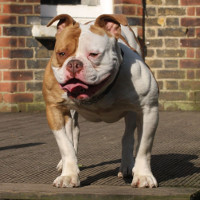
| The American Bulldog was developed as a general-purpose farm dog in the southern United States, with a specialty in catching pigs and cattle. The breed is a direct descendant of the old English Bulldog, now extinct, and is widely regarded as the modern breed in appearance, temperament and use closest to its ancestor. The American Bulldog was almost extinct by the middle of the 20th century, but was revived by the efforts of two breeders, John D. Johnson and Alan Scott, who subsequently developed two distinct lines that were named for them. In recent years, the American Bulldog has experienced a massive increase in popularity and is one of the fastest-growing breeds in the USA. Many have classified this breed as a type of Pit Bull, a member of a group of dogs collectively known as Bully Breeds, but this is totally inaccurate and regarded with great distaste by the vast majority of lovers of both American Bulldog and American Pit Bull Terrier. The two varieties of American Bulldog are sometimes referred to as Southern White, Old Southern Whites and American Pit Bulldogs. The Scott type is also known as the Standard or Performance type, and the Johnson type is also called the Bully or Classic type. | ||
 |
||
| Presentation of the American Bulldog | ||
A little of the Rottweiler |
||
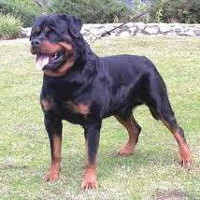
| The Rottweiler is part of the Roman Mastiff line of dogs that accompanied the Romans on their northern conquests. Mastiff cattle dogs were bred to herd livestock, which were mobile food resources for invading Roman forces. Roman Mastiffs mated with native dogs and became the foundation of the Rottweiler in Germany. A Roman settlement in Germany was discovered some 600 years after the invading forces had passed through, following the discovery of red tiles on a site, red tiles were used on the roofs of Roman villas. The site became known as Rote Wil, and the cattle breeders of the area were later christened Rottweiler in homage to the region they had developed over those 600 years. Rottweilers continued to thrive in Germany until the 19th century, when they were almost threatened with extinction, but the breed was saved and returned to popularity as a police and guard dog. Today, the Rottweiler is one of the twenty most popular breeds. | ||
 |
||
| Standard of the Rottweiler |
Appearance of the American Bullweiler |
| The physical appearance of the American Bullweiler will vary according to the litter. Some American Bullweilers may inherit more traits of the American Bulldog, while other American Bullweilers may inherit more traits of the Rottweiler. The breed is considered a large dog with a solid body. The American Bullweiler's appearance contains a muscular constitution. Like the American Bulldog, it has a short, dense coat and a full-sized tail. Its short, rounded muzzle is prominent with a large, rounded head, the face and neck areas contain wrinkled skin and the eye color is dark brown. Soft ears may fall to the side. Some common color variations found in the American Bullweiler include black, gold and red with white markings on chest, neck and feet. His head is Rottweiler-like, blocky and deep, with a black nose. His ears are semi-erect. The American Bullweiler has a scissor bite. It has slender hindquarters and muscular forelegs enabling a powerful, strong gait. This breed stands on feet that are generally webbed and rounded. |
Temperament of the American Bullweiler |
| The American Bullweiler is described as an affectionate, fun-loving breed with lots of love to offer. Early training and socialization should be provided to prevent your American Bullweiler from becoming an individual companion and to avoid excessive barking. The breed is full of energy and will engage in playful exercise. The American Bullweiler is also an excellent watchdog, protecting its family from danger. American Bullweilers like to keep active, with fitness activities and regular exercise. The American Bullweiler is a confident, intelligent breed that develops quickly by learning training techniques. The breed is known to be fearless and loyal to its family, working well with children too, as long as early socialization is assured. Naturally good-natured with other pets, cohabitation will go particularly well if there has been an early introduction between housemates. The American Bullweiler may display protective behavior against strangers if they are close to its territory, although if trained correctly, there should be no unfounded aggression. The American Bullweiler is easy to train, as it is an eager breed ready to take on new tasks. The energy levels of this devoted dog are described as high, and he needs to be engaged in activity often to stimulate his physical and mental self. |
Needs and activities of the American Bullweiler |
| The American Bullweiler is a breed with high energy levels, which means the breed needs plenty of space for movement and extra exercise on a regular schedule, which will be enthusiastically met by your dog. It is recommended that the American Bullweiler be given up to an hour of exercise a day due to its energetic temperament. It's best suited to engaging the American Bullweiler in intense play and long walks. If a secure space is available, the American Bullweiler loves to wander and explore. This breed would do best in a large house with a yard or spacious grounds on which to roam. The American Bullweiler would be able to live in urban or rural areas as long as it is provided with mental and physical stimulation. Extreme weather conditions are acceptable for this dog, but it should not live anywhere where there is extreme heat, as constant exposure can lead to overheating, a risk in the American Bulldog breed. |
Maintenance of the American Bullweiler |
| The American Bullweiler is not a hypoallergenic breed and sheds from time to time. The short coat makes for an easy grooming routine. Brushing your dog daily with a rubber curry brush should remove all dead hair while bathing. We recommend doing this every 6 to 8 weeks, if necessary. If you bathe him too often, your American Bullweiler will have an excessively greasy coat. This breed is not known for drooling or significant odor. It's essential to watch your hybrid's ears for dirt build-up and clean them weekly to avoid infection. Nails should be trimmed every 2-3 weeks to prevent overgrowth, which can cause nail breakage or tearing. Teeth should be brushed regularly to maintain oral hygiene. |



 English (United Kingdom)

Comments