
 |
Pugmatian |
|
He is not recognized by the F.C.I. |
Origin |
China <> Croatia -> U.S.A. | |
Translation |
Francis Vandersteen |
A brief presentation of the Pugmatian |
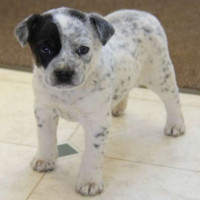
| The small, boisterous Pug and the lean, playful Dalmatian have joined forces to create the gentle Pugmatian, an affectionate pet that loves to interact with the whole family. Most Pugmatians are more like Carlins, with their wrinkled faces and small stature, although their Dalmatian ancestry is often apparent in their coats with black spots on the fur. Good socialization and consistent training can produce a balanced, loyal dog, although some people may develop separation anxiety. With moderate physical activity and a sensible head on its shoulders, the Pugmatian is a good pet for families with children. |
History of the Pugmatian |
| An extremely rare mix, it's unlikely you've ever met a Pugmatian, a cross between a Pug and a Dalmatian. It's thought that this cross has only been around for 10 or 20 years, and there are very few of them in the world. With only a brief and limited history available for Pugmatians, we can turn to their parents to get a better idea of the lives of their ancestors. |
A little of the Pug |
||
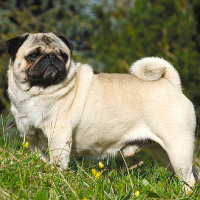
| The Pug is a breed with a long and interesting history. Their origins date back some 2,000 years to ancient China. These flat-faced dogs were a common ancestor for another instantly recognizable dog breed, the Pekingese. The Pug was introduced to Europe in the 16th century by Dutch merchants and quickly became a popular companion dog for aristocrats and royalty. Over the centuries, their appearance has changed somewhat, with the modern dog having a much flatter face than their more robust ancestors. | ||
 |
||
| Standard of the Pug | ||
A little of the Dalmatian |
||
| The Dalmatian has a somewhat controversial history, although most agree that they've been around since ancient times. Similar-looking dogs have appeared in ancient Egyptian tombs, although their name derives from a historic site in Croatia (Dalmatia). Traditionally used as "carriage dogs", Dalmatians accompanied horses and carts, be they gypsy caravans or noblemen's chariots. They would run alongside the horses, clearing the road in front of them. A versatile animal, they have also been used over the years as hunting dogs, guard dogs and even circus performers. | ||
 |
||
| Standard of the Dalmatian |
Appearance of the Pugmatian |
| Because the Pugmatian's parents are so different in appearance, there's great variability in their appearance. Generally speaking, this is a small to medium-sized breed that tends to have a face more reminiscent of its Pug parent. Their head retains the features of the brachycephalic Pug, with large brown eyes and a small, dark nose. Their skulls are rounded, and slight facial wrinkles are most visible in the forehead region. Their ears are velvety and triangular in shape, flying towards the back of their face. Unlike the Dalmatian, known worldwide for its white coat with black patches, the Pugmatian can have a wide variety of coat colors and patterns. Their short coat can be black, brown, fawn, white or sable, and may or may not have spots that can appear anywhere. Taking more after their Pug relative when it comes to size, most fully grown adult Pugmatians measure between 33 and 40 centimeters, for females there are a few centimeters less. They weigh from 9 to 13 kilos, although some individuals can be significantly heavier than that. |
Temperament of the Pugmatian |
| With both parents touted as excellent pets, the Pugmatian is an affectionate, gentle animal that thrives in the presence of people. Sometimes, their dependence on human companionship can be a problem, as they can develop separation anxiety. This means they are unsuitable for those who spend a lot of time away from home, and may be better off in a home where there's always someone around. They are friendly with people of all ages and can make fantastic little friends for children. Intelligent and curious, Pugmatians relish the opportunity to learn and be active. They benefit from all forms of mental stimulation, from canine games to outdoor agility classes. Brave, loyal and devoted to their family, Pugmatians are natural watchdogs. However, they are generally not hostile enough to make a defense dog, and should not be used for this purpose. |
Needs and activities of the Pugmatian |
| The Pugmatian needs at least 45 minutes to an hour of vigorous exercise every day. Because they're relatively small, Pugmatians can do a lot of their exercise indoors in bad weather, but they'll still need to go outside two or three times a day for a walk and a trip to the bathroom. Walking your dog every day is great exercise for both of you. Taking your Pugmatian to a dog park to play with other dogs is a wonderful way to keep him socialized. Your dog can also take part in a game of catch, play Frisbee and agility training, all of which he can do very well. |
Maintenance of the Pugmatian |
| The Pugmatian's short, fine coat means you only need to brush your dog once or twice a week with a smooth brush to keep his coat and skin healthy. In spring and autumn, it may be preferable to brush them more often to avoid excessive shedding. Their ears should be thoroughly cleaned about once a week, and their nails clipped with nail clippers once a month or as needed. You can wash your Pugmatian when it's excessively dirty, but not too often, otherwise it will dry out its skin. Be sure to dry them well to avoid irritation caused by skin folds. |



 English (United Kingdom)

Comments