
 |
Lab-Pointer |
|
He is not recognized by the F.C.I. |
Origin |
Canada <> Great Britain -> U.S.A. | |
Translation |
Francis Vandersteen |
A brief presentation of the Lab-Pointer |
| A mixed breed that was probably developed decades ago, the Lab-Pointer was created by breeding the beloved Labrador Retriever with the athletic Pointer. By retaining the gentle nature of both parents, the Lab-Pointer is now renowned for its generous nature and ability to play gently with children of all ages. A medium to large dog, the Lab-Pointer has a dense body, with good muscles and long limbs, giving it great speed and endurance. Never afraid of the activities on offer, this breed loves family outings and particularly enjoys long hikes and playing with children. |
History of the Lab-Pointer |
| When you cross a Labrador Retriever with a Pointer, you get a well-balanced, gentle and energetic breed known as the Lab-Pointer. Although its exact date of origin is undetermined, the Lab-Pointer is considered one of the specific crossbreed dogs and has probably been around for at least three decades. As the Labrador and the Pointer are very common dog breeds, it's very likely that Lab-Pointers were produced independently of each other in several parts of the world at the same time. Although both the Labrador Retriever and the Pointer are part of the AKC sporting group, the Lab-Pointer, like other crossbreeds, is not yet officially recognized by any traditional dog club. Today, Lab-Pointer mixes are used all over the world and make wonderful pets. |
A little of the Labrador Retriever |
||
| The Labrador Retriever, one of the most internationally famous breeds of all time, had its humble beginnings in the UK, and worked along the coast of Canada in the 1800s to help local fishermen. | ||
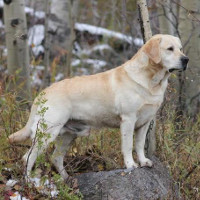 |
||
| Standard of the Labrador Retriever | ||
A little of the English Pointer |
||
| The Pointer originated on the Iberian Peninsula around 500 years ago, where it was used as a hunting dog, excelling at both tracking and pointing. Since both parents come from hard-working families, Lab Pointers aren't the type to shy away from a good old-fashioned game. | ||
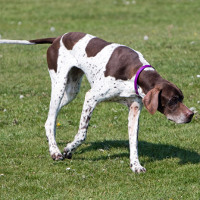 |
||
| Standard of the English Pointer |
Appearance of the Lab-Pointer |
| As with other hybrids, the initial litter produced between a Labrador and a Pointer can have a varied appearance, although the physical traits become more pronounced with each mating. As a general rule, a Lab-Pointer is a well-built, medium to large-sized dog with good muscles and a supple gait. Their broad, square-shaped head has pretty brown, hazel or amber eyes and a broad nose that can be brown, black or beige. Their medium-length ears roll back and rest close to their head, while their muzzle is of medium size. The Lab-Pointer's body is compact and strong, supported by long, lean limbs. Their tail is fairly thick at the base and will extend beyond the hocks once held. The Lab-Pointer's double coat tends to be thick and short. As its ancestors were made to swim, its coat is also water-resistant. This breed's coat settles moderately and can be brown, white, cream or black. Many dogs will be black with a large white patch on the chest and other white markings. Adult dogs will weigh between 55 and 80 kilos and measure between 53 and 71 centimeters. Females weigh and measure slightly less than their male counterparts. |
Temperament of the Lab-Pointer |
| The Pointer and Labrador Retriever are known for their benevolent personalities and friendly temperaments. Cross-breeding them only serves to bring out this gentle, affectionate character even more. Gentle and thoughtful, the Lab-Pointer is an ideal pet for people of all ages. Dedicated to those he loves, he shows fierce loyalty to his family, but is not hostile enough to be used as a guard dog. This breed can, however, be used as a very effective watchdog, and always barks loudly at the first sign of a newcomer. Unlike many other affectionate breeds, the Lab-Pointer does not tend to depend too much on its owner, and separation anxiety is not often seen as a problem in this independent dog. Happy in its own company, as well as with humans and other animals, the Lab-Pointer is a well-balanced, easy-going and pleasant dog. A good friend to most animals, you need to be careful if you're around smaller pets, such as rabbits, as the Pointer's natural hunting tendencies can prove too strong for the Lab-Pointer to ignore. |
Needs and activities of the Lab-Pointer |
| The Lab-Pointer is a very active breed of dog. These guys will need at least 65 to 75 minutes of physical activity a day, and will thrive in high-energy households. They're not your big resting dogs, they'll need owners who'll take them to the dog park, let them swim, play, go for runs, hikes and long walks. As they crave prey due to their hunting and retrieving history, it's important that owners provide plenty of toys that engage their pet; toys with squeaky sounds are often a dog favorite. The Lab-Pointer thrives in any environment as long as its daily activity levels are met. However, they may be better suited to rural or suburban areas where they can have plenty of space in the back. |
Maintenance of the Lab-Pointer |
| The Lab-Pointer is considered a low-maintenance breed, requiring very little grooming. These dogs shed seasonally and will need to be brushed with a special comb during the warmer months. During the rest of the year, owners may choose to brush their dogs occasionally to remove debris and fur. These guys tend to have water-repellent coats and generally only need to be bathed once or twice a month. Bathing should only be done when the animal is really dirty. Other maintenance requirements include brushing their teeth regularly at least once a week with pet toothpaste, trimming their nails if they haven't been worn down by physical activity, and regularly examining and cleaning their ears. |



 English (United Kingdom)

Comments