 |
Gordondoodle |
|
He is not recognized by the F.C.I. |
Origin |
Great Britain <> France -> U.S.A. | |
Translation |
Francis Vandersteen |
A brief presentation of the Gordondoodle |
| While the Poodle is a major player in the world of specific crossbreed dogs, the Gordon Setter is a rare breed that is not commonly mixed with other dogs. The Gordondoodle is known to be very energetic and playful, but needs a lot of guidance and can develop harmful behaviors if not sufficiently disciplined. They form strong attachments with their owners and can be very affectionate. A large dog with a lean body and long limbs, the Gordondoodle is quite the athlete. Their coat is long and usually quite curly. With a handsome face and intelligent brown eyes, it's hard not to fall in love with the Gordondoodle at first sight. |
History of the Gordondoodle |
| Not to be confused with the more popular Goldendoodle, which is a mix of Golden Retriever and Standard Poodle, the Gordondoodle is a new hybrid created by blending the Gordon Setter with the Standard Poodle. The Gordondoodle is a very rare breed that most people haven't even heard of, and which has only recently been established as a hybrid. |
A little of the Gordon Setter |
||
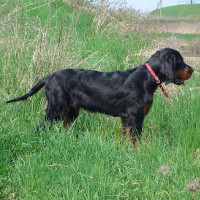
| The Gordon Setter is the largest of all Setter dogs. It has a noble appearance and a confident personality that many appreciate. The breed originated in Scotland in the 1600s, but wasn't finally named by the Duke of Gordon until the 19th century. It was then that the black and brown coat characteristics became a standard. Traditionally used for hunting, the Gordon Setter was renowned for its stamina, although it was never the fastest dog. As with other Setter breeds, these dogs will follow scent away from their master, then adopt a crouched posture once they have detected their prey, enabling the hunter to locate and then shoot the target. The Gordon Setter was mainly used to hunt poultry, such as quail and partridges. Many will hunt alone, and for some, this is the main attraction of owning this breed. Although not widely known, there is an established population of dogs and pets in several countries. | ||
 |
||
| Standard of the Gordon Setter | ||
A little of the Poodle |
||
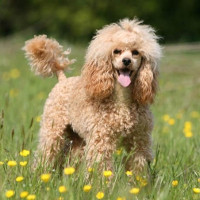
| The Standard Poodle is one of three variants of the Poodle breed, the other two being the Miniature and Toy. The Poodle is undoubtedly the most popular choice of dog for creating specific crossbreeds. This is not only because they come in three different sizes, but also because they tend to have soft fur and a gentle, intelligent nature. Poodles have been around since the 15th century and are descended from the French Barbet, a water dog. Although the Poodle is mistakenly thought to be a French breed in its own right, experts agree that it originated in Germany, where it was used for duck hunting. | ||
 |
||
| Standard of the Poodle |
Appearance of the Gordondoodle |
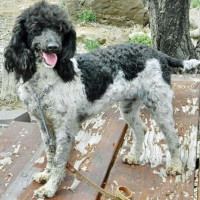
| Since the Poodle and Gordon Setter differ so dramatically in appearance, it's not surprising that the Gordondoodle is not yet uniform in appearance. Some individuals will be tall and bulky like their Setter Gordon parent, others will be shorter and of a lighter, more elegant build like the Poodle. As with other hybrid dogs, it will take several generations of Gordondoodles before their appearance is standardized. Most will have a muscular body with long limbs and are a relatively large dog. Their face and muzzle are long and square, and their lips may or may not show a degree of playfulness. Their eyes will be almond-shaped and dark brown, giving them a pensive, calm expression. They have long ears that are often covered with wavy fur and hang behind their chin. Their chest is deep and they should have a visible abdominal fold. Their tail is long and fairly straight, sometimes held aloft during exercise or when excited. The Gordondoodle's mantle can be medium or long, and usually lies somewhere in the middle between wavy and curly. Feathering on the hind legs and tail is possible. While the Gordon Setter is never just black and brown, the Poodle can be composed of several colors, including apricot, white, gray, red, black and cream, and the Gordondoodle can take on one after another of the parents' colors. White spots are not uncommon. |
Temperament of the Gordondoodle |
| Gordondoodles have an attractive personality, but need an experienced owner to bring out the best in them. They maintain close ties with their family and can become over-dependent, especially if they don't receive enough physical and mental stimulation in their daily lives. Assertive and affectionate with its family, the Gordondoodle is a well-balanced, calm companion. Thorough socialization is necessary for Gordondoodles to accept other animals in the home, and it's not always possible for them to coexist with other dogs. Ideally, Gordondoodles should be introduced to all other animals when they are puppies, as this will increase their chances of getting along well. Gordondoodles are very good watchdogs and like to bark to warn of intruders. To prevent them from becoming wary and aloof around family friends, these dogs need to be exposed to all kinds of people from an early age. Playful and sometimes cheeky, Gordondoodles welcome the chance to take part in any game or sport, and enjoy spending time outdoors and in nature. If they stay at home too long, they can start to feel cooped up and may begin to misbehave and develop harmful behaviors. |
Needs and activities of the Gordondoodle |
| It would be unwise to underestimate the exercise needs of this boisterous breed, and owners will need to provide them with at least an hour and a half of activity a day. Gordondoodles love to swim and hike. They enjoy being taken on different trails and can get bored of the same scenery every day. They need lots of space and would ideally have a back garden where they could run around without leaving tracks. |
Maintenance of the Gordondoodle |
| Although the Poodle is classified as hypoallergenic, when crossed this trait is not always inherited and some Gordondoodles will shed a reasonable amount of hair. Their coat is dense and will require good brushing several times a week, concentrating on the feathers to avoid tangles. The Gordondoodle's pendulous, hairy ears create an ideal environment for the development of bacteria and yeast. So you need to keep them clean and dry at all times. A veterinary ear cleaner should be used two or three times a month for ears prone to waxing. |



 English (United Kingdom)

Comments