 |
Great Bernese |
|
He is not recognized by the F.C.I. |
Origin |
France <> Switzerland -> U.S.A. | |
Translation |
Francis Vandersteen |
A brief presentation of the Great Bernese |
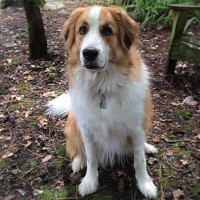
| Great Berneses are big, stoic, striking dogs. They are quite active and like to be surrounded by family members. Great Berneses generally live to 12 years of age, weighing between 32 and 52 kilos. At maturity, they can measure between 61 and 71 centimeters. Great Berneses have a long, full coat that comes in tricolored variations of white, black and brown or red. They can also be beige with badger markings, gray, reddish brown and tan. This large, specific crossbreed is known for being well-mannered and calm, although not very popular. And while both its parent breeds are recognized by the American Kennel Club, the Great Bernese is not. |
History of the Great Bernese |
| The Great Bernese takes its name from its parent breeds: the Bernese Mountain Dog and the Pyrenean Mountain Dog, both of which have long and interesting histories. The mating of these two parent breeds has produced a very large, loyal dog that has been bred since the mid-1900s. |
A little of the Pyrenean Mountain Dog |
||
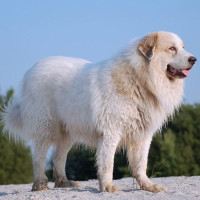
| The Pyrenean Mountain Dog is closely related to the Kuvasz and is thought to have been in Europe since the Bronze Age. However, this majestic dog first developed in Central Asia or Siberia, then traveled to the Pyrenees region between France and Spain. This intelligent breed was first used for sheep breeding, but was later declared the royal dog of France, where it was employed as a guard dog for the French elite. Internationally, Canada began importing the Pyrenean Mountain Dog to breed with other large dogs, as did the United States. In 1933, it joined the roster of the American Kennel Club. | ||
 |
||
| Standard of the Pyrenean Mountain Dog | ||
A little of the Bernese Mountain Dog |
||
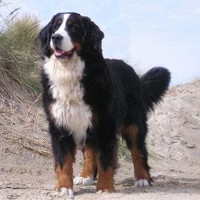
| The Bernese Mountain Dog originated in the central regions of Switzerland, where it has worked on farms for centuries. It is one of four varieties of Swiss mountain dog and shares a similar distinctive coloration with other varieties, however, it is the only long-haired and silky variety. The first Bernese Mountain Dog was brought to the USA in 1926 and received recognition from the American Kennel Club shortly afterwards in 1937. | ||
 |
||
| Standard of the Bernese Mountain Dog |
Appearance of the Great Bernese |
| The Great Bernese is a large dog with a regal presence. They generally weigh between 32 and 52 kilos. At maturity, Great Berneses measure between 61 and 71 centimeters. They have robust, muscular builds that are hidden beneath their long, ample coats. The coat is generally straight, thick and rough, and comes in tricolored combinations of black, white, brown or rust. Some Great Berneses are beige with badger, gray, reddish-brown or tan markings. This breed also has a dense, woolly undercoat, which is usually a basic white or beige color. Their ears are medium-sized, soft and triangular with a rounded tip. Great Berneses have dark brown, almond-shaped eyes, and a strong, straight muzzle with a scissor bite. This breed also has a long, feathered tail and round, compact paws. |
Temperament of the Great Bernese |
| The temperament of this hybrid depends on the behavioral traits it inherits from both parent breeds, with some being more like Pyrenean Mountain Dogs and others more like Bernese Mountain Dogs. In general, Great Berneses are known for their calm, loyal disposition. They are gentle, affectionate and intelligent animals. This breed generally attaches itself to one person in the household, and will seek that person's attention and affection wherever possible. However, this breed gets along with other people, animals and children, and because of its large size, it needs to be supervised around very small or young companions. Great Berneses are also natural watchdogs. As a result, they can be territorial and vocal if they perceive a threat. However, they are not known for being aggressive. They can also be playful, but prefer to romp outside in the cool rather than indoors. Indoors, they like to lounge around the house with "their person" or other family members. |
Needs and activities of the Great Bernese |
| Great Berneses have plenty of energy and need daily exercise to stay healthy. They don't like to play indoors. This breed much prefers walking or hiking in cool conditions. In fact, the Great Bernese does better in colder climates because of its thick coat and undercoat. Depending on their personalities, they can even enjoy the occasional romp in the dog park. Beyond that, they love to stay indoors and watch family members or "guard" the house. Because of its size, the Great Bernese needs plenty of space, both indoors and out, and is best suited to larger homes in suburban or rural areas. |
Maintenance of the Great Bernese |
| The Great Bernese sheds all the time, with intense episodes at the change of season. Frequent brushing with a pin or smoother brush can control shedding to some extent, but it's important to remove the inevitable mats and tangles in this dog's long coat. Great Berneses need only an occasional bath, but should have their teeth brushed daily and their nails trimmed once or twice a month. Diligent dental care is particularly important for this breed, as it is prone to severe plaque build-up. Owners may consider using a dental rinse in their dog's water to prevent dental and gum infections. Beyond that, Great Berneses should have their ears checked regularly for wax build-up and debris to avoid infection. |



 English (United Kingdom)

Comments