
 |
Bea Tzu |
|
He is not recognized by the F.C.I. |
Origin |
Great Britain <> Tibet -> U.S.A. | |
Translation |
Francis Vandersteen |
A brief presentation of the Bea Tzu |
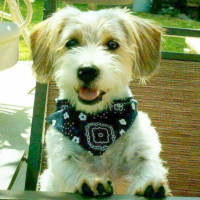
| A cute little scruffy, the Bea Tzu is a specific crossbreed dog with a confident, cheeky personality. Taking more from its Shih Tzu parent than its Beagle parent in the looks department, don't be fooled, as the Bea Tzu is by no means a pocket dog and can be quite energetic and boisterous. Many Bea Tzus will be brown and white, but they can display a number of coat colors, including gray and cream. They have melancholy brown eyes and large, floppy ears, giving them a face that's hard to resist when they ask for treats. |
History of the Bea Tzu |
| A recently developed crossbreed, the Bea Tzu is a blend of the Shih Tzu, a loyal, placid dog, and the Beagle, an energetic, confident hunting dog. In the world of canine hybrids, there are few limitations, and although these are two very different breeds, it's a mix that works well. The first Bea Tzu is thought to have been developed at the end of the 20th century, at a time when breeders were creating large numbers of specific cross-breed dogs to determine which crosses would work best. |
A little of the Beagle |
||
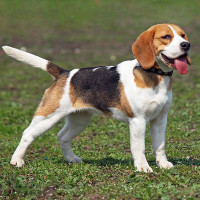
| Beagles were developed more recently. While similar dogs already existed in the 1400s, the modern Beagle we recognize today was first created in the 19th century. Breeders wanted to create an obedient hunting dog with a sense of smell capable of hunting prey such as rabbits and foxes. While larger breeds, such as the Foxhound, would have been accompanied by hunters on horseback, the shorter Beagle was better suited to those hunting on foot. The Beagle is a popular breed in Europe and the USA, and although some continue to work in the field, most are kept as pets. Versatile pets, they also excel in other roles and are commonly used as sniffer dogs by police and bomb squads. | ||
 |
||
| Standard of the Beagle | ||
A little of the Shih Tzu |
||
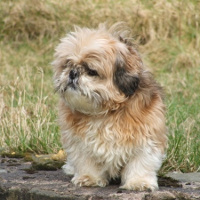
| The Shih Tzu is one of the oldest breeds still in existence, dating back some 3000 years. They are a Tibetan breed with close ties to the ancient monks who inhabited the region. They have always been highly revered and held an important place in society, being regarded as companions and friends. Breeds such as the Lhasa Apso and Pekingese probably contributed to the Shih Tzu's genetic make-up, and the physical similarities are undeniable to this day. Although Shih Tzus have been popular in Asia for centuries, it wasn't until the early 1900s that they made their way to Europe. Here, their popularity quickly soared as people came to appreciate their loyalty and good nature. The Kennel Club placed the Shih Tzu in its utilitarian, non-sporting group, and the first Shih Tzu was shown in England in 1933. | ||
 |
||
| Standard of the Shih Tzu |
Appearance of the Bea Tzu |
| The Bea Tzu is not immediately recognizable as a descendant of the Beagle, due to its longer, denser coat. However, traces of the Beagle can be seen in their large, pendulous ears and round, dark-brown eyes. Their muzzles should be longer than those of the Shih Tzu, and they are both taller and heavier. Their bodies are fairly long and stocky, and their limbs are rather short. Their tail is of medium length and can be carried high over the back or even curled into an elegant plume of fur. Bea Tzu have a long to medium coat that tends to be longer on the face than on the body. Many individuals will be brown and white or black and white, but shades of brown, cream and gray can also be seen in the breed. Solid colors are uncommon, and most will be bicolored or tricolored. Their fur doesn't shed much. A small dog, an adult Bea Tzu will measure from 25 cm to 38 cm at the withers and weigh between 7 and 11 kg. |
Temperament of the Bea Tzu |
| A good choice for a family that likes to keep active, Bea Tzus are friendly and a lot of fun. They will form close bonds with all members of the family, and are often particularly docile and tolerant when surrounded by children. However, as they can be very energetic, it may be best to wait until very young children are a little older before taking on this breed. As well as being sociable with people, they enjoy the company of other dogs and tend to thrive in multi-pet households. Although rarely hostile or aggressive, these dogs are extremely loyal and will always be on the lookout for intruders. They will bark loudly when someone arrives, but should quickly shut up if told to do so. |
Needs and activities of the Bea Tzu |
| Bea Tzu dogs are moderately active and like to play. They'll enjoy a daily walk or a visit to the dog park, but won't need much special exercise. A yard is not mandatory for this dog, as long as they have the opportunity to go for a walk or burn off some steam by interacting with other dogs and people. They love to play, jump and run, so if you have a yard, make sure it's well fenced. As far as environment is concerned, this hybrid can live in a house as well as an apartment, and will adapt to urban or rural life with no problem, as long as it stays with its beloved family. |
Maintenance of the Bea Tzu |
| The Bea Tzu needs constant grooming to keep its coat tangle-free. Daily brushing with a firm brush will help solve any problems, while an occasional trip to the groomer may be necessary for a quick trim. Their hair grows quite fast, but they don't need to be stripped, although the longer hairs on their face need trimming to stay clean. Bathing should only be done when they really need it. When bathing, use an appropriate dog shampoo that's gentle on the skin, to avoid allergies. In addition to coat care, they need their nails trimmed if they don't wear them out, but take care not to cut into the bloody part of the nail. Wipe the inner ear with a soft, damp cloth, and brush his teeth about three times a week to keep your Bea-Tzu in excellent health. If you train them young to get used to the grooming process, you'll find that they'll love the time and attention you give them. |



 English (United Kingdom)

Comments