Beabull

He is not recognized by the F.C.I.

Origin
Great Britain -> U.S.A.
Translation
Francis Vandersteen

A brief presentation of the Beabull

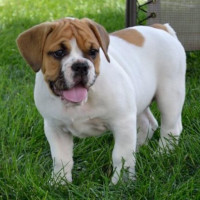
The Beabull is a cross between a Beagle and an English Bulldog. It combines both the temperament and physical appearance of its parents. In terms of appearance, they are barrel-shaped, rough with floppy ears, a long muzzle and undershot mouth. In terms of personality traits, their friendly, lovable nature is disturbed only by their somewhat false and obstinate manner. Beabulls are generally even-tempered dogs, loyal to their families and fond of children and other pets. They are not very active, but have occasional bursts of energy. They are healthy, patient and playful dogs. Although they are a good dog, they are probably not the best choice for new owners, as they can be stubborn.

History of the Beabull

While the history of Beagles and Bulldogs is more or less well defined and dates back to the 19th century, the history of Beabulls is interchangeable with that of their parent breeds. This cross-breed probably appeared in the USA in the 1990s, but details of its origins are not fully known. They were designed to be pets, taking advantage of the gentle nature of Beagles, as well as the tenacity and strength of Bulldogs. The Beagle was created to be a hunting dog and, as a result, has a well-developed sense of smell. Bulldogs were used to bait bulls and bears until 1835, when this sport was banned, and later for dog fighting. So they were bred to be aggressive and brave, but at the same time loyal and gentle, so that their owners could manage them safely. Later, when Bulldogs were brought to America, they were used to hunt game and guard property. The Beabull was then created from these Bulldogs and Beagles, making it a loyal and affectionate, trustworthy dog, but also sometimes impetuous and an independent thinker. Beabulls can be unpredictable in terms of appearance, depending on their parental genetic contribution. This results in dogs that look more like one or the other parent. In addition, dogs from the first generation are generally even more unpredictable, and puppies from the same litter can be very different. Beabulls are recognized as a specific crossbreed by the American Canine Hybrid Club, the Designer Breed Registry, the Designer Dogs Kennel Club, the Dog Registry of America Inc. and the International Designer Canine Registry.
        

A little of the Beagle

        
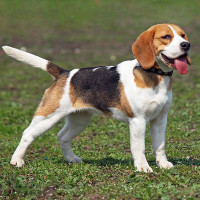
Beagles were developed more recently. While similar dogs already existed in the 1400s, the modern Beagle we recognize today was first created in the 19th century. Breeders wanted to create an obedient hunting dog with a sense of smell capable of hunting prey such as rabbits and foxes. While larger breeds, such as the Foxhound, would have been accompanied by hunters on horseback, the shorter Beagle was better suited to those hunting on foot. The Beagle is a popular breed in Europe and the USA, and although some continue to work in the field, most are kept as pets. Versatile pets, they also excel in other roles and are commonly used as sniffer dogs by police and bomb squads.
Standard of the Beagle

A little of the English Bulldog

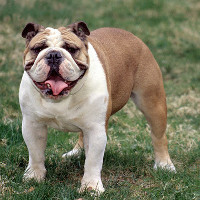
The Bulldog is often regarded as a symbol of Britain, and is one of its oldest native breeds. Originally developed for the brutal sport of bull-baiting, the Bulldog saw a change of character when it was outlawed in the 19th century. Today's Bulldog is an affectionate, bold, good-natured dog that is good with children and often protects them. The breed is sociable and generally good with other pets and loves company. The Bulldog is a medium-sized dog, relatively heavy for its size. They are not particularly active, although, as with all dogs, they should be exercised regularly to avoid becoming overweight. Because of its shortened face, care should be taken to keep dogs calm and cool in hot weather, as they can have breathing difficulties. The breed also suffers from other health problems and can be prone to skin problems, although it has a short, easy-care coat that doesn't require specialized grooming.
Standard of the English Bulldog

Appearance of the Beabull

Beabulls are medium-sized, solidly built dogs with short tails and legs. They have strong, lean bodies, soft ears and wrinkles. They are strongly undershot, like their Bulldog relative, with long muzzles and a broad, black nose. Beabulls have short, stiff hair and a thick coat, which comes in the following colors: brown, gold, white, brindle, merle, spotted, spotted. An average male Beabull weighs between 18 and 27 kilos and measures between 35.5 and 40.5 centimeters. Females are smaller, weighing 13.5 to 23 kilos and usually measuring 30.5 to 33 centimeters.

Temperament of the Beabull

In addition to their attractive appearance, Beabulls have a pleasant temperament: they're friendly, affectionate and charming. They are intelligent dogs, with an independent, mischievous streak that comes from their Beagle parent. They are strong and alert, like their Bulldog parent, playful and devoted. In short, the blend of these two interesting breeds produces an affectionate, docile and comical dog that makes an excellent family dog. They're the perfect combination of a mischievous companion who will follow his owner around all day, only to curl up beside him on the sofa. Because they tend to be obstinate, most say they're not a good dog for novice owners, as a certain degree of experience and patience are required to handle the Beabull. However, with obedience training, or a consistent, patient and firm overall approach to their training and handling, they can make excellent pets, even for the dedicated first-time dog owner. They get on well with children, with whom they are very patient, as well as with other pets, and have moderate strength that can be easily controlled. They enjoy being close to humans, are eager to please and are protective of their family. Because of their friendly disposition, they are not good guard dogs.
Like their appearance, Beabull characters are somewhat unpredictable. They are generally calm and don't require much exercise. However, they can have bursts of energy, almost hyperactive, often displaying rough behavior when playing with other dogs and people. They can sometimes play too rough and aggressive. This behavior should be corrected when they are still puppies, as they are strong, robust dogs in adulthood. The best approach to these biting games, which can include nipping, play-fighting or even strong biting, is simply not to participate, correcting the puppy as soon as the behavior is demonstrated. They have a tendency to bark, and some inherit the Beagle's powerful howl. Beabulls can be left alone for quite some time. Like any dog, however, they can become bored and frustrated if left alone for too long, adopting destructive behaviors such as chewing or destroying furniture or other objects. Despite this, a Beabull can adapt to life in an apartment, although a fenced-in yard is an added bonus. Beabulls can be very sensitive to handling. That's why it's important to handle them from an early age, as they're used to being touched.

Needs and activities of the Beabull

Although they are a medium-sized dog, they can adapt to life in an apartment, provided they walk well and play a little every day. They do best in a home with a well-fenced yard where they can lounge around or participate in family games. As hybrid dogs, they are robust when it comes to climate, and can tolerate most conditions except extreme temperatures. In extremely cold weather, Beabulls may need a dog coat, and in extremely hot weather, they'll seek shade or air conditioning inside the house to sleep well.

Maintenance of the Beabull

Beabulls need to be brushed almost daily. Brushing them with a stiff bristle brush and vacuum cleaner, then wiping with a damp cloth will keep them, and your home, beautiful and clean. Bathing is only necessary, and it's advisable to use a special dog shampoo, taking care to clean and dry wrinkled areas to prevent skin infections. They are not hypoallergenic because of the amount of hair they shed. Beabulls will love attention to grooming, but be sure to get them used to teeth cleaning and nail clipping from an early age. Many dogs don't like to have their feet handled. So it's a good idea to get them used to it when they're still puppies. As they have long, soft ears, they need to be cleaned by wiping them with a damp cloth once a week, just to remove any debris that may have lodged in the ear.

Comments

Latest page updates

  • Telomian

    Telomian He is not recognized by the F.C.I. Origin Malaysia Translation Francis Vandersteen A brief presentation of the Telomian The Telomian is a very rare breed of dog, and the only one native to Malaysia to have been bred outside the country. They were originally bred by the indigenous people of Malaysia to combat parasites such as snakes, rats,...
  • King Wheaten -- Cavalier King Charles Spaniel X Irish Soft Coated Wheaten Terrier

    King Wheaten He is not recognized by the F.C.I. Origin Great Britain <> Ireland -> U.S.A. Translation Francis Vandersteen A brief presentation of the King Wheaten The King Wheaten is a small dog with a heart this big and a playful disposition. Borrowing the energy and soft-coated waves of the Irish Soft Coated Wheaten Terrier and the size and...
  • Spanierd -- English Springer Spaniel X German Shepherd

    Spanierd He is not recognized by the F.C.I. Origin Great Britain <> Germany -> U.S.A. Translation Francis Vandersteen A brief presentation of the Spanierd The Spanierd is a hybrid dog. Its parent breeds are the English Springer Spaniel and the German Shepherd. They have an affable personality. He's known for entertaining family and friends with his...
  • Alaskan Goldenmute -- Alaskan Malamute X Golden Retriever

    Alaskan Goldenmute He is not recognized by the F.C.I. Origin U.S.A. <> Great Britain -> U.S.A. Translation Francis Vandersteen This breed is also known as Alaskan GoldenGoldenmuteAlaskan Gold Retriever     A brief presentation of the Alaskan Goldenmute The Alaskan Goldenmute is a descendant of two great dog breeds: the Alaskan Malamute and the Golden...
  • French pointing dog Pyrenean type

    French pointing dog Pyrenean type FCI standard Nº 134 Origin France Translation Mrs. Peggy Davis Group Group 7 Pointing Dogs Section Section 1.1 Continental Pointing Dogs « Braque » Type Working With working trial Acceptance on a definitive basis by the FCI Tuesday 18 January 1955 Publication of the official valid standard Tuesday 01 August 2023 Last...
  • French pointing dog Gascogne type

    French pointing dog Gascogne type FCI standard Nº 133 Origin France Translation Mrs. Peggy Davis Group Group 7 Pointing Dogs Section Section 1.1 Continental Pointing Dogs « Braque » Type Working With working trial Acceptance on a definitive basis by the FCI Monday 17 January 1955 Publication of the official valid standard Tuesday 01 August 2023 Last...
  • Vucciriscu

    Vucciriscu He is not recognized by the F.C.I. Origin Sicily Translation Francis Vandersteen En français, cette race se dit Vucciriscu Diese Norm ist in deutscher Sprache sichtbar Vucciriscu En español, esta raza se dice Vucciriscu In het Nederlands, wordt dit ras gezegd Vucciriscu This breed is also known as Sicilian Vucciriscu Sicilian Butcher...

© 2026 Groupe Milouchouchou ASBL. Tous droits réservés. En savoir plus

Protected by Copyright01
We use cookies

We use cookies on our website. Some of them are essential for the operation of the site, while others help us to improve this site and the user experience (tracking cookies). You can decide for yourself whether you want to allow cookies or not. Please note that if you reject them, you may not be able to use all the functionalities of the site.

Ok