
 |
Mal-Shi |
|
He is not recognized by the F.C.I. |
Origin |
Central Mediterranean Basin <> Tibet -> Canada | |
Translation |
Francis Vandersteen |
A brief presentation of the Mal-Shi |
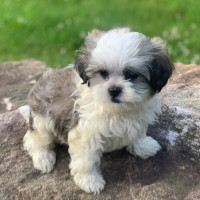
| This adorable little dog is the hybrid result of crossbreeding between Maltese and Shih Tzu parents. Like other specific crossbreed dogs, the Mal-Shi was developed in the hope of combining the positive traits of its parents while mitigating any physical or behavioral faults. Prospective owners should understand that this isn't always the case with hybrids, but most Mal-Shis have the mischievous nature and discreet coat of Maltese, as well as the affectionate, loyal and vigilant tendencies of Shih Tzu, making them a very popular and versatile pet choice. As a true companion dog, the Mal-Shi should never be forced to endure isolation and can be prone to separation anxiety. He's an energetic dog, but only requires short daily walks. He'll happily play with people or other pets if he has access to a small garden, but he's adaptable enough to suit apartment living. Because of his playful disposition and intelligence, he is renowned for being easy to train and extremely sociable, making socialization training easy for most. Although the coat is only very slightly shedding, it does require considerable work, as it is prone to matting, and owners must be prepared to brush it daily and make regular trips to the grooming salon. As with other hybrid dogs, first-generation crosses in particular are prone to many health problems of the parent breeds, and anyone considering buying a puppy should insist that recent health certificates issued by both parents are visible. Despite this, the Mal-Shi is generally a healthy dog, with a life expectancy of 13 to 15 years. |
History of the Mal-Shi |
| It is thought that the Mal-Shi was first bred in a deliberate and organized manner in the USA in the 1990s, although it is a more popular crossbreed in Australia than anywhere else in the world today. Like the Poodle hybrids that preceded it, such as the Cockapoo, it was conceived as a breed with reduced excretion that would appeal to a population increasingly allergic to pets. Indeed, this is a constant trait in the Mal-Shi, which tends to shed very little, although the concept of a shed-free coat is a fallacy, as all furry animals must produce hair throughout the year. In addition to acquiring this desirable coat characteristic, the Mal-Shi tends to have a more stable temperament than the Maltese, which can be a little sensitive and lively when in distress, and while the Shih Tzu can suffer from respiratory problems linked to its high and short airways, the Mal-Shi is not usually as affected. The Shih Tzu's bulging eyes can also be considered a design fault, as they are prone to trauma and drying out, and this characteristic is much less pronounced in the Mal-Shi. However, despite all these positive characteristics, it must be understood that this, like all other crossbreeds, can also inherit negative physical and behavioral characteristics from both parents. Cross-breeding is the equivalent of a genetic lottery, and you can never be sure which traits will emerge. When choosing a puppy, it's important to observe the behavior of both puppies and their parents, and to be prepared to walk away empty-handed if the offspring appears to be unsociable or unhealthy. |
A little of the Maltese |
||
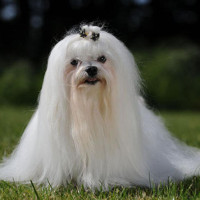
| Lively and affectionate, the Maltese is an ancient breed, recorded in the written history of Aristotle and Pliny almost 2,500 years ago. This is a small breed dog with a big personality that's playful and energetic. Maltese live very well in small spaces and are therefore ideal for indoor and apartment dogs. They thrive on human companionship, benefit from constant attention and can suffer from separation anxiety and boredom if left alone for long periods. They are considered a toy breed, although they are thought to share common ancestry with Spitz breeds. Although they appreciate physical contact and affection, Maltese can be prone to biting if overwhelmed and are therefore not considered ideal company for young children. | ||
 |
||
| Standard of the Maltese | ||
A little of the Shih Tzu |
||
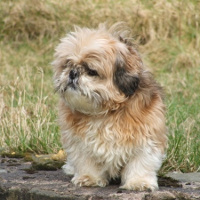
| The Shih Tzu is a small table dog that looks like a small version of a lion, which is exactly what the word means in Chinese. Shih Tzus originate from the Tibetan region of China and are one of the ancient breeds of dog, created for the sole purpose of being a pet, a role they play exceptionally well. | ||
 |
||
| Standard of the Shih Tzu |
Appearance of the Mal-Shi |
| Unlike purebreds, hybrids are not required to conform to a breed standard, and some variations in appearance are natural and to be expected. However, the Mal-Shi is still a small dog, measuring around 30 to 30 cm in height at the withers and weighing between 3 and 6.5 kg. It usually has a very soft, silky, wavy coat that can reach 8 to 10 cm in length if left untrimmed. Although most are predominantly white, spots and markings on the face are common, and Mal-Shi can potentially inherit a wide range of colors, including: white, white and tan, black, black and white, brown, brown and white, black and brown. It has a domed skull with small, raised ears that are usually folded forward on the side of the head. The almond-shaped eyes are usually brown and should not protrude. The Mal-Shi may inherit its Maltese relative's underdeveloped tear duct and show dark spots on the face. The muzzle is a relatively short, blunt wedge, and should have good-sized nostrils to avoid the respiratory problems that beset the Shih Tzu. Its legs may be short, but they should be reasonably straight when viewed from front to back, as misalignment is a frequent cause of joint pain in middle-aged and older dogs. |
Temperament of the Mal-Shi |
| There are many complementary adjectives that can be used to describe Mal-Shi's temperament. It's a cheerful, alert, fun-loving dog with a great personality. He loves his owners and generally inherits the protective nature of the Shih Tzu, ignoring his small size and showing courage in the face of danger. This, combined with his naturally alert nature, makes him a surprisingly good watchdog. He will sound the alarm when he feels justified, but is unlikely to bark without provocation. On the other hand, he's also an extremely sociable dog who loves meeting new people and will quickly let his guard down once he's been introduced to a visitor. It's a very affectionate hybrid that thrives in company. The Mal-Shi should be treated as a member of the family and not left alone for long periods, as it is prone to separation anxiety when isolated. For owners who need to leave their dog unattended for an hour or two on occasion, a second companion dog may be a good option, as the Mal-Shi mixes well with other animals. Most are very good with children, although their small size means that rambunctious young children can unintentionally inflict injury. |
Needs and activities of the Mal-Shi |
| The Mal-Shi loves activity. He'll be moderately energetic, however, so long as he gets a variety of short exercise breaks throughout his day, he'll be as much a pocket dog as a ball of energy. Remember that he's a highly intelligent dog, so provide him with a variety of toys to stimulate him mentally. He'll enjoy retrieving games, but he can get bored easily. He'll enjoy short, brisk walks with you. He can also enjoy a trip to the dog park to play with friends. If you have an enclosed space, you can let him out several times a day for exercise. However, many Mal-Shis are brachycephalic and should never be overheated or overexcited. |
Maintenance of the Mal-Shi |
| The Mal-Shi will require much of the same care as its parents. He will generally have long, silky, straight hair, but in some cases, he may have slightly wavy hair. He'll need daily brushing to avoid tangles and braids. Of course, some owners choose to have their Mal-Shi groomed with shorter, more manageable hair. In any case, he should be brushed every day. You'll need to clean the area around his eyes, too, as he's prone to tearing. Mal-Shi is hypoallergenic, so count on him not losing much. Cut his nails every two or three weeks. In fact, if you hear his nails clicking on the tiles, it's time to cut them. Brush his teeth two or three times a week to prevent tartar build-up, and brush daily to prevent tooth decay. Some Mal-Shi owners choose to have their dogs groomed every six to eight weeks. |



 English (United Kingdom)

Comments