 |
Lucas Terrier |
|
He is not recognized by the F.C.I. |
Origin |
Great Britain -> Scotland | |
Traduction |
Francis Vandersteen |
A brief presentation of the Lucas Terrier |
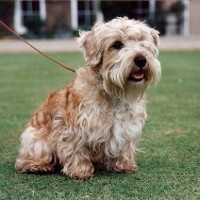
| A small, sturdy Terrier with half-pointed ears, dark eyes and a hard double coat, the Lucas Terrier can be white, beige or black and beige. Created by blending the Sealyham Terrier and Norfolk Terrier, this breed was developed by Sir Jocelyn Lucas in the hope of creating an efficient, healthy and sociable working dog. These little guys are always full of energy and eager to attack life. They love to go for walks, play games, solve puzzles and participate in various canine activities, such as agility and obedience. They thrive when surrounded by people and will form close bonds with their families, showing them copious amounts of affection. |
History of the Lucas Terrier |
| Not to be confused with the Sporting Lucas Terrier, a totally different breed, the Lucas Terrier is a rare breed of dog established in the UK by Sir Jocelyn Lucas, a well-known dog breeder of his day. He developed the Lucas Terrier by mixing the Sealyham Terrier and the Norfolk Terrier. Sir Jocelyn Lucas decided to create the breed because he felt that the Sealyham Terrier was too big and bulky to competently hunt its prey in holes and tunnels. He had also experienced a high number of births when whelping in his kennel and thought that heterogeneity would improve survival. The breed was created around 1940 and is sometimes referred to as the Cornish Terrier. With such a recent history and small population base, it is often claimed that all modern Lucas Terrier dogs are directly related to the Lucas Terriers created by Sir Jocelyn Lucas. Interestingly, it is still acceptable for Lucas Terriers to be crossed with Sealyhams and Norfolks, while maintaining the purity of the breed. There are currently a small number of Lucas Terriers in the UK, around 500, and an even smaller population in the USA, where they were exported around the 1970s. The Lucas Terrier Club carries out much of the work associated with the breed, as it is not currently recognized by any established organization, such as the Kennel Club or UKC. |
A little of the Sealyham Terrier |
||
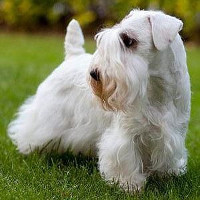
| The Sealyham Terrier was originally bred as a hunting dog to hunt particularly difficult prey, such as foxes, badgers and polecats. Native to Pembrokeshire, they were developed through a ruthless selection process, in which only the fiercest hunters were allowed to survive. Despite its street-fighting qualities, it is often said to have the gentlest nature of all terrier breeds, and makes a wonderful companion that can adapt to many different living situations. | ||
 |
||
| Standard of the Sealyham Terrier | ||
A little of the Norfolk Terrier |
||
| The smallest of the modern working Terriers, Norfolk Terriers are robust, active dogs that are sure to keep their homes free from mice and other vermin. Despite their small size, they were also used to catching larger animals, such as foxes, and this is reflected in their fearless disposition. Although recently recognized as a distinct breed from the Norwich Terrier, it has its own attributes and characteristics, and is in fact quite unique. | ||
 |
||
| Standard of the Norfolk Terrier |
Appearance of the Lucas Terrier |
| As a working dog, it's important for the Lucas Terrier to be well balanced and in good proportion, with no exaggerated features that would hinder its movements or working ability. They have a fairly broad skull and a well-defined stop leading to a strong jaw. Their noses are always black, while their oval eyes are dark and melancholy. Their V-shaped ears should not be too large and will flop forward in a half-pointed position. Their necks are relatively broad and should blend perfectly into their bodies. Their straight legs should be strong and powerful with adequate musculature. Their chest is deep and their ribs slender. Their coat is straight and hard with good weather-resistant qualities. Most dogs have a black and tan or bronze coat, although some are white and others may be blue. Females weigh between 5 and 8 kilos, while the slightly larger male will weigh between 6 and 9 kilos. Males measure around 25 to 30 centimeters at the withers, while females reach a height of 23 to 28 centimeters. |
Temperament of the Lucas Terrier |
| Gentle and well-mannered, these little dogs have an even temperament and a real zest for life. Happy to take part in almost any activity, they love to experience new things and will try anything. Perhaps their best asset is their adaptability, they can easily fit into any household as a pet, while having the opportunity to make a superb Terrier at the same time. Impertinent and feisty, it's true that this little dog can sometimes be a challenge, although any mischief they stir up is always done without malice. They make good playmates for children, and are both gentle and caring. Likewise, they are an excellent breed for the elderly, offering wonderful companionship, although they need regular exercise and playtime. Lucas Terriers get on well with other dogs and love to make new friends. More reserved breeds, however, may find them a little too boisterous, so introductions should be made slowly. Not surprisingly, all small furry animals, such as guinea pigs or ferrets, are not safe in the company of the Lucas Terrier, whose prey will quickly engage. While this dog can make a good watchdog, it's not overly vocal and may therefore allow a visitor into its home without warning. They are far too friendly to be considered a guard dog, and a different breed should be considered if this role were required. |
Needs and activities of the Lucas Terrier |
| Although this is a dog that loves to be outdoors, they adapt well to life in a small house or apartment and are very happy to live the majority of their lives indoors. That said, they do need a fair amount of exercise every day, usually 30 to 40 minutes on foot. Ideally, they would also have free time in a secure back garden, allowing them to display their more natural behaviors. Anecdotally, this is a dog that likes to dig, so care should be taken if left unsupervised in the back garden, as new holes may soon appear. Digging tends to be a response to boredom, so try to keep your Lucas Terrier busy by providing plenty of exercise, as well as mental stimulation, which may include hide-and-seek games or puzzles that will only release treats in some cases. |
Maintenance of the Lucas Terrier |
| These dogs rarely shed, even if they are not classified as hypoallergenic. It's often said that they don't smell like dogs, so they can be a good option for owners who are particularly sensitive to odors. They may need to be stripped by hand several times a year to help shed fur and allow new fur to grow. This task can be carried out over several days, especially if your dog becomes restless. Check the Lucas Terrier's ears every few days, turning the pinna over and making sure the canal is pale and clean. Wax can be removed with an ear cleaner and some dry cotton. |



 English (United Kingdom)

Comments