Toy Fox Pinscher

He is not recognized by the F.C.I.

Origin
U.S.A. <> Germany -> U.S.A.
Translation
Francis Vandersteen

A brief presentation of the Toy Fox Pinscher

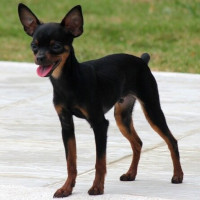
The Toy Fox Pinscher was recognized by the International Designer Canine Registry in 2009. They are affectionate by nature, making them an excellent family companion. It's an intelligent breed that can be trained fairly easily, and sources suggest that it responds well to positive reinforcement. Believed to have originated in the USA, this breed is made up of two pure-bred parents: the Toy Fox Terrier and the Miniature Pinscher. This hybrid is a small dog, measuring no more than 30.5 centimeters. Sources suggest that they are energetic and playful, so regular exercise is essential. Mental stimulation is just as important as physical stimulation, as boredom often leads to destructive behavior in this breed. There are many similarities between the parent breeds. While the Toy Fox Terrier is an American breed, the Miniature Pinscher originated in Germany. Both were bred to hunt rodents. Both breeds are known for their playfulness and athleticism. Owners and breeders claim that the Toy Fox Pinscher, like its parent breeds, has a big personality, and for this reason it's recommended that owners be experienced as the Toy Fox Pinscher tends to try to take charge. Despite this, they are people-oriented and form strong bonds with their owners. However, it is advisable to socialize these dogs from an early age, as they are very strong-willed. Both parent breeds appear to be well-balanced dogs with strong legs. They have short, sparse coats that are easy to maintain. They are happy in small spaces, such as apartments, provided they get their daily exercise. They are proud dogs who like to trot, raising their legs high. Although they are a small breed, they parade around with their ears pricked up as if they were a much larger breed, and are often said to be fearless.

History of the Toy Fox Pinscher

This is a fairly recent breed of dog, which means that not much is known about this exact hybrid, but there is some information about its parent breeds. As a hybrid, the Toy Fox Pinscher is not recognized by the American Kennel Club, but it is recognized by the International Designer Canine Registry and the Designer Breed Registry. As both parent breeds are recognized as a Toy group breed by the American Kennel Club, the Toy Fox Pinscher, as its name suggests, also falls into this category of dogs. It's important not to underestimate the Toy Fox Pinscher based on its size, as this dog would give sporting breeds a run for their money too, due to its renowned hunting abilities, inherited from both parent breeds.


A little of the Toy Fox Terrier

        
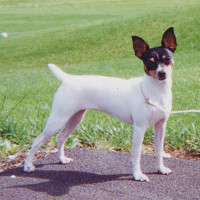
The Toy Fox Terrier originated in the USA and was originally developed to deal with a rodent problem. Again, this canine was used for tracking and hunting, just like the Miniature Pinscher. The Toy Fox Pinscher's ancestors are the Manchester Terrier, Chihuahua, German Pinscher, Italian Greyhound and Dachshund. The Toy Fox Terrier was recognized by the American Kennel Club in 2003.
Presentation of the Toy Fox Terrier


A little of the Miniature Pinscher

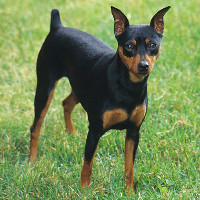
The Miniature Pinscher is of German origin, and although the breed was not well documented until the 19th century, this particular breed is thought to date back some 2,000 years. It was used for retrieving and has excellent hunting skills. It was recognized by the American Kennel Club in 1929.
Standard of the Miniature Pinscher

Appearance of the Toy Fox Pinscher

The Toy Fox Pinscher is a small dog in the small breed category. This well-balanced, yet sturdy and poised dog has an athletic appearance that shows off its defined, muscular hind legs. Its short, fine coat is smooth and glossy when properly groomed. Maintenance is simple with this breed, as grooming is only required once a week to remove dead hairs. All the characteristics of this breed are proportionate: the skull is slightly rounded, but the muzzle is strong and tapered, ending in a scissor bite. The tail is generally set high, and both breeds often have their tails docked or docked at an early age, so that they are in proportion with the rest of the dog. Both breeds have medium-sized ears, set high on the head. As a hybrid, the Toy Fox Pinscher can inherit different characteristics from each parent breed, but as the parent breeds are similar, it's much easier to determine the breed's appearance. There are, however, a variety of colors for this breed, including black, brown, russet, sable, cream, isabelle, fawn, blue and brindle. The eyes, however, will be brown and the nose will probably be black, or possibly brown. The legs are small and rounded, enabling this agile breed with a thirst for exercise to do so easily, while expressing confidence through its prominent dark brown eyes, retaining its curious, yet intelligent expression. A healthy dog is often happy, and this is reflected in the breed's behavior.

Temperament of the Toy Fox Pinscher

The Toy Fox Pinscher, although a small dog, is known to have a very big personality. He may try to take things into his own hands, so it's best to train him from an early age. Socialization is important, as this breed can try to be the boss of other breeds. Although some sources suggest that this breed is a good family pet that loves children, both parent breeds are said to be better with older children, rather than younger ones. With this in mind, it's advisable to monitor any time spent with children and other dogs, especially at an early age. In any case, it's a good idea to keep an eye on small dogs, as they can easily injure themselves due to their small size. Like its two parent breeds, the Toy Fox Pinscher is also renowned for being energetic, playful and fearless. They are protective dogs who will bark if they sense a threat or danger. Despite its "tough terrier" instincts, this breed is also known to be affectionate and loving, so moments of play, love and complicity are essential to stimulate the hybrid, both mentally and physically. Boredom in this breed can lead to poor, destructive behavior. Moderate exercise is therefore just as important as mental and physical stimulation.

Needs and activities of the Toy Fox Pinscher

The two parent breeds, the Miniature Pinscher and Toy Fox Terrier, are energetic and require moderate exercise of around 30 minutes a day. Both are known to have high energy levels and like to be stimulated both physically and mentally. The Toy Fox Pinscher will thrive in a warm climate, as neither too hot nor too cold will suit this hybrid, and measures must be taken to protect your dog from both. As a small breed, he can live in an apartment, provided he gets plenty of exercise. If he has a garden in which he can play, be sure to keep an eye on him, as he could put his digging skills to good use and manage to escape unexpectedly.

Maintenance of the Toy Fox Pinscher

The Toy Fox Pinscher is easy to care for, requiring only one brushing a week to remove dead hairs from the coat. A healthy dog has a shiny coat, and this can be maintained by ensuring that the coat is wiped clean before brushing. Brushing can be done with a pimple brush, smoothing brush or comb, but shedding is moderate in this breed. Regular shampooing is not recommended for this breed's fine, sparse coat. The fine coat means that this dog is not at home in cold climates, but it doesn't like hot climates either. Its nails need to be trimmed regularly to keep its little paws healthy. The Toy Fox Pinscher's teeth need to be brushed regularly, as both parent breeds are known to have dental problems if their teeth are not cared for properly. Dentastix can be used to minimize tartar build-up. A cup of dry food, divided into two meals each day, is suggested for this breed, but due to a range of allergies that could be inherited from the parent breed Toy Fox Terrier, it is suggested that a high quality food be provided. This type of dog is well suited to an apartment building, provided it gets enough exercise to expend its energy.

Comments

Latest page updates

  • Telomian

    Telomian He is not recognized by the F.C.I. Origin Malaysia Translation Francis Vandersteen A brief presentation of the Telomian The Telomian is a very rare breed of dog, and the only one native to Malaysia to have been bred outside the country. They were originally bred by the indigenous people of Malaysia to combat parasites such as snakes, rats,...
  • King Wheaten -- Cavalier King Charles Spaniel X Irish Soft Coated Wheaten Terrier

    King Wheaten He is not recognized by the F.C.I. Origin Great Britain <> Ireland -> U.S.A. Translation Francis Vandersteen A brief presentation of the King Wheaten The King Wheaten is a small dog with a heart this big and a playful disposition. Borrowing the energy and soft-coated waves of the Irish Soft Coated Wheaten Terrier and the size and...
  • Spanierd -- English Springer Spaniel X German Shepherd

    Spanierd He is not recognized by the F.C.I. Origin Great Britain <> Germany -> U.S.A. Translation Francis Vandersteen A brief presentation of the Spanierd The Spanierd is a hybrid dog. Its parent breeds are the English Springer Spaniel and the German Shepherd. They have an affable personality. He's known for entertaining family and friends with his...
  • Alaskan Goldenmute -- Alaskan Malamute X Golden Retriever

    Alaskan Goldenmute He is not recognized by the F.C.I. Origin U.S.A. <> Great Britain -> U.S.A. Translation Francis Vandersteen This breed is also known as Alaskan GoldenGoldenmuteAlaskan Gold Retriever     A brief presentation of the Alaskan Goldenmute The Alaskan Goldenmute is a descendant of two great dog breeds: the Alaskan Malamute and the Golden...
  • French pointing dog Pyrenean type

    French pointing dog Pyrenean type FCI standard Nº 134 Origin France Translation Mrs. Peggy Davis Group Group 7 Pointing Dogs Section Section 1.1 Continental Pointing Dogs « Braque » Type Working With working trial Acceptance on a definitive basis by the FCI Tuesday 18 January 1955 Publication of the official valid standard Tuesday 01 August 2023 Last...
  • French pointing dog Gascogne type

    French pointing dog Gascogne type FCI standard Nº 133 Origin France Translation Mrs. Peggy Davis Group Group 7 Pointing Dogs Section Section 1.1 Continental Pointing Dogs « Braque » Type Working With working trial Acceptance on a definitive basis by the FCI Monday 17 January 1955 Publication of the official valid standard Tuesday 01 August 2023 Last...
  • Vucciriscu

    Vucciriscu He is not recognized by the F.C.I. Origin Sicily Translation Francis Vandersteen En français, cette race se dit Vucciriscu Diese Norm ist in deutscher Sprache sichtbar Vucciriscu En español, esta raza se dice Vucciriscu In het Nederlands, wordt dit ras gezegd Vucciriscu This breed is also known as Sicilian Vucciriscu Sicilian Butcher...

© 2026 Groupe Milouchouchou ASBL. Tous droits réservés. En savoir plus

Protected by Copyright01
We use cookies

We use cookies on our website. Some of them are essential for the operation of the site, while others help us to improve this site and the user experience (tracking cookies). You can decide for yourself whether you want to allow cookies or not. Please note that if you reject them, you may not be able to use all the functionalities of the site.

Ok