
 |
Smooth Foxingese |
|
He is not recognized by the F.C.I. |
Origin |
Great Britain <> China -> U.S.A. | |
Translation |
Francis Vandersteen |
A brief presentation of the Smooth Foxingese |
| The Smooth Foxingese is a small hybrid that is a combination of the Pekingese and the Fox Terrier Smooth. This breed can be an excellent pet for your family if well trained. However, it is not ideal with young children due to its size and can be a little jealous with other animals. The Smooth Foxingese can be difficult to train and needs a lot of patience and consistency to learn who's boss. They're brave and make excellent guard dogs, but they'll attack any threat, no matter how big or small, so you'll need to make sure they don't hurt themselves. |
History of the Smooth Foxingese |
| To determine the history of the Smooth Foxingese, it's important to look at the origins of the Pekingese and the Fox Terrier Smooth |
A little of the Fox Terrier Smooth |
||
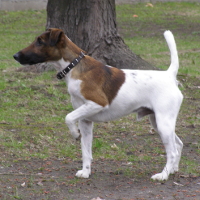
| The Fox Terrier Smooth is an English breed dating back to the 18th century, bred from Beagles, Bull Terriers, Black and Tan Terriers and Greyhounds. It was one of the first breeds to enter a dog show, but was originally bred to hunt foxes by chasing them out of their holes for hunters. Although the Fox Terrier Smooth and Fox Terrier Wirehaired were once considered a single breed, they had different origins. However, even the AKC listed the two breeds as the same until 1985, when they were finally separated. | ||
 |
||
| Standard of the Fox Terrier Smooth |
A little of the Pekingese |
| The Pekingese breed has been an integral part of Chinese history since the 8th century, and was named after the city of Peking, where it was developed during the Tang dynasty. Because of its coat, it has been nicknamed the lion dog, and legend has it that the breed is a cross between a marmoset and a lion who fell in love centuries ago. In fact, the Chinese believed that Pekingese had magical powers similar to those of the Chinese guard lions that protected palaces and temples, which is why Pekingese were protected and had their own servants. Non-royalists were not allowed to own a Pekingese until the late 1800s, when soldiers found several during the Chinese takeover. One of these dogs was given to Queen Victoria, who wore it in the long sleeves of her royal gown, earning it the nickname Sleeved Pekingese. In 1906, the breed was recognized by the American Kennel Club, which today ranks it as the 93rd most popular breed in America. |
 |
| Standard of the Pekingese |
Appearance of the Smooth Foxingese |
| The Smooth Foxingese is a small dog with a thick coat that comes in many colors, including beige, orange, pied, gold, sable, brindle, lemon, blue, silver, chocolate, red, spotted, merle and spotted. These little dogs stand no taller than 30.5 centimeters and weigh around 7 kilos. It has short legs and a curled tail covered with long, silky hair. He has round brown eyes with a lively expression and a shortened muzzle with a black nose. As your Smooth Foxingese has a short muzzle, you'll need to check that he doesn't suffer from brachycephalic syndrome, which is a dangerous respiratory disease. |
Temperament of the Smooth Foxingese |
| The Smooth Foxingese is an affectionate, loving little dog with a big personality that can sometimes resemble an attitude. He can sometimes be a little too brave, but he doesn't know his own size and that can be a problem. This breed is also a little difficult to train, even though they are very intelligent. They are stubborn and it can take a lot of time and patience to get them to listen. However, if you let your dog know who's the leader of the pack, he'll eventually get used to it. Some owners, however, prefer to send their Smooth Foxingese to obedience classes. |
Needs and activities of the Smooth Foxingese |
| The Smooth Foxingese has a lot of excess energy and needs around 45 minutes to an hour of vigorous exercise a day to stay healthy. It needs physical and mental stimulation to avoid overweight, anxiety or depression. This hybrid tends to be susceptible to separation anxiety if it doesn't receive enough attention from you every day, and can develop bad habits, such as excessive barking. Activities you can enjoy with your Smooth Foxingese include outings to the dog park, hikes in the woods, swimming, ball games and brisk walks around the neighborhood. |
Maintenance of the Smooth Foxingese |
| The Smooth Foxingese's thick coat requires thorough brushing every day, or at least every other day. It's best to use a detangling spray and tool, as well as a steel comb and a stiff bristle or pimple brush. If your dog tangles a lot, you should use your fingers and the spray to loosen the knots before combing. You should also bathe your dog with a mild, conditioned shampoo and cream rinse once or twice a month, and clean his ears thoroughly. You should also trim his nails regularly to prevent splitting or cracking. Brush his teeth with a vet-approved toothpaste every day if possible. Small dogs are very prone to tooth decay. |



 English (United Kingdom)

Comments