 |
Shiranian |
|
He is not recognized by the F.C.I. |
Origin |
Tibet <> Germany -> U.S.A. | |
Translation |
Francis Vandersteen | |
This breed is also known as |
Shih-Pom
|
A brief presentation of the Shiranian |
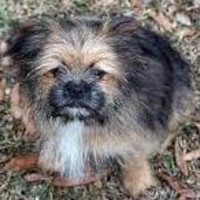
| The Shiranian is a lovely cross between a German Toy Spitz / Pomeranian and a Shih Tzu. They are small, lively and friendly dogs. They are companion dogs who love to be with their families and are perfect with children and the elderly. The downside is that the Shiranian tends to suffer from separation anxiety, so if you can't be home a good part of the time, you may want to consider another hybrid. Nevertheless, it's a playful, happy and intelligent dog that makes an excellent addition to a caring family. Like its two parent breeds, the Shiranian has a long, silky coat that can be straight or wavy. This hybrid comes in many colors, including red, sable, chocolate, black, gold, orange and brindle. |
History of the Shiranian |
| There is little documented information on the history of the Shiranian. This hybrid was created in the United States by crossing a Shih Tzu and a German Toy Spitz / Pomeranian. |
A little of the Shih Tzu |
||
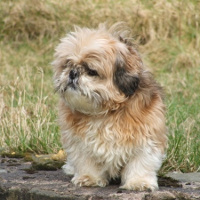
| The Shih Tzu is one of the oldest dog breeds. It is said that the Shih Tzu may be a cross between the Lhassa Apso and the Pekingese. The Shih Tzu is thought to have been developed by Tibetan monks, who gave some of these dogs as gifts to Chinese royalty. The Shih Tzu is depicted in paintings, works of art and writings from the Chinese Tang dynasty, between 1368 and 1644. In 1861, the breed became very popular at the imperial court after the Dalai Lama presented two Shih Tzus to Empress Tzu Hsi. According to popular belief, these dogs had their own palace. After the empress's death, many royal families began breeding these dogs. The breed was then introduced to England, Ireland and finally the United States. The Shih Tzu was recognized by the American Kennel Club in 1969. | ||
 |
||
| Standard of the Shih Tzu |
A little of the German Toy Spitz / Pomeranian |
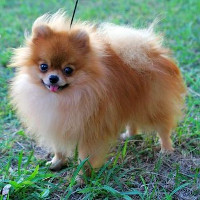
| The German Toy Spitz / Pomeranian originated in the Pomerania region of central Europe. In their early days, these dogs weighed up to 14 kilos and had wedge-shaped heads, pointed ears and abundant fur. They are descended from Spitz breeds such as the Norwegian Elkhound, Schipperke, American Eskimo, German Spitz and Samoyed. Martin Luther, Michelangelo, Isaac Newton and Mozart are all said to have had German Toy Spitz / Pomeranians. In 1761, the breed became popular in English royal circles after Princess Sophie Charlotte brought her two German Toy Spitz / Pomeranians with her when she married the future King George III. Queen Victoria also took a liking to the breed when she saw a 5.5-kilo German Toy Spitz / Pomeranian in Italy in 1888. Her passion for the breed, especially the smaller ones, encouraged the breeding of small German Toy Spitz / Pomeranians. The breed was recognized by the American Kennel Club in 1888. |
 |
| Standard of the German Toy Spitz / Pomeranian |
Appearance of the Shiranian |
| The Shiranian is a small dog weighing between 2 and 7 kilos, the upper end of the scale being larger than today's German Toy Spitz / Pomeranian. This gentle canine has a medium to long double coat, like its two parent breeds. Its coat is silky and generally straight, but can sometimes be wavy like that of the German Toy Spitz / Pomeranian. They come in a variety of colors, including black, red, chocolate, brindle, sable, orange and multicolored. These dogs have a short muzzle, large black or brown eyes and floppy ears. They have small black noses and their tails usually curl over their backs. Although they are small dogs, their bodies are quite robust, their legs are strong and they measure between 18 and 25.5 centimeters. |
Temperament of the Shiranian |
| The Shiranian inherits its personality from its two parent breeds, the Shih Tzu and the German Toy Spitz / Pomeranian. This designer dog is very friendly, intelligent and cheerful. It is very affectionate, loves to be with its family, but can suffer from separation anxiety if left alone too often. These dogs are easy to train, as they learn quickly and follow commands eagerly. They are not inclined to bark unless necessary, and are not recommended as guard dogs as they are very sociable and approachable. They are great with children and the elderly, and will make adorable family members as they are very loyal. They can be gentle with children but need to be supervised when interacting. |
Needs and activities of the Shiranian |
| The Shiranian is very adaptable and can cope very well with an apartment, although it would benefit from a garden in which to explore all day. Daily visits to a park and walks in the neighborhood are welcome. Although a small indoor dog, this hybrid needs social interaction, fresh air and a chance to exercise his brain as well as his body. Offering him plenty of outlets for his energy can help him overcome the anxiety he feels when left alone. A few 20-minute walks a day, an obedience class, a game of fetch or the chance to play with an interesting toy are all activities your Shiranian will enjoy. |
Maintenance of the Shiranian |
| Both parent breeds, the Shih Tzu and the German Toy Spitz / Pomeranian, have long, abundant, double-coated coats. The Shiranian inherits these characteristics; this hybrid has a silky coat of medium to long length that is generally straight, but when the influence of the German Toy Spitz / Pomeranian is stronger, its coat can have a more wavy texture. They often shed, so daily brushing is recommended. A spiked brush or wide comb is suggested. As small dogs are prone to skin sensitivities, blow-drying is not recommended for the Shiranian; towel-drying is preferable. Occasional trimming is necessary around the eyes and in other areas of the body, such as the feet. Every two weeks, check that nails are not split or torn, and that they are not too long. Brush teeth daily if you can; this hybrid is prone to tooth decay. |



 English (United Kingdom)

Comments