
 |
Shocker |
|
He is not recognized by the F.C.I. |
Origin |
Japan <> U.S.A. -> U.S.A. | |
Translation |
Francis Vandersteen |
A brief presentation of the Shocker |
| The Shocker is a cross between an American Cocker Spaniel and a Shiba. These dogs are independent, lively and affectionate. They are medium-sized dogs with medium to long, thick coats. They get on well with children and other dogs, but not so well with other animals. They can come in a variety of colors, such as black, chocolate, cream, white and tan. They need moderate activity, such as short walks or playing in a yard. |
History of the Shocker |
| The Shocker is a fairly recently conceived breed, the result of crossing an American Cocker Spaniel with a Shiba. |
A little of the Shiba |
||
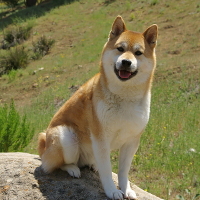
| The Shiba originated in Japan, as did the related Akita, Kai Dog, Hokkaido, Kishu and Shikoku breeds, which are larger dogs. The Shiba's main purpose was hunting. During the Second World War, the Shibas suffered greatly, with many dogs dying in bombing raids, and others from distemper. When the war ended, a Shiba breeding program was set up. In 1954, the first Shiba was brought to the United States. The Shiba was recognized in the American Kennel Club's Miscellaneous class, and in 1997 was granted full status in the Non-Sporting group. | ||
 |
||
| Standard of the Shiba |
A little of the American Cocker Spaniel |
| The Cocker Spaniel is descended from the ancient Spaniel family. Its name suggests that the breed originated in Spain. They were then divided into toy dogs, for companionship, and large dogs for hunting, and the Cocker Spaniel was known for its woodcock-hunting abilities. Nevertheless, in England they were considered a functional category until 1892, when the Cocker Spaniel was recognized as a breed. In the 1870s, the breed was imported to the USA, and in 1881 Clinton Wilmerding and James Watson founded the American Spaniel Club, the oldest breed club in the U.S.A. Some American breeders were moving towards a smaller Cocker Spaniel, different from the English Cocker Spaniel. This led to the creation of the English Cocker Spaniel Club of America, recognized by the American Kennel Club. Eventually, there was a motion not to breed English Cocker Spaniels with American Cocker Spaniels. The American Cocker Spaniel gained popularity after a black dog called “Ch. My Own Brucie” won Best American Breed at the Westminster Dog Show two years running. The dog was so beloved that its death was published in the New York Times. In 1946, the American Cocker Spaniel and the English Cocker Spaniel were recognized as two different breeds by the American Kennel Club. |
 |
| Standard of the American Cocker Spaniel |
Appearance of the Shocker |
| The Shocker is a medium-sized dog, although rather small in this category. These dogs have a thick, medium-to-long coat that can be chocolate, cream, black, white, tan or a mixture of colors. They have floppy ears, a black nose and large, round eyes. They have strong legs and feet, and a broad neck, although they retain the athletic complexity of the Shiba. The head is broad, followed by a narrower, slightly longer muzzle. Its tail is long and curls over its back when happy, like that of the Shiba. |
Temperament of the Shocker |
| The Shocker is an independent, stubborn dog, but it's also lively, active and attentive. They like to spend time with their owners, but can tolerate being left alone. These dogs are friendly with people and get along with children and other dogs when properly introduced. On the other hand, they don't get on well with other animals. Like its two parent breeds, the Shocker can be prone to wandering, chasing prey and barking. They can be trained, with consistency and resolution. If the Shocker is more like the Shiba, it can be aloof and free-spirited. This mixed breed can also be possessive of its toys and food. |
Needs and activities of the Shocker |
| These hybrids need daily activity to keep them happy and avoid boredom. Regular outings of 20 to 40 minutes work well for them, in addition to playtime with their owners or in a yard or park. These dogs also need mental activity, as they are highly intelligent and can become apathetic and unmotivated if they have no work to do. This breed is suited to apartment living, although a garden is very much appreciated. As the Shocker can be prone to wandering off and chasing prey, a fence is necessary to prevent it from going hunting. |
Maintenance of the Shocker |
| Shockers are thick-coated dogs with medium to long hair. They shed moderately, and can shed a lot at certain times of the year. Daily brushing is therefore recommended to remove dead hairs and avoid tangles. Excessive bathing can cause skin irritation and dryness, so it's best to give them an occasional bath. As these dogs are stubborn and free-thinking, it's important to get them used to grooming when they're puppies, as they may not appreciate being groomed and clipped when they're older. Occasional trimming is also advisable to maintain a beautiful, healthy coat and keep your Shocker looking well groomed. Nails should be trimmed monthly. Ears should be checked frequently for infection and cleaned if necessary to prevent ear problems. Brush teeth at least several times a week. |



 English (United Kingdom)

Comments