
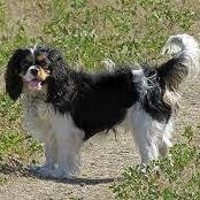
King Charles Spaniel

FCI standard Nº 128

Origin
Great Britain
Group
Group 9 Companion and Toy Dogs
Section
Section 7 English Toy Spaniels
Working
Without working trial
Acceptance on a definitive basis by the FCI
Monday 03 January 1955
Publication of the official valid standard
Tuesday 27 July 2021
Last update
Tuesday 24 August 2021
En français, cette race se dit
King Charles Spaniel
Diese Norm ist in deutscher Sprache sichtbar
King Charles Spaniel
En español, esta raza se dice
King Charles Spaniel
In het Nederlands, wordt dit ras gezegd
King Charles Spaniel

Usage

Companion and Toy Dog.

Brief historical summary

An obvious relative of the Cavalier King Charles Spaniel, this dog is known in some countries as the English Toy Spaniel, and derives his name from a dog which was a great favourite of King Charles II. Toy spaniels have long been treasured as pets both in England and on the Continent and were bred to a smaller and smaller size from setter dogs which established the type for spaniels. Basically these were little gun dogs, but pampered by wealthy owners, admired for their companionship and crossed with toy dogs from the East, giving rise to their facial appearance.

General appearance

Refined, compact and cobby.

Behaviour / temperament

Happy, intelligent, toy spaniel, with distinctive domed head. Reserved, gentle and affectionate.

Head

Cranial region

Skull
Moderately large in comparison to size, well domed, full over eyes.  
Stop
Between skull and nose well defined.

Facial region

Nose
Black, with large, wide-open nostrils, short and turned-up.
Muzzle
Square, wide and deep, well turned up.
Lips
Exactly meeting, giving nice finish.
Jaws and teeth
Lower jaw wide. Bite should be slightly undershot. Protruding tongue highly undesirable.
Cheeks
Not falling away under eyes, but well cushioned.
Eyes
Relatively large and dark, set wide apart, eyelids block square to face line, pleasing expression.
Ears
Set on low, hanging quite flat to cheeks, very long and well feathered.

Neck

Of medium length; arched giving proud carriage of head.

Body

Back
Short and level.
Chest
Wide and deep.

Tail

Docking previously optional.
Docked: Well feathered, not carried over or above level of back.
Undocked: Well feathered, not carried over or above level of back.
In overall balance with the rest of the dog.
Natural short tail (bobtail) and kinked tail tolerated.

Limbs

Forequarters

Shoulders
Well laid back.
Elbows
Close to rib cage, neither turning in nor out.
Forearm
Legs short and straight.
Pastern
Firm.

Hindquarters

Generality
Sufficient muscle to give positive driving movement.
Stifle
Well bent.
Metatarsus
Hocks well let down and defined. Straight viewed from behind, turning neither in nor out.

Feet

Compact, well padded and feathered, toes well knuckled, round cat-shaped foot, well cushioned.

Gait and movement

Free, active and elegant, driving from behind. Sound movement highly desirable.

Coat

Hair
Long, silky and straight, slight wave allowed, never curly. Legs, ears and tail profusely feathered.
Colour
• Black and Tan: Rich glossy black, with bright mahogany-tan markings on muzzle, legs, chest, linings of ears, under tail and spots over eyes. White patch on chest undesirable.
• Tricolour: Ground pearly white, with well distributed black patches, brilliant tan markings on cheeks, linings of ears, under tail and spots over eyes. Wide white blaze between eyes and up forehead.
• Blenheim: Ground pearly white, with well distributed chestnut-red patches. Wide, clear blaze with the “spot” in centre of skull should be a clear chestnut red mark about the size of a penny.
• Ruby: Whole coloured, rich chestnut red. White patch on chest highly undesirable.

Size and weight

Height at withers
3.6-6.3 kgs.

Faults

• Any departure from the foregoing points should be considered a fault and the seriousness with which the fault should be regarded should be in exact proportion to its degree and its effect upon the health and welfare of the dog and its ability to perform its traditional work.
• Faults listed should be in degree of seriousness.

Disqualifying faults

 Aggressive or overly shy.

NB :

• Any dog clearly showing physical or behavioural abnormalities shall be disqualified.
• The above mentioned faults when occurring to a highly marked degree or frequently are disqualifying.
• Male animals should have two apparently normal testicles fully descended into the scrotum.
• Only functionally and clinically healthy dogs, with breed typical conformation should be used for breeding.

Bibliography

https://www.fci.be/


Detailed history

The King Charles Spaniel is a small dog, but not a miniaturized dog. Elegant and refined, her appearance is nevertheless picked up, solid and somewhat sporty. Here is a Spaniel amenity in British fashion.

In the first place, it is thus a Spaniel, that is to say that, while going up in his family tree, one finds the Hunting Spaniel, whose origin, itself, is rather confused and is the subject of various theories, to tell the truth, unsatisfactory. Thus, the Spaniel could claim Spain as the original soil, although he is not a Mediterranean, or be a dog that "Spain" - which flattens, old French; which is credible with regard to the French word, but what is less credible with regard to its English name, "Spaniel".

According to Welsh Springer Spaniel specialists, the Spaniel would have been known a long time ago in the British Isles, because it would be mentioned by the Welsh chef Hywell Dda (or Howell the Great), in a text of Tenth century. Be that as it may, the Spaniels have been settled in Britain since at least the end of the 14th century, as Edward de Langley (ca 1373-1415), Henry IV's master of dogs and hunts , quotes them in his Mayster of Game. And, at the same time, is it better reference than Geoffrey Chaucer, this poet known for his contribution to the fixation of the English language? Certainly, the Spaniel must be considered a British possession.

Some chandeliers; two centuries at most; will be necessary for the Hunting Spaniel to be transformed into Pleasure Spaniel, according to a quite logical process, when we know that there are hardly other dogs more affectionate, more docile than the Spaniels. In fact, in 1570, Johannes Caius, the British breed specialist, says that there are "nice Spaniels" all the more appreciated because they are smaller, so they can nestle "in the the noble ladies, whose "comforting" they are, according to the expression of the learned doctor, physician to Queen Elizabeth I.

If Company Spaniel is present at the Court of England, it is equally with the great Scottish rival of Elizabeth, Mary Stuart: when it will be conducted on the scaffold, in 1587, we discover under his skirts one of his little Spaniels. The Queen of Scotland will transmit her taste for this kind of dogs to all the lineage of the Stuarts, the two Jacques (James I, who reigned over England between 1603 and 1625, and James II, who reigned from 1685 to 1688) and the two Charles (Charles I, King of England from 1625 to 1649, and Charles II, who was from 1660 to 1685). Two of Charles I's Spaniels, who also ended up on the scaffold, had the privilege of entering history: Gentle Breath and Gentile Heart, it is said, were wandered all over London after the execution of their master. . It is not, however, this unfortunate king who gave his name to the small Spaniels of pleasure, but his son Charles II, whom the chronicles (and in particular that of Samuel Pepys) portray, not without acrimony, as at least as much preoccupied by his little dogs than his profession of king.

As a heritage of Mary, who was Queen of France in 1659, when she married Francis II, the Stuarts also received a lasting friendship for our country. The excellent relations they have maintained with France have not been unimportant during the vicissitudes that many of them have known, but above all, here, these relations allow us to suggest a link between the little English Spaniels and the Spaniels. Continental Dwarves. Moreover, if they form today quite different breeds, these dogs were much closer to the sixteenth, seventeenth and eighteenth centuries, so much so that some English dogs represented could be considered as Continental and vice versa. Thus, the dog that appears at the feet of Queen Charlotte of England, in the painting painted by Benjamin West in 1779, could be a Phalaen spaniel; while that shown by Giuseppe Maria Crespi in the early eighteenth century is strikingly reminiscent of a King Charles.

It is true that these little Spaniels traveled a lot: they were rare and therefore very popular, so they were very appreciated gifts. If we find them in Italy, in Flanders, in France, why would not they have crossed the Channel, especially during the reign of the Stuarts, who favored exchanges with the Continent?

In fact, the case of the English Toys Spaniels is more complicated than that of the Continental Spaniels. There seems to be a constant confusion in the ancient sources between small hunting Spaniels, who are in fact the ancestors of the Cockers, and the Carpet Spaniels, who are solely dedicated to living in the salon. Thus, for a number of authors, the evolution towards this last type, relatively late, would not really have been specified until the nineteenth century. However, one can not ignore the various circumstances that marked the history of the small Spaniels, since the time of the Stuarts, as well as the crossings that did not fail to occur. Of course, the hypothesis of a contribution of exclusively domestic and small-sized Continental Spaniels is not corroborated by any document, so far, but can we blame English cynologists who were concerned to brush the King Charles history of not having explored this path?

On the other hand, if it is a crossing which owes nothing to the suppositions, it is the one carried out with Asian Spaniels, and this, not in the last century; which is still far away; but just when the little Spaniels were named "King Charles". In addition, as curious as it may seem, these dogs arrived via Portugal. Yet, when we know that Charles II had married a princess of Portuguese origin, Catherine de Braganza, there is no need to be surprised at the arrival on the soil of England of a couple of Spaniels Japanese, offered by a Portuguese missionary: Portugal had then bases in the empire of the Sunrise, in the concern so much to evangelize the Japanese as to trade with them (for example, to acquire silks and porcelain).

These Spaniels, known today as Chins or Tchins, were very small, had a high forehead and a short nose, and they did not yet have the camuse face that is theirs now. Therefore, it is not at this period that the appearance of a very short snout must be placed in the King Charles, who, despite the position due to his name, was going to continue a path filled with mysteries and mysteries detours.

The Spaniels of Catherine of Braganza did not constitute the only extreme oriental infusion to the English race. We know, for example, that the Duke of Marlborough, known to have selected the small Blenheim Spaniels, crossed his Red and White Hunting Spaniels with an Asian Spaniel, which can not be said to come from China, Japan, or from another country. James Scott points out, moreover, that the Duke possessed two distinct lineages of Spaniels: the dogs of the first were small but able to hunt, while those of the second, smaller, were exclusively house dogs. Such crosses with Eastern Spaniels were certainly practiced more than once, even if less is known about them, for in Great Britain kings, dukes and other members of the high nobility did not disdain to take care themselves of canine breeding (which was unthinkable among their French counterparts, except perhaps for the current dogs). The English aristocracy has always been very attached to its estates and things of the earth, being much less attracted by the brilliant lights of the court and the city.

But now, 1688, the year in which the last of the Stuart kings, James II, after three years of reign, had to emigrate to France and give way to his son-in-law William III of Orange-Nassau, Stadtholder of the United Provinces . It is at this precise moment that some place the disgrace of King Charles. But is not it going a little fast? Forget that the Stuarts did not have the exclusivity of this kind of dogs, appreciated by all the nobility? The dukes of Norfolk, in particular, were noted for their predilection for Toys Spaniels, which they created a lineage with black and fire dress. As for the Duke of Marlborough, already quoted, it is not to be a convinced supporter of William of Orange against James II who prevented him from particularly sniffing his Spaniels.

William III, he is known to have had, like his great-grandfather William the Taciturn, the Pugs for companions favorites, and he would have introduced this breed in Britain. One can think, obviously, that the King Charles was then crossed with the Pug.

However, the Dutch, who must be familiar with this episode of their story, say that Guillaume's favorite dogs were rather small duck hunting Spaniels, the Kooikerhondjes. So? Certainly, it is sure that the Pug is already known in the eighteenth century, the famous self-portrait of William Hogarth (1697 - 1764) with his Carlin testifies, but it is also undeniable that the Vogue Pug in England does not date of this time and that this dog as original as charming will have to wait a century to impose itself; which does not exclude previous crossings between Carlins and King Charles, on the contrary. It was not until 1870 that Hugh Dalziel could exclaim: "The Pug (the name of the Carlin in English) is in excess in this country, we see it swarming everywhere. This breed is essentially part of the Victorian universe.

The decline of the King Charles at the beginning of the nineteenth century should therefore be considered, which makes it contemporaneous with the analogous fate of the Dwarf Spaniels on the Continent. After several centuries of reign without sharing, these Spaniels and Spaniels, the first real pet dogs created in Europe, must make room for the newcomers, Poodles, Carlin, of course, and soon the long-haired cousins of the latter (Tchin, Pekingese), because the Carlin is of Chinese origin. With regard to the Pekingese, it may be noted that Hogarth represented, in The Marriage in Fashion, a dog that is very similar to him, which proves the age of the introduction of this breed in England, even if it does not really start spread only in the last years of the nineteenth century.

Disappearing or changing "look" is the alternative that comes to King Charles, because being fashionable, for small dogs, when the dog is born, is to take the Pug as a model, while at least as regards the proportions of the head. Until then, all dogs had a distinct muzzle, more or less long or pointed. Here come from China or Japan canine specimens whose muzzle is so short that their truffle seems like a nose in the middle of the "face"; their round, broad and camouflaged head gives them a brow, their big eyes are no longer placed laterally but look straight forward. In short, they have almost human figure. A boon for dogs to be pampered, cherished, pampered like little children.

The King Charles, who already has a snout short and not pointed, so adapts. It is transformed, even, in thirty years. In 1845, Queen Victoria's favorite painter, Sir Edwin Landseer, shows two King Charles in his painting The Prince's Favorites, which he places beside a large feathered hat, which is as much a reference to time of their great success as an indication of their size (very modest); and, importantly, he represents them with a marked stop, a high forehead, but a muzzle. And, in 1859, the newspaper The Field describes King harles stating: "They have a slender but short snout, of elegant form", or even: "Their nose is very delicate, their voice of the most musical, but they are quickly tired. They are better than their cuckoo spell. In 1879, Stonehenge regretted their metamorphosis: "The brevity of their muzzle has nothing to do with the old standard, when it was brought to the point where it is now triumphing. What had happened during this period of time?

The answer is found in the writings of Rawdon Lee in 1893: the King Charles had left the salons of the "high society" to settle in the popular neighborhoods of London, where, by selection, the breeders had arrived to produce dogs with deep stops (we must be able to accommodate a marble), pronounced dome head, muzzle reduced to its simplest expression. One of them even called his subjects "no noses." The documents of the time attest, moreover, that these characteristics had sometimes been exaggerated, because, besides specimens which, according to a French specialist, Mrs. Françoise Guérin, are almost identical to those of today, they show others whose skull is twice as "dore" than what is required now.

If Lee excludes the crossing with the Pug and the Pekinese, like Davidson, other authors, more numerous, it is true, affirm the opposite, and it is necessary to recognize that, for many races; and King Charles is one of them; it is practically impossible to know exactly what was going on in the backyards of breeders, people who were quite talkative when it came to highlighting their results but rather discreet as to how to get there.

The King Charles Club was founded in 1882, but it took another ten years for the Kennel Club to register the breed, or rather the breeds, because we then separate the Toys Spaniels according to their colors (in 1923, they will be grouped in four varieties of a single breed, the King Charles Spaniel). Next to the King Charles proper, black and fire, there is the Blenheim, red and white, as well as two "new", Prince Charles (sometimes named "Princess Elizabeth" in some ancient works), tricolor, and the Ruby , entirely tawny red (chestnut).

Even more than the larger ones, amenity breeds have had to deal with the vagaries of fashion. The Pug becoming decidedly too common, we prefer the sumptuous Pekingese soon; then, a little before the Great War, the leonine and proud character of the Terrier was somewhat neglected for the sparkling temperament of the Terriers, especially the hard-haired ones, to whom the grooming gave a square and clear silhouette, very original. Finally all the others advance, Loulou of Pomerania, Dachshund. Among this cohort each year more numerous, the noble and very old King Charles has more and more difficult to keep a place in sight.

Suddenly, an American has the idea of finding the King Charles as it appeared in the time of Charles II; an initiative that, interesting as it is, will push a little more in the shadow one who, through this long series of episodes and despite a changing fortune, arrived at the time of the twenties. Indeed, a race emerges from the past to gain momentum, a new breed, whose Special Club was founded in 1928 and that the Kennel Club began to record in 1944, but at the same time old, since its "recreation" is based on representations of the seventeenth century: also, to name it, one chooses to simply add the term "Cavalier", retaining that of "King Charles".

In fact, the King Charles is slowly moving towards extinction outright, after the Second World War decimated the last farms, when, fortunately, this threat of extinction encourages some enthusiasts to save him (at the same time, the Cavalier, he, knows an irresistible rise, thanks in particular to a royal guarantee, in this case that of Princess Margaret). The King Charles will thus slowly climb the slope, and this is how, again, this essential element of the British canine heritage figure in number in the exhibitions: 20 subjects are present at Cruft in 1972, 169 at the United Toy Dog Show in 1983, according to clarifications provided by Ms. Guérin.

For many centuries, the King Charles had to fend for himself without royal sponsorship, while the English rulers and their families, first and foremost Queen Victoria, paid their kind attention to an impressive number of races. did not fail to have effects on the British public. Curious and complex destiny for a dog with such a transparent and pleasant temperament! It must be that the King Charles has been endowed with strong qualities to reach us. Here, for example, is the portrait of a century ago when he was passing through one of his difficult periods: "Intelligent, essentially loving, extremely gentle, cheerful, modest, obedient but retaining free will. and their personality, opposing only the force of inertia to things that are not to their taste, clean, elegant, with aristocratic, discreet ways, never soliciting. No term is to be changed in these praiseworthy and yet so exact words.

Always in the same mood, knowing to stand in any place without disturbing, adapting to everything; city apartment, pavilion with a garden, walks in the countryside or in the woods, car trips, hotel, restaurant; this dog, clean, barking, civilized in all circumstances, knows not to be noticed. And at the same time, what a remarkable pace. With its elegant silhouette, its silky coat with abundant fringes, its extreme refinement, the King Charles combines an undeniable robustness: it is not a miniature although it is not very bulky.

Is it a dog for insiders, what could suggest its relatively low numbers in its country of origin and its scarcity, even in France? This is not so sure! If you think about it, you sometimes have to be a good connoisseur to choose a dog whose breed is in vogue and which is the object of a strong demand. Being introduced into the cynophile environment, having an informed eye are not useless to who wants to discern the subject of elite, or at least a specimen well typed. In the case of King Charles, the proposed acquirer is faced with enthusiasts, enthusiasts who are dedicated to the breed, often of long standing, and whose breeding, modest in quantitative terms, is focused on quality. Thus, the neophyte can turn with confidence to one of these amateurs in the noble sense of the term, who will provide him with good advice, will worry about the growth of the "student", will encourage him to confirm, to to attend dog shows.

If the owner of a dog "in the wind" can derive a legitimate pride, the happy master of a King Charles will have no less satisfactions when he will inform passers-by curious to know what is the race of this dog out of the ordinary. That the King Charles participates in his own promotion must also be the main fault of this dog, at least for snobs. But the King Charles is not a posh, unassigned, he is the "King", simply, and his nickname is "Charlie".

Comments

Latest page updates

  • Samusky

    Samusky He is not recognized by the F.C.I. Origin Northern Russia and Siberia <> Siberia -> North America Translation Francis Vandersteen En français, cette race se dit Samusky Diese Norm ist in deutscher Sprache sichtbar Samusky En español, esta raza se dice Samusky In het Nederlands, wordt dit ras gezegd Samusky This breed is also known as SamhuskySamsky     A...
  • Agouti Husky

    Agouti Husky FCI standard Nº 270 Origin Siberian Translation Francis Vandersteen En français, cette race se dit Husky Agouti Diese Norm ist in deutscher Sprache sichtbar Agouti-Husky En español, esta raza se dice Husky Agouti In het Nederlands, wordt dit ras gezegd Agouti Husky   The "Agouti" Husky is not a distinct breed but a rare color variant...
  • White Husky

    White Husky   FCI standard Nº 270       Origin Siberia Translation Francis Vandersteen En français, cette race se dit Husky blanc Diese Norm ist in deutscher Sprache sichtbar Weißer Husky En español, esta raza se dice Husky blanco In het Nederlands, wordt dit ras gezegd Witte Husky   The white Husky is not a distinct breed, but rather a rare and striking...
  • Taimyr Wolf

    Taimyr Wolf He is not recognized by the F.C.I. Origin Siberia Translation Francis Vandersteen En français, cette race se dit Loup de Taïmyr Diese Norm ist in deutscher Sprache sichtbar Taimyr-Wolf En español, esta raza se dice Lobo de Taimyr In het Nederlands, wordt dit ras gezegd Taimyr-wolf   The Taimyr Wolf is no longer an extant breed, but it...
  • Manchurian Spitz

    Manchurian Spitz He is not recognized by the F.C.I. Origin Manchuria and Siberia region Translation Francis Vandersteen En français, cette race se dit Spitz de Mandchourie Diese Norm ist in deutscher Sprache sichtbar Mandschurischer Spitz En español, esta raza se dice Spitz de Manchuria In het Nederlands, wordt dit ras gezegd Mantsjoerije-spits   The...
  • White Swedish Elkhound

    White Swedish Elkhound He is not recognized by the F.C.I. Origin Sweden Translation Francis Vandersteen En français, cette race se dit Chien d'élan suédois blanc Diese Norm ist in deutscher Sprache sichtbar Schwedischer weißer Elchhund En español, esta raza se dice Perro de alce sueco blanco In het Nederlands, wordt dit ras gezegd Witte Zweedse...
  • Turkish Spitz

    Turkish Spitz He is not recognized by the F.C.I. Origin Turkey Translation Francis Vandersteen En français, cette race se dit Spitz turc Diese Norm ist in deutscher Sprache sichtbar Türkischer Spitz En español, esta raza se dice Spitz turco In het Nederlands, wordt dit ras gezegd Turkse spits This breed is also known as Tonya FinosuFino TonyaKobi   The Tonya...
  • Hunters Creek Feist

    Hunters Creek Feist He is not recognized by the F.C.I. Origin U.S.A. Translation Francis Vandersteen En français, cette race se dit Hunters Creek Feist Diese Norm ist in deutscher Sprache sichtbar Hunters Creek Feist En español, esta raza se dice Hunters Creek Feist In het Nederlands, wordt dit ras gezegd Hunters Creek Feist   The Hunters Creek Feist is...
  • Gray’s Mountain Feist

    Gray’s Mountain Feist He is not recognized by the F.C.I. Origin U.S.A. Translation Francis Vandersteen En français, cette race se dit Gray’s Mountain Feist Diese Norm ist in deutscher Sprache sichtbar Gray’s Mountain Feist En español, esta raza se dice Gray’s Mountain Feist In het Nederlands, wordt dit ras gezegd Gray’s Mountain Feist   The Gray’s...
  • Thornburg Feist

    Thornburg Feist He is not recognized by the F.C.I. Origin U.S.A. Translation Francis Vandersteen En français, cette race se dit Thornburg Feist Diese Norm ist in deutscher Sprache sichtbar Thornburg Feist En español, esta raza se dice Thornburg Feist In het Nederlands, wordt dit ras gezegd Thornburg Feist   The Thornburg Feist is a specialized line of...
  • Mullins Feist

    Mullins Feist He is not recognized by the F.C.I. Origin U.S.A. Translation Francis Vandersteen En français, cette race se dit Mullins Feist Diese Norm ist in deutscher Sprache sichtbar Mullins Feist En español, esta raza se dice Mullins Feist In het Nederlands, wordt dit ras gezegd Mullins Feist   The Mullins Feist is an American hunting dog breed...
  • Kemmer Stock Hybrid Squirrel Dog

    Kemmer Stock Hybrid Squirrel Dog He is not recognized by the F.C.I. Origin U.S.A. Translation Francis Vandersteen En français, cette race se dit Kemmer Stock Hybrid Squirrel Dog Diese Norm ist in deutscher Sprache sichtbar Kemmer Stock Hybrid Squirrel Dog En español, esta raza se dice Kemmer Stock Hybrid Squirrel Dog In het Nederlands, wordt dit...
  • Buckley Mountain Feist

    Buckley Mountain Feist He is not recognized by the F.C.I. Origin U.S.A. Translation Francis Vandersteen En français, cette race se dit Buckley Mountain Feist Diese Norm ist in deutscher Sprache sichtbar Buckley Mountain Feist En español, esta raza se dice Buckley Mountain Feist In het Nederlands, wordt dit ras gezegd Buckley Mountain Feist   The...
  • Charlie Feist

    Charlie Feist He is not recognized by the F.C.I. Origin United Kingdom, U.S.A. Translation Francis Vandersteen En français, cette race se dit Charlie Feist Diese Norm ist in deutscher Sprache sichtbar Charlie Feist En español, esta raza se dice Charlie Feist In het Nederlands, wordt dit ras gezegd Charlie Feist   The charming Charlie Feist is one of...
  • Barger Stock Feist

    Barger Stock Feist He is not recognized by the F.C.I. Origin U.S.A. Translation Francis Vandersteen En français, cette race se dit Barger Stock Feist Diese Norm ist in deutscher Sprache sichtbar Barger Stock Feist En español, esta raza se dice Barger Stock Feist In het Nederlands, wordt dit ras gezegd Barger Stock Feist   The Barger Stock Feist is a...
  • Toy Manchester Terrier

    Toy Manchester Terrier He is not recognized by the F.C.I. Origin U.S.A. Translation Francis Vandersteen En français, cette race se dit Manchester Terrier miniature Diese Norm ist in deutscher Sprache sichtbar Miniatur-Manchester-Terrier En español, esta raza se dice Manchester Terrier miniatura In het Nederlands, wordt dit ras gezegd Miniatuur-Manchesterterriër   The Toy...
  • Donggyeongi

    Donggyeongi He is not recognized by the F.C.I. Origin South Korea Translation Francis Vandersteen En français, cette race se dit Donggyeongi Diese Norm ist in deutscher Sprache sichtbar Donggyeongi En español, esta raza se dice Donggyeongi In het Nederlands, wordt dit ras gezegd Donggyeongi This breed is also known as Daeng GyeonDonggyeong Gae   The...
  • Mackenzie River Husky

    Mackenzie River Husky He is not recognized by the F.C.I. Origin Canada, U.S.A. Translation Francis Vandersteen En français, cette race se dit Husky du fleuve Mackenzie Diese Norm ist in deutscher Sprache sichtbar Mackenzie-River-Husky En español, esta raza se dice Husky del río Mackenzie In het Nederlands, wordt dit ras gezegd Mackenzie-rivier...
  • Danish Spitz

    Danish Spitz He is not recognized by the F.C.I. Origin Denmark Translation Francis VandersteenAuthoritative language (DK) Working No working trial required En français, cette race se dit Spitz danois Diese Norm ist in deutscher Sprache sichtbar Dänischer Spitz En español, esta raza se dice Spitz danés In het Nederlands, wordt dit ras gezegd Deense...
  • Hällefors Elkhound

    Hällefors Elkhound He is not recognized by the F.C.I. Origin Sweden Translation Francis Vandersteen En français, cette race se dit Chien d'élan de Hällefors Diese Norm ist in deutscher Sprache sichtbar Hällefors Elchhund En español, esta raza se dice Elkhound de Hällefors In het Nederlands, wordt dit ras gezegd Hällefors Elkhound   The Hällefors...
  • Great Fauve of Brittany

    Great Fauve of Brittany He is not recognized by the F.C.I. Origin France Translation Francis Vandersteen En français, cette race se dit Grand Fauve de Bretagne Diese Norm ist in deutscher Sprache sichtbar Großer Fauve der Bretagne En español, esta raza se dice Gran Fauve de Bretaña In het Nederlands, wordt dit ras gezegd Grote Fauvist van...
  • Timmon’s Biter Herding Dog

    Timmon’s Biter Herding Dog He is not recognized by the F.C.I. Origin Australia Translation Francis Vandersteen En français, cette race se dit Chien de berger Timmon’s Biter Diese Norm ist in deutscher Sprache sichtbar Timmon’s-Biter-Schäferhund En español, esta raza se dice Perro pastor Timmon’s Biter In het Nederlands, wordt dit ras gezegd Timmon’s...
  • Montemboeuf Dog

    Montemboeuf Dog He is not recognized by the F.C.I. Origin France Translation Francis Vandersteen En français, cette race se dit Chien Montemboeuf Diese Norm ist in deutscher Sprache sichtbar Montemboeuf-Hund En español, esta raza se dice Perro Montemboeuf In het Nederlands, wordt dit ras gezegd Montemboeuf-hond   The Montemboeuf is an extinct dog breed, developed...
  • Leauvenaar Dog

    Leauvenaar Dog He is not recognized by the F.C.I. Origin Belgium Translation Francis Vandersteen En français, cette race se dit Chien Leauvenaar Diese Norm ist in deutscher Sprache sichtbar Leauvenaar-Hund En español, esta raza se dice Perro Leauvenaar In het Nederlands, wordt dit ras gezegd Leauvenaar Hond   The Leauvenaar is an extinct dog breed that...
  • Larye Dog

    Larye Dog He is not recognized by the F.C.I. Origin France Translation Francis Vandersteen En français, cette race se dit Chien de Larye Diese Norm ist in deutscher Sprache sichtbar Larye-Hund En español, esta raza se dice Perro de Larye In het Nederlands, wordt dit ras gezegd Larye-hond This breed is also known as Layrre   The Larye is a...
  • Happa Dog

    Happa Dog He is not recognized by the F.C.I. Origin China Translation Francis Vandersteen En français, cette race se dit Chien Happa Diese Norm ist in deutscher Sprache sichtbar Happa-Hund En español, esta raza se dice Perro Happa In het Nederlands, wordt dit ras gezegd Happa-hond   The Happa Dog was a dog breed originating in China. Closely...
  • Han Epoch Dog

    Han Epoch Dog He is not recognized by the F.C.I. Origin China Translation Francis Vandersteen En français, cette race se dit Chien de l'époque Han Diese Norm ist in deutscher Sprache sichtbar Hund der Han-Zeit En español, esta raza se dice Perro de la época Han In het Nederlands, wordt dit ras gezegd Hond uit de Han-periode This breed is also known...
  • Stable Griffon

    Stable Griffon He is not recognized by the F.C.I. Origin Belgium Translation Francis Vandersteen En français, cette race se dit Griffon d’écurie Diese Norm ist in deutscher Sprache sichtbar Stallgriffon En español, esta raza se dice Grifón de establo In het Nederlands, wordt dit ras gezegd Stalgriffon   The Stable Griffon was developed to hunt rats...
  • Red Decoy Dog

    Red Decoy Dog He is not recognized by the F.C.I. Origin England Translation Francis Vandersteen En français, cette race se dit Chien d'appel rouge Diese Norm ist in deutscher Sprache sichtbar Roter Lockhund En español, esta raza se dice Perro de reclamo rojo In het Nederlands, wordt dit ras gezegd Lokjachthond This breed is also known as Decoy...
  • Coton from Réunion

    Coton from Réunion He is not recognized by the F.C.I. Origin Réunion Island En français, cette race se dit Coton de Réunion Diese Norm ist in deutscher Sprache sichtbar Coton von Réunion En español, esta raza se dice Cotón de Reunión In het Nederlands, wordt dit ras gezegd Coton van Réunion This breed is also known as Réunion Dog   The Coton from...
  • Céris Dog

    Céris Dog He is not recognized by the F.C.I. Origin France Translation Francis Vandersteen En français, cette race se dit Chien Céris Diese Norm ist in deutscher Sprache sichtbar Céris Hund En español, esta raza se dice Perro Céris In het Nederlands, wordt dit ras gezegd Céris Hond   The Céris is an extinct dog breed, created in France by Monsieur de...
  • Roulers Cattle Dog

    Roulers Cattle Dog He is not recognized by the F.C.I. Origin Belgium Translation Francis Vandersteen En français, cette race se dit Bouvier des Roulers Diese Norm ist in deutscher Sprache sichtbar Roulers Treibhund En español, esta raza se dice Boyero de Roulers In het Nederlands, wordt dit ras gezegd Roulers Koehond   The Roulers Cattle Dog was...
  • Paret Cattle Dog

    Paret Cattle Dog He is not recognized by the F.C.I. Origin Belgium Translation Francis Vandersteen En français, cette race se dit Bouvier des Paret Diese Norm ist in deutscher Sprache sichtbar Paret Treibhund En español, esta raza se dice Boyero de Paret In het Nederlands, wordt dit ras gezegd Paret Koehond   The Paret Cattle Dog was one of five...
  • Moerman Cattle Dog

    Moerman Cattle Dog He is not recognized by the F.C.I. Origin Belgium Translation Francis Vandersteen En français, cette race se dit Bouvier des Moerman Diese Norm ist in deutscher Sprache sichtbar Moerman Treibhund En español, esta raza se dice Boyero de Moerman In het Nederlands, wordt dit ras gezegd Moerman Koehond   The Moerman Cattle Dog was...
  • Blanquito de la Habana

    Blanquito de la Habana He is not recognized by the F.C.I. Origin Cuba Translation Francis Vandersteen En français, cette race se dit Blanquito de la Habana Diese Norm ist in deutscher Sprache sichtbar Blanquito de la Habana En español, esta raza se dice Blanquito de La Habana In het Nederlands, wordt dit ras gezegd Blanquito de la Habana   The...
  • Black and Tan Terrier

    Black and Tan Terrier He is not recognized by the F.C.I. Origin United Kingdom Translation Francis Vandersteen En français, cette race se dit Terrier noir et feu Diese Norm ist in deutscher Sprache sichtbar Schwarzer und feuriger Terrier En español, esta raza se dice Terrier Negro y Fuego In het Nederlands, wordt dit ras gezegd Zwart-bruine...
  • Saintonge Hound

    Saintonge Hound He is not recognized by the F.C.I. Origin France Translation Francis Vandersteen En français, cette race se dit Chien de Saintonge Diese Norm ist in deutscher Sprache sichtbar Saintonge-Laufhund En español, esta raza se dice Perro de Saintonge In het Nederlands, wordt dit ras gezegd Saintonge-hond   The Saintonge Hound is an extinct breed that...
  • Basset Saintongeois

    Basset Saintongeois He is not recognized by the F.C.I. Origin France Translation Francis Vandersteen En français, cette race se dit Basset saintongeois Diese Norm ist in deutscher Sprache sichtbar Basset Saintongeois En español, esta raza se dice Basset saintongeois In het Nederlands, wordt dit ras gezegd Basset Saintongeois   The Basset...
  • Basset Normand

    Basset Normand He is not recognized by the F.C.I. Origin France Translation Francis Vandersteen En français, cette race se dit Basset normand Diese Norm ist in deutscher Sprache sichtbar Basset Normand En español, esta raza se dice Basset normando In het Nederlands, wordt dit ras gezegd Basset Normand   The Basset Normand was a Basset-type hound...
  • Basset d'Artois

    Basset d'Artois He is not recognized by the F.C.I. Origin France Translation Francis Vandersteen En français, cette race se dit Basset d'Artois Diese Norm ist in deutscher Sprache sichtbar Basset d’Artois En español, esta raza se dice Basset de Artois In het Nederlands, wordt dit ras gezegd Basset d'Artois   The Basset d’Artois was a basset-type hound...
  • Tenerife Dog

    Tenerife Dog He is not recognized by the F.C.I. Origin Island of Tenerife (Canary Islands) Translation Francis Vandersteen En français, cette race se dit Chien de Tenerife Diese Norm ist in deutscher Sprache sichtbar Teneriffa-Hund En español, esta raza se dice Perro de Tenerife In het Nederlands, wordt dit ras gezegd Tenerife-hond This breed is also known...
  • Welsh Hillman

    Welsh Hillman He is not recognized by the F.C.I. Origin Wales Translation Francis Vandersteen En français, cette race se dit Welsh Hillman Diese Norm ist in deutscher Sprache sichtbar Welsh Hillman En español, esta raza se dice Welsh Hillman In het Nederlands, wordt dit ras gezegd Welsh Hillman   The Welsh Hillman was an old local breed or type of...
  • Turnspit Dog

    Turnspit Dog He is not recognized by the F.C.I. Origin United Kingdom Translation Francis Vandersteen En français, cette race se dit Chien de tournebroche Diese Norm ist in deutscher Sprache sichtbar Rotisserie-Hund En español, esta raza se dice Perro asador In het Nederlands, wordt dit ras gezegd Turnspit-hond   The Turnspit dog was a...
  • Toy Trawler Spaniel

    Toy Trawler Spaniel He is not recognized by the F.C.I. Origin United Kingdom Translation Francis Vandersteen En français, cette race se dit Epagneul Miniature Trawler Diese Norm ist in deutscher Sprache sichtbar Miniatur-Trawler-Spaniel En español, esta raza se dice Spaniel de Trawler en miniatura In het Nederlands, wordt dit ras gezegd Miniatuur...
  • Cão de Fila da Terceira

    Cão de Fila da Terceira He is not recognized by the F.C.I. Origin Terceira Island in the Azores Translation Francis Vandersteen The Terceira Mastiff (Portuguese : Cão de Fila da Terceira) is a local Portuguese dog breed, also known as the Rabo Torto (rabo = tail, torto = twisted). Neither the Fédération Cynologique Internationale nor the Local...
  • Talbot Hound

    Talbot Hound He is not recognized by the F.C.I. Origin France Translation Francis Vandersteen En français, cette race se dit Chien de Talbot Diese Norm ist in deutscher Sprache sichtbar Talbot-Hund En español, esta raza se dice Sabueso Talbot In het Nederlands, wordt dit ras gezegd Talbot-hond This breed is also known as Talbot BloodhoundFrench...
  • English Staghound

    English Staghound He is not recognized by the F.C.I. Origin England Translation Francis Vandersteen En français, cette race se dit Staghound anglais Diese Norm ist in deutscher Sprache sichtbar Englischer Staghound En español, esta raza se dice Staghound inglés In het Nederlands, wordt dit ras gezegd Engelse Staghound   The Staghound is an extinct...
  • Southern Hound

    Southern Hound He is not recognized by the F.C.I. Origin Great Britain Translation Francis Vandersteen En français, cette race se dit Chien du Sud Diese Norm ist in deutscher Sprache sichtbar Südlicher Laufhund En español, esta raza se dice Sabueso del sur In het Nederlands, wordt dit ras gezegd Zuidelijke Hond   The Southern Hound was a large...
  • St. John's Water Dog

    St. John's Water Dog He is not recognized by the F.C.I. Origin Canada Translation Francis Vandersteen En français, cette race se dit Chien d’eau de St. John's Diese Norm ist in deutscher Sprache sichtbar St. John's Wasserhund En español, esta raza se dice Perro de aguas de San Juan In het Nederlands, wordt dit ras gezegd St. John's Water Dog The St...
  • Rache Hound

    Rache Hound He is not recognized by the F.C.I. Origin Middle Ages Translation Francis Vandersteen En français, cette race se dit Chien courant Rache Diese Norm ist in deutscher Sprache sichtbar Rache-Laufhund En español, esta raza se dice Sabueso Rache In het Nederlands, wordt dit ras gezegd Rache-hond This breed is also known as RacchRachRatch   The term...
  • Welsh Grey Sheepdog

    Welsh Grey Sheepdog He is not recognized by the F.C.I. Origin Wales Translation Francis Vandersteen En français, cette race se dit Chien de berger gallois gris Diese Norm ist in deutscher Sprache sichtbar Waliser Grauer Schäferhund En español, esta raza se dice Pastor Gris Galés In het Nederlands, wordt dit ras gezegd Welsh Grey Herdershond This breed is...
  • Old Croatian Sighthound

    Old Croatian Sighthound He is not recognized by the F.C.I. Origin Croatia Translation Francis Vandersteen En français, cette race se dit Lévrier croate ancien Diese Norm ist in deutscher Sprache sichtbar Alter kroatischer Windhund En español, esta raza se dice Viejo lebrel croata In het Nederlands, wordt dit ras gezegd Oude Kroatische Windhond This...
  • Norman Hound

    Norman Hound He is not recognized by the F.C.I. Origin France Translation Francis Vandersteen En français, cette race se dit Chien normand Diese Norm ist in deutscher Sprache sichtbar Normannischer Laufhund En español, esta raza se dice Sabueso Normando In het Nederlands, wordt dit ras gezegd Normandische Brak   Little is known about the origins of...
  • Moscow Water Dog

    Moscow Water Dog He is not recognized by the F.C.I. Origin Russia Translation Francis Vandersteen En français, cette race se dit Chien d'eau de Moscou Diese Norm ist in deutscher Sprache sichtbar Moskauer Wasserhund En español, esta raza se dice Perro de agua de Moscú In het Nederlands, wordt dit ras gezegd Moskou-waterhond This breed is also...
  • Tracking Hound

    Tracking Hound He is not recognized by the F.C.I. Origin Middle Ages Translation Francis Vandersteen En français, cette race se dit Chien pisteur Diese Norm ist in deutscher Sprache sichtbar Spürhund En español, esta raza se dice Sabueso de rastro In het Nederlands, wordt dit ras gezegd Speurhond This breed is also known as LimerLymerLyam...
  • Laconian

    Laconian He is not recognized by the F.C.I. Origin Ancient Laconia, Greece Translation Francis Vandersteen En français, cette race se dit Laconien Diese Norm ist in deutscher Sprache sichtbar Lakonier En español, esta raza se dice Laconio In het Nederlands, wordt dit ras gezegd Laconisch This breed is also known as SpartanCastorian   The Laconian is an...
  • Halls Heeler

    Halls Heeler He is not recognized by the F.C.I. Origin Australia Translation Francis Vandersteen En français, cette race se dit Halls Heeler Diese Norm ist in deutscher Sprache sichtbar Halls Heeler En español, esta raza se dice Halls Heeler In het Nederlands, wordt dit ras gezegd Halls Heeler   The Halls Heeler is the presumed ancestor of two...
  • Dogo Cubano

    Dogo Cubano He is not recognized by the F.C.I. Origin Cuba Translation Francis Vandersteen The Dogo Cubano, also known as the Cuban Dogue, Cuban Bloodhound and Cuban Mastiff, is an extinct breed of dog from Cuba. It was of the Bullmastiff type and was used for bull and dog fighting. The breed was introduced to Cuba to capture runaway slaves...
  • Dalbo Dog

    Dalbo Dog He is not recognized by the F.C.I. Origin Sweden Translation Francis Vandersteen En français, cette race se dit Chien de Dalbo Diese Norm ist in deutscher Sprache sichtbar Dalbo-Hund En español, esta raza se dice Perro Dalbo In het Nederlands, wordt dit ras gezegd Dalbo-hond This breed is also known as DalbohundDalsland Mastiff   Icelandic...
  • Cordoba Fighting Dog

    Cordoba Fighting Dog He is not recognized by the F.C.I. Origin Argentina Translation Francis Vandersteen En français, cette race se dit Chien de combat de Cordoue Diese Norm ist in deutscher Sprache sichtbar Córdoba-Kampfhund En español, esta raza se dice Perro de pelea de Córdoba In het Nederlands, wordt dit ras gezegd Cordoba-vechthond This breed is...
  • Celtic Greyhound

    Celtic Greyhound He is not recognized by the F.C.I. Origin Celtic Mythology Translation Francis Vandersteen En français, cette race se dit Lévrier celte Diese Norm ist in deutscher Sprache sichtbar Keltische Windhund En español, esta raza se dice Lebrel celta In het Nederlands, wordt dit ras gezegd Keltische windhond   The Celtic Greyhound is an...
  • Belgian Mastiff

    Belgian Mastiff He is not recognized by the F.C.I. Origin Belgium Translation Francis VandersteenOrigin SRSH-KMSH - Belgian Royal Canine SocietyAuthentic language FR Group Group 2 : Pinscher and Schnauzer - Molossoid and Swiss Mountain and Cattle Dogs Section Section 2.1 : Molossoids, mastiff type Working Without working trial En français, cette...
  • Argentine polar dog

    Argentine polar dog He is not recognized by the F.C.I. Origin Argentina Translation Francis Vandersteen The Argentine polar dog (perro polar argentino) was a breed of Argentine dog that is now extinct. Argentine polar dogs were developed by the Argentine army to provide sled dogs for their Antarctic bases. The breed was the result of a cross...
  • Alaunt

    Alaunt He is not recognized by the F.C.I. Origin Central Asia Translation Francis Vandersteen This breed is also known as Kavkaz AlauntCaucasian AlauntAlan DoggePersian AlauntContinental AlauntEnglish AlauntFrench AlauntSpanish AlauntAlan DogArnaut Dogge The legendary Alaunt is one of the most important Molosse breeds in history, but also one of...
  • Small Dutch Hound

    Small Dutch Hound He is not recognized by the F.C.I. Origin The Netherlands Translation Francis Vandersteen En français, cette race se dit Petit Chien courant néerlandais Diese Norm ist in deutscher Sprache sichtbar Kleiner niederländischer Brackenhund En español, esta raza se dice Sabueso holandés pequeño In het Nederlands, wordt dit ras gezegd Kleine...
  • Sri Lankan Hound

    Sri Lankan Hound He is not recognized by the F.C.I. Origin Sri Lankan Translation Francis Vandersteen En français, cette race se dit Chien courant du Sri Lanka Diese Norm ist in deutscher Sprache sichtbar Sri-Lanka-Hund En español, esta raza se dice Sabueso de Sri Lanka In het Nederlands, wordt dit ras gezegd Sri Lankaanse Brak This breed is also...
  • Bulgarian Tricolour Hound

    Bulgarian Tricolour Hound He is not recognized by the F.C.I. Origin Bulgaria Translation Francis Vandersteen En français, cette race se dit Chien courant tricolore bulgare Diese Norm ist in deutscher Sprache sichtbar Bulgarischer Dreifarbiger Laufhund En español, esta raza se dice Sabueso tricolor búlgaro In het Nederlands, wordt dit ras gezegd Bulgaarse...
  • Međimurje Small Dog

    Međimurje Small Dog He is not recognized by the F.C.I. Origin Northwestern Croatia Translation Francis Vandersteen En français, cette race se dit Petit chien du Međimurje Diese Norm ist in deutscher Sprache sichtbar Međimurje-Kleinhund En español, esta raza se dice Perro pequeño de Međimurje In het Nederlands, wordt dit ras gezegd Međimurje-hondje This...
  • Serbian Yellow Hound

    Serbian Yellow Hound He is not recognized by the F.C.I. Origin Serbia (Balkans, Southeast Europe) Translation Francis Vandersteen En français, cette race se dit Chien jaune serbe Diese Norm ist in deutscher Sprache sichtbar Serbischer Gelber Laufhund En español, esta raza se dice Sabueso Amarillo Serbio In het Nederlands, wordt dit ras gezegd Servische...
  • Gotland Hound

    Gotland Hound He is not recognized by the F.C.I. Origin Sweden Translation Francis Vandersteen En français, cette race se dit Chien de chasse de Gotland Diese Norm ist in deutscher Sprache sichtbar Gotlandhund En español, esta raza se dice Sabueso de Gotland In het Nederlands, wordt dit ras gezegd Gotlandhond This breed is also known as Gotland...
  • Westerwald Mountain Dog

    Westerwald Mountain Dog He is not recognized by the F.C.I. Origin Germany Translation Francis Vandersteen En français, cette race se dit Bouvier du Westerwald Diese Norm ist in deutscher Sprache sichtbar Westerwalder Sennenhund En español, esta raza se dice Perro de Montaña de Westerwald In het Nederlands, wordt dit ras gezegd Westerwaldse...
  • Carnia Hound

    Carnia Hound He is not recognized by the F.C.I. Origin Italy Translation Francis Vandersteen En français, cette race se dit Chien courant de Carnia Diese Norm ist in deutscher Sprache sichtbar Carnia-Hund En español, esta raza se dice Sabueso de Carnia In het Nederlands, wordt dit ras gezegd Carnia-hond This breed is also known as Segugio Carnico   The...
  • Kemmer Feist

    Kemmer Feist He is not recognized by the F.C.I. Origin Southern United States Translation Francis Vandersteen En français, cette race se dit Kemmer Feist Diese Norm ist in deutscher Sprache sichtbar Kemmer Feist En español, esta raza se dice Kemmer Feist In het Nederlands, wordt dit ras gezegd Kemmer Feist   The Kemmer Feist originates from the...
  • Alpine Spaniel

    Alpine Spaniel He is not recognized by the F.C.I. Origin Switzerland Translation Francis Vandersteen En français, cette race se dit Epagneul Alpin Diese Norm ist in deutscher Sprache sichtbar Alpenspaniel En español, esta raza se dice Spaniel Alpino In het Nederlands, wordt dit ras gezegd Alpenspaniël   Alpine Spaniels were bred by canons in Alpine...
  • Alpine Mastiff

    Alpine Mastiff He is not recognized by the F.C.I. Origin Switzerland Translation Francis Vandersteen En français, cette race se dit Mâtin alpin Diese Norm ist in deutscher Sprache sichtbar Alpenmastiff En español, esta raza se dice Mastín Alpino In het Nederlands, wordt dit ras gezegd Alpenmastiff   The Alpine Mastiff was an ancient, giant working...
  • Hairless Chihuahua

    Hairless Chihuahua He is not recognized by the F.C.I. Origin Mexico Translation Francis Vandersteen En français, cette race se dit Chihuahua nu Diese Norm ist in deutscher Sprache sichtbar Nackter Chihuahua En español, esta raza se dice Chihuahua sin pelo In het Nederlands, wordt dit ras gezegd Haarloze Chihuahua   The Chihuahua is a small, lively,...
  • Argentine Pila

    Argentine Pila He is not recognized by the F.C.I. Origin Argentina Translation Francis Vandersteen En français, cette race se dit Pila Argentin Diese Norm ist in deutscher Sprache sichtbar Argentinischer Pila En español, esta raza se dice Pila Argentino In het Nederlands, wordt dit ras gezegd Argentijnse Pila This breed is also known as Perro...
  • Ecuadorian Hairless Dog

    Ecuadorian Hairless Dog He is not recognized by the F.C.I. Origin Ecuador Translation Francis Vandersteen En français, cette race se dit Chien nu équatorien Diese Norm ist in deutscher Sprache sichtbar Ecuadorianischer Nackthund En español, esta raza se dice Perro sin pelo ecuatoriano In het Nederlands, wordt dit ras gezegd Ecuadoriaanse...
  • Tesem

    Tesem He is not recognized by the F.C.I. Origin Egypt Translation Francis Vandersteen En français, cette race se dit Tesem Diese Norm ist in deutscher Sprache sichtbar Tesem En español, esta raza se dice Tesem In het Nederlands, wordt dit ras gezegd Tesem   The Tesem was a hunting dog from ancient Egypt. Now extinct, its ancestry is believed to...
  • Salish Woolly Dog

    Salish Woolly Dog He is not recognized by the F.C.I. Origin British Columbia, Canada Translation Francis Vandersteen En français, cette race se dit Chien laineux Salish Diese Norm ist in deutscher Sprache sichtbar Salish-Wollhund En español, esta raza se dice Perro Lanudo Salish In het Nederlands, wordt dit ras gezegd Salish wollige hond This...
  • Tierra del Fuego Dog

    Tierra del Fuego Dog He is not recognized by the F.C.I. Origin South America Translation Francis Vandersteen En français, cette race se dit Chien de Terre de Feu Diese Norm ist in deutscher Sprache sichtbar Feuerlandhund En español, esta raza se dice Perro de Tierra del Fuego In het Nederlands, wordt dit ras gezegd Tierra del Fuego-hond This...
  • Techichi

    Techichi He is not recognized by the F.C.I. Origin Mexico Translation Francis Vandersteen En français, cette race se dit Techichi Diese Norm ist in deutscher Sprache sichtbar Techichi En español, esta raza se dice Techichi In het Nederlands, wordt dit ras gezegd Techichi   The Techichi was an indigenous dog of Mesoamerica, specifically associated...
  • Hare Indian Dog

    Hare Indian Dog He is not recognized by the F.C.I. Origin Canada Translation Francis Vandersteen The Hare Indian Dog is an extinct domesticated dog; possibly a breed of domestic dog, hybrid coyote/dog or domestic coyote; previously found and originally bred in northern Canada by the Hare Indians for hunting. It had the speed and certain...
  • Tahitian Dog

    Tahitian Dog He is not recognized by the F.C.I. Origin Tahiti Translation Francis Vandersteen En français, cette race se dit Chien de Tahiti Diese Norm ist in deutscher Sprache sichtbar Tahiti-Hund En español, esta raza se dice Perro Tahitiano In het Nederlands, wordt dit ras gezegd Tahitiaanse hond   The Tahitian Dog is an extinct Polynesian breed,...
  • Polynesian Dog

    Polynesian Dog He is not recognized by the F.C.I. Origin Polynesia Translation Francis Vandersteen En français, cette race se dit Chien polynésien Diese Norm ist in deutscher Sprache sichtbar Polynesischer Hund En español, esta raza se dice Perro polinesio In het Nederlands, wordt dit ras gezegd Polynesische hond   The term "Polynesian dog" does...
  • Marquesan Dog

    Marquesan Dog He is not recognized by the F.C.I. Origin Marquesas Islands Translation Francis Vandersteen En français, cette race se dit Chien des Marquises Diese Norm ist in deutscher Sprache sichtbar Marquesas-Hund En español, esta raza se dice Perro Marquesano In het Nederlands, wordt dit ras gezegd De Marquesaanse hond This breed is also...
  • Kuri

    Kuri He is not recognized by the F.C.I. Origin New Zealand, between "Waikava" & Mataura plains, Catlins Translation Francis Vandersteen This breed is also known as Maori dog Kurī, or Pacific dog, were a unique breed, brought to Aotearoa New Zealand by ancestors of Māori. These animals were prized – not necessarily as friends, but as valuable...
  • Chiribaya Dog

    Chiribaya Dog He is not recognized by the F.C.I. Origin Peru Translation Francis Vandersteen The Chiribaya Dog (perro Chiribaya) or Peruvian Shepherd Dog (perro pastor Peruano) was a pre-Columbian breed of dog from southwestern Peru, identified by the 42 mummies discovered by anthropologist Sonia Guillén Oneglio in the Ilo district, Moquegua...
  • Philippine Forest Dog

    Philippine Forest Dog He is not recognized by the F.C.I. Origin Philippines Translation Francis Vandersteen En français, cette race se dit Chien des forêts des Philippines Diese Norm ist in deutscher Sprache sichtbar Philippinischer Waldhund En español, esta raza se dice Perro del Bosque Filipino In het Nederlands, wordt dit ras gezegd Filipijnse...
  • Lai Dog

    Lai Dog He is not recognized by the F.C.I. Origin Vietnam Translation Francis Vandersteen En français, cette race se dit Chien de Lai Diese Norm ist in deutscher Sprache sichtbar Lai-Hund En español, esta raza se dice Perro Lai In het Nederlands, wordt dit ras gezegd Lai-hond   With its unique appearance and hunting dog origins, the Lai Dog is...
  • Pampas Hound

    Pampas Hound He is not recognized by the F.C.I. Origin Brazil, Argentina, and Uruguay Translation Francis Vandersteen En français, cette race se dit Chien de chasse des Pampas Diese Norm ist in deutscher Sprache sichtbar Pampashund En español, esta raza se dice Sabueso de las Pampas In het Nederlands, wordt dit ras gezegd Pampashond   The Pampas Hound...
  • Zerdava

    Zerdava He is not recognized by the F.C.I. Origin Turkey and Georgia Translation Francis Vandersteen En français, cette race se dit Zerdava Diese Norm ist in deutscher Sprache sichtbar Zerdava En español, esta raza se dice Zerdava In het Nederlands, wordt dit ras gezegd Zerdava This breed is also known as Eastern Black Sea SpitzKapi Kopegi   The...
  • I-Twina

    I-Twina He is not recognized by the F.C.I. Origin Southern/Eastern Africa Translation Francis Vandersteen En français, cette race se dit I-Twina Diese Norm ist in deutscher Sprache sichtbar I-Twina En español, esta raza se dice I-Twina In het Nederlands, wordt dit ras gezegd I-Twina   The I-Twina is a specific variety of Africanis, an ancient dog breed...
  • Greek Greyhound

    Greek Greyhound He is not recognized by the F.C.I. Origin Greece Translation Francis Vandersteen En français, cette race se dit Lévrier grec Diese Norm ist in deutscher Sprache sichtbar Griechischer Windhund En español, esta raza se dice Galgo Griego In het Nederlands, wordt dit ras gezegd Griekse Windhond   The Greek Greyhound is medium-sized, and its...
  • Khoikhoi Hottentot Dog

      Khoikhoi Hottentot Dog He is not recognized by the F.C.I. Origin South Africa Translation Francis Vandersteen En français, cette race se dit Chien Khoïkhoï Hottentot Diese Norm ist in deutscher Sprache sichtbar Khoikhoi-Hottentottenhund En español, esta raza se dice Perro Hotentote Khoikhoi In het Nederlands, wordt dit ras gezegd Khoikhoi...
  • Santal Hound

    Santal Hound He is not recognized by the F.C.I. Origin India Translation Francis Vandersteen En français, cette race se dit Chien de chasse Santal Diese Norm ist in deutscher Sprache sichtbar Santal-Hund En español, esta raza se dice Sabueso Santal In het Nederlands, wordt dit ras gezegd Santal jachthond   The Santal Hound is an indigenous Indian...
  • Middle Eastern Village Dog

    Middle Eastern Village Dog He is not recognized by the F.C.I. Origin Middle East Translation Francis Vandersteen En français, cette race se dit Chien de village du Moyen-Orient Diese Norm ist in deutscher Sprache sichtbar Dorfhund aus dem Nahen Osten En español, esta raza se dice Perro de aldea de Oriente Medio In het Nederlands, wordt dit ras...
  • Avuvi

    Avuvi He is not recognized by the F.C.I. Origin Ghana and Togo Translation Francis Vandersteen En français, cette race se dit Avuvi Diese Norm ist in deutscher Sprache sichtbar Avuvi En español, esta raza se dice Avuvi In het Nederlands, wordt dit ras gezegd Avuvi This breed is also known as Ghana Stray Dog   Ghana stray dogs are free-roaming dogs that...
  • Old Spanish Pointer

    Old Spanish Pointer He is not recognized by the F.C.I. Origin Spain Translation Francis Vandersteen En français, cette race se dit Braque espagnol ancien Diese Norm ist in deutscher Sprache sichtbar Altspanischer Vorstehhund En español, esta raza se dice Pointer Español Antiguo In het Nederlands, wordt dit ras gezegd Oude Spaanse Pointer This breed...
  • Paisley Terrier

    Paisley Terrier He is not recognized by the F.C.I. Origin Scotland Translation Francis Vandersteen The Paisley Terrier is a descendant of its ancestor, the Skye Terrier, with a similar temperament and appearance.Records from 1440 use the word terrier, telling us that the Skye Terrier was not the first of this group, although we have little...

© 2026 Groupe Milouchouchou ASBL. Tous droits réservés. En savoir plus

Protected by Copyright01

