
 |
Donggyeongi |
|
He is not recognized by the F.C.I. |
Origin |
South Korea | |
Translation |
Francis Vandersteen | |
En français, cette race se dit |
 |
Donggyeongi |
Diese Norm ist in deutscher Sprache sichtbar |
 |
Donggyeongi |
En español, esta raza se dice |
 |
Donggyeongi |
In het Nederlands, wordt dit ras gezegd |
 |
Donggyeongi |
This breed is also known as |
Daeng Gyeon
|
|
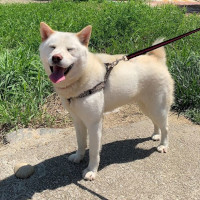
The Donggyeongi is a naturally anurous (tailless or very short-tailed) dog breed native to Korea. It is an endangered breed, with a total population of approximately 600 individuals, and has held "Natural Monument" status in South Korea since 2012 (Cultural Heritage Administration of Korea, No. 540). The Donggyeongi is distinguished from other Korean dog breeds by its lack of a tail or the presence of a very short one. Its facial features resemble those of another breed, the Korean Jindo, which is also classified as a natural monument in South Korea. DNA analysis indicates that the Donggyeongi and the Korean Jindo diverged from a common ancestor approximately 900 years ago. Characteristics of the Donggyeongi are mentioned in ancient documents such as the *Donggyeong Jabgi* (1845) and the *Jeungbomunhyunbigo* (1770); traces of the breed can also be found in 6th-century terracotta dog figurines unearthed in the Gyeongju region. In the past, the Donggyeongi population in Gyeongju was substantial, but these dogs were slaughtered during the period of Japanese colonization (1910–1945). It is believed they were eliminated due to their resemblance to "Komainu"—guardian dog statues found in Japanese royal palaces and shrines. During this period, the numbers of breeds such as the Donggyeongi, Jindo, and Sapsali plummeted, as the dogs were slaughtered en masse for their fur, which was used to make winter coats. Even after Korea's liberation in 1945, the situation of the Donggyeongi remained precarious. These dogs were viewed unfavorably by the public: their lack of a tail was considered a bad omen, or the animals were mistakenly perceived as deformed. Consequently, the number of Donggyeongi declined significantly. Crossbreeding with other breeds exacerbated the situation. Subsequently, the misunderstanding regarding their tail shape was cleared up, efforts to preserve the breed were undertaken, and the dogs were designated as national heritage. |



 English (United Kingdom)

Comments