
 |
Sco-Shi |
|
He is not recognized by the F.C.I. |
Origin |
Scotland <> Tibet -> U.S.A. | |
Translation |
Francis Vandersteen |
A brief presentation of the Sco-Shi |
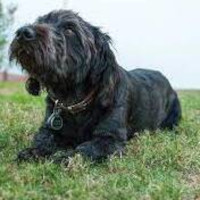
| The Sco-Shi is a hybrid dog. Its parent breeds are the Scottish Terrier and the Shih Tzu. It's a small dog; even as an adult, it won't weigh more than 9 kilos. They are highly intelligent and relatively easy to train. He may require a good deal of maintenance, as both parent breeds are likely to leave him with long hair. He may seem somewhat aloof, but he is extremely loyal to his master. He can also be quite independent at times. He doesn't need much activity to stay healthy. He's happy in an apartment or house with a fenced garden, and gets on well with family members of all ages. |
History of the Sco-Shi |
| The Sco-Shi is a hybrid breed. While not necessarily a rare breed, there isn't much information on how the Sco-Shi came to be. However, we can study the history of parent breeds to understand the origins of the mixed breed. |
A little of the Scottish Terrier |
||
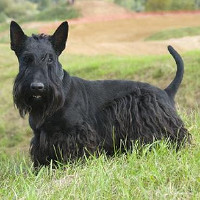
| The Scottish Terrier is a born hunter. Developed to help guard homes and hunt vermin in Scotland, the Scottie can trace its origins back to the Scotch Terrier. The Scotch Terrier, now extinct, is slightly larger than the modern Scottie. It is also thought to be the father of the Scottie, Skye Terrier, West Highland White Terrier and Cairn Terrier. The Scotch Terrier was known for its stamina and tenacity at work. They also worked in rock quarries, never failing to complete a task when asked to do so by their master. The Scotch Terrier is said to have been one of many dogs given to the French monarchy by James I of England. Over time, the dog was crossed to become the Scottie we know today. | ||
 |
||
| Standard of the Scottish Terrier |
A little of the Shih Tzu |
| The Shih Tzu was also prized by royalty, only it was revered in the East. Used by Tibetan monks as guard dogs, there was a time when the only way to get a Shih Tzu was to receive one as a gift from the Dalai Lama. In fact, this is how the Emperor and Empress of China received their Shih Tzu. Some Chinese called them “lion dogs”, a comment on the Shih Tzu's courage. It is said that the Shih Tzus of the royal family had their own palace and were trained to sit and greet visitors. After the Empress's death in 1908, many members of the royal family tried to start breeding these dogs. In 1928, a certain Lady Brownrigg obtained a pair of male and female Shih Tzu. Philip Price, Lady Brownrigg's nephew, was one of the first to import the Shih Tzu to the United States. In 1969, the Shih Tzu was recognized by the American Kennel Club. The breed remains very popular today. |
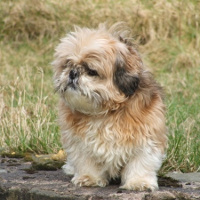 |
| Standard of the Shih Tzu |
Appearance of the Sco-Shi |
| The Sco-Shi will be a rather small dog, weighing no more than 9 kilos at maturity. It's likely that he'll actually be smaller than this expected weight, but this depends on the parent's dominant breed. He will have floppy ears, which will require special care to keep them healthy, and his coat is generally of medium to long length. This coat is generally straight, but may appear to be harsh. Again, this depends on the breed of the dominant parent. It is usually black, but can also be gray, brown, black with brown or gray flecks, or brindle. His coat will be long on the face. He may appear to have a beard, and he may have long hair around his eyes. His tail is straight and may also be long-haired. Its body is short and compact. Its legs are short but sturdy. It may have a long muzzle with a black nose. |
Temperament of the Sco-Shi |
| The Sco-Shi is a generally happy dog. However, it is often described as aloof. He's not an overly friendly or yappy dog, but he's a good watchdog. He will certainly alert you if something is wrong on his territory. He's not afraid of solitude, so if you or your family are away a lot, you won't have to worry about Sco-Shi suffering from separation anxiety. He's often the dog of a single person or family. He may, however, follow his person from room to room to see what they're up to. He loves cuddles and is often happy to sit on the sofa next to his person. He's good with older children, especially those who know how to handle a small dog. |
Needs and activities of the Sco-Shi |
| The Sco-Shi is not a very active dog, but he does need appropriate daily exercise to maintain a healthy weight. He'll enjoy short, brisk walks around the neighborhood with you. He'll also enjoy spending time at the dog park. Don't forget, however, that the Scottie mother breed is a hunter. If squirrels and other small animals also enjoy the dog park, it might be best to take your Scottie to obedience classes to make sure he'll listen to you even if he's tempted to chase small prey. He'll also appreciate spending time in a fenced-in yard, but it's not necessary for him to spend a lot of time unsupervised in this area. He may inherit the brachycephalic snout of his parent breed, the Shih Tzu, in which case you'll need to make sure he never overpowers himself. Keep water close at hand when exercising, especially on hot days. |
Maintenance of the Sco-Shi |
| Since the Sco-Shi is likely to have long bristles, you can expect it to be well cared for. Brush it two or three times a week to remove excess hair and prevent tangling. In spring and autumn, you can brush him daily to prevent excess hair from settling on your clothes and furniture. Brush his teeth two or three times a week to prevent tartar build-up and bad breath. If you want to prevent tooth decay, brush daily. Trim his nails twice a month, unless he wears them out on his own. As a general rule, if you hear his nails clicking on the tiles, it's time to trim them. His ears may need special attention. When you brush him, check his ears. Wipe them with a damp cotton ball to remove excess dirt. Make sure there's no redness or foul odor, which is a sign of a possible ear infection. You may also need to trim the hairs around his eyes to prevent them from interfering with his vision. |



 English (United Kingdom)

Comments