
 |
Schipese |
|
He is not recognized by the F.C.I. |
Origin |
Belgium <> Central Mediterranean Basin -> U.S.A. | |
Translation |
Francis Vandersteen |
A brief presentation of the Schipese |
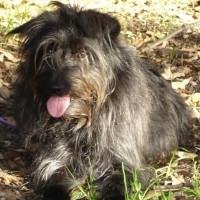
| The Schipese is a designer dog that was developed by combining two different small pets: the Schipperke, a small all-black dog descended from herding dogs in Belgium, and the Maltese, a tiny all-white breed that has been favored by celebrities and royalty for thousands of years. Although playful and affectionate, they can have a stubborn or mischievous side. Early training and socialization will help prevent the development of anxious, fearful or temperamental behaviors, encouraging your dog to retain his natural cheerfulness and good manners. Although they require a little more grooming than other breeds, they also need less exercise due to their size, and adapt very well to small apartments. |
History of the Schipese |
| The Schipese is a type of intentional hybrid known as a designer dog. In this case, it's a combination of the Maltese, a lively, playful pet favored by royalty for thousands of years, and the Schipperke, a pet popular with canal workers and craftsmen throughout Belgium. |
A little of the Schipperke |
||
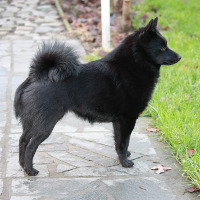
| The Schipperke is a much more recent breed than the Maltese, but by no means a new one. This little black dog with a fox-like face is considered to be one of the descendant breeds of a vanished sheepdog, the Leauvenaar, a black dog weighing around 13.5 kilos that originated in Belgium. Popular with local canal workers and craftsmen, the Schipperke inspired one of the first breed-specific dog shows. In 1690, groups of Schipperke owners gathered at the Grand Palais in Brussels to exhibit their beloved dogs, often wearing decorative collars of hammered and sculpted brass specially designed and made for the occasion. | ||
 |
||
| Standard of the Schipperke |
A little of the Maltese |
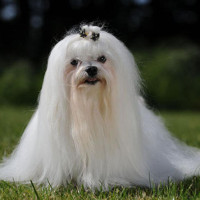
| The Maltese is one of the world's oldest companion breeds, tracing its origins to a small island off the coast of Italy called Malta. Although it shares a common ancestor with other lively, silky-coated companion dogs, such as the Bichon frise and the Havanese Bichon, it separated from its cousins some three thousand years before the time of Christ. Since the days of ancient Greece, they have been the preferred pets of the rich and famous, as much for their luxurious, long white coats as for their endearing personalities. With the exception of a brief period in the 1600s, the Maltese breed has remained popular throughout the world and has been enjoyed by many, including Elizabeth Taylor, Josephine Bonaparte, Halle Berry, Mary Queen of Scots, Liberace and Marie Antoinette. |
 |
| Standard of the Maltese |
Appearance of the Schipese |
| The Schipese is classified as a toy-sized dog, generally measuring less than 30.5 centimeters and weighing less than 5.5 kilos. This hybrid is generally as long as it is tall, with a well-proportioned head and a tapered muzzle of medium length, although some may have the slightly longer muzzle of the Schipperke, while others will have a muzzle that is both shorter and finer like the Maltese. The coats of the parent breeds are quite different from each other, and the Schipese can inherit characteristics from either of the parent breeds; while the Maltese has a long, flowing, single-layer white coat, the Schipperke's black coat is a double-layer coat, with a thick, soft undercoat that features a layer of medium-length hard hairs that stand out from the body. Whereas the Maltese's coat is long all over, the Schipperke's is of variable length, with shorter hairs on the lower legs and around the face. |
Temperament of the Schipese |
| The Schipese is generally a very friendly, energetic and playful dog, with a bold sense of adventure and a mischievous side. The Schipperke is generally quite impulsive, and while it makes an excellent companion for adults and older children, it generally won't tolerate teasing or harsh treatment. However, adding the Maltese to the mix can encourage the Schipese to develop a more peaceful nature with children, although all interactions between children and dogs must be closely supervised to ensure the safety of both child and dog. Early socialization, both positive and consistent, will help this dog retain its bold, cheerful temperament and prevent fearful or anxious behavior from developing. This cross should be fairly easy to train, as it inherits the quick wit and good memory of both parents, and although the Schipperke is known to be a little stubborn and mischievous on occasion, the Maltese's gentle nature and desire to please should mitigate some of these tendencies. |
Needs and activities of the Schipese |
| Although this dog is quite active and energetic, it's also quite small, which makes it a little easier to keep in shape. Half an hour to forty-five minutes of vigorous activity a day is usually enough to keep this little dog in top shape, but effectiveness is best if exercise sessions are shorter and spaced out throughout the day. In addition to brisk walks around the neighborhood or in a nearby park, this small dog may enjoy other activities, such as advanced obedience training, agility competitions and freestyle canine dancing. Some of these small dogs can even excel at herding and controlling sheep. Because of their alert temperament and small size, these dogs make excellent guard dogs in apartment buildings. |
Maintenance of the Schipese |
| Although the coat of this hybrid can vary considerably from one individual to another, all Schipese dogs are likely to require a little more grooming than most dogs. In general, they should be bathed two or three times a month with a quality shampoo designed for dogs, and brushed at least several times a week, but daily is preferable. Dogs that have inherited the Schipperke's double coat tend to shed more than those that have inherited the Maltese's single coat, and frequent brushing helps to remove dead hairs, while those that have inherited the Maltese's long silky coat need brushing to remove tangles and prevent knots from forming. Because of their small size, these dogs are prone to dental disorders, so attention to dental hygiene is crucial. |



 English (United Kingdom)

Comments