Rottsky

He is not recognized by the F.C.I.

Origin
Germany <> Siberia -> U.S.A.
Translation
Francis Vandersteen

A brief presentation of the Rottsky

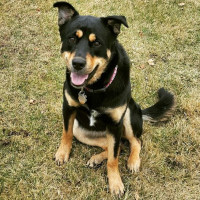
The Rottsky is an intentional hybrid, the combination of a large, muscular German guard dog, the Rottweiler, and the Siberian Husky, an ancient dog that has been an integral part of life for the Chukchi people of Russia since before the region's written history. They are extremely athletic animals with great stamina and, although they make excellent exercise partners and are generally loyal, reliable and protective dogs, they are far too active for apartments and can become very destructive if not given an adequate amount of exercise and mental stimulation.

History of the Rottsky

The Rottsky is a designer dog, the deliberate cross between the Rottweiler, a large German dog known for its guarding abilities, and the Siberian Husky, an ancient sled dog developed by Russian nomads at some point in prehistoric times. The combination of these two breeds often results in a strong, loyal and enduring animal, which is generally leaner and less prone to heart problems than the Rottweiler, with a more developed guarding instinct than the Siberian Husky. Some breeders may mix the Rottweiler with the Alaskan Husky instead of the Siberian Husky and call it a Rottsky, but the Alaskan Husky can bring a different temperament and different structural characteristics to the Siberian Husky, so it's always important to do your research when choosing a breeder.


A little of the Rottweiler

        
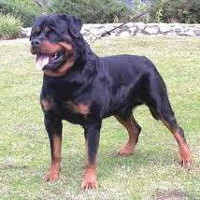
The Rottweiler has been used as a cattle dog in Germany since the Middle Ages and, although its origins are obscure, most people believe it is descended from the large Drover dogs employed by Roman herders and butchers as early as 700 AD to protect livestock and drive them to market, mixed with some local German breeds such as the Appenzell Sennenhund and the Bernese, Entlebucher and Great Swiss Mountain Dog breeds. With the development of the locomotive in the mid-1800s, the number of cattle-driving dogs declined, and the popularity of these determined, dignified dogs dropped dramatically. It wasn't until they were rebranded in the 1900s as high-quality dogs suitable for police, military and security use, that they regained their popularity and today are regarded as reliable, protective family companions.
Standard of the Rottweiler


A little of the Siberian Husky

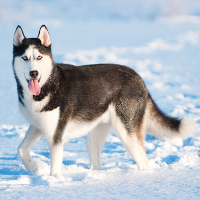
The Siberian Husky is an even older breed, developed by the Chukchi people, a tribe indigenous to Russia. Siberian Huskies were highly prized by the Chukchi as they were used to pull sledges carrying food, goods and sometimes even people, enabling the tribe to travel further and faster. When these dogs were not being used for work, they spent their time with the women and children of the tribe, and only non-aggressive, well-tempered animals were tolerated.
Standard of the Siberian Husky

Appearance of the Rottsky

The Rottsky is generally about a meter high at the shoulders, with a slightly longer body. They are generally powerfully built animals, with compact but substantial musculature, although individual dogs may lean towards the more massive structure of the Rottweiler, with a broad head and short, broad muzzle, or towards the slightly longer, drier form of the Husky, with a more moderately sized head and tapering, medium-length muzzle. They have almond-shaped eyes that are most often dark brown, although they can inherit the blue or heterochromatic eyes of the Husky, and although both parent breeds have triangular-shaped ears, those of the Rottweiler fold back close to the sides and those of the Husky are erect. Although both the Rottweiler and the Siberian Husky have a double coat, these coats can be very different from each other, as the Rottweiler's coat is short, glossy and lies close to the body, while the Husky's coat is of medium length, well furnished with hair and stands out from the body.

Temperament of the Rottsky

This canine is quite active, both mentally and physically, and needs plenty of exercise, attention and mental stimulation to avoid problem behaviors. Without these resources, the Rottsky can become incredibly destructive; while a bored or restless Siberian Husky is likely to vocalize loudly, act out physically and dig destructively, the bored or anxious Rottweiler is known to chew on objects as varied as his chew toys, your shoes or even the walls themselves. When given sufficient exercise, socialization and mental stimulation, they are generally friendly but reserved with most people, whatever their age, although they can be more demonstrative towards their own family. While Siberian Huskies are generally sociable with other dogs, this crossbreed can sometimes develop a certain aggression towards other dogs due to the Rottweiler heritage, particularly with dogs of the same sex, and they have a strong propensity for hunting and can pursue cats and other small animals. The trainability of these dogs can vary somewhat, but it's generally not an easy task; although they are extremely intelligent and able to learn quickly, the Rottweiler's temperament can be stubborn and the Husky is prone to situational behavior, behaving well in its harness or in the show ring, but ignoring its masters at home.

Needs and activities of the Rottsky

The Rottsky is an extremely athletic, persevering dog that needs plenty of physical activity and mental stimulation to be as stable and healthy as possible. While long walks and vigorous running are generally appreciated, this dog can also enjoy and excel in other activities such as sledding, Schutzhund classes, advanced obedience or agility training, although it may be more difficult to convince him that swimming or water sports are a good idea. It's also crucial to keep an eye on this crossbreed, especially when exercising in hot weather, as these dogs can be more prone to heat exhaustion than other dogs.

Maintenance of the Rottsky

Neither breed needs many baths, and bathing Rottskys too frequently can deprive the skin of the natural oils needed to maintain the coat. If your Rottsky has a slightly longer, denser coat, like the Siberian Husky, it's particularly important to ensure that its undercoat is completely dry, as this breed is known to frequently develop mold in the undercoat if it remains damp. Both the Rottweiler and the Siberian Husky shed a lot, and although this can be controlled by several brushing sessions a week, daily brushing may be necessary in spring and autumn, when shedding is more intense.

Comments

Latest page updates

  • Telomian

    Telomian He is not recognized by the F.C.I. Origin Malaysia Translation Francis Vandersteen A brief presentation of the Telomian The Telomian is a very rare breed of dog, and the only one native to Malaysia to have been bred outside the country. They were originally bred by the indigenous people of Malaysia to combat parasites such as snakes, rats,...
  • King Wheaten -- Cavalier King Charles Spaniel X Irish Soft Coated Wheaten Terrier

    King Wheaten He is not recognized by the F.C.I. Origin Great Britain <> Ireland -> U.S.A. Translation Francis Vandersteen A brief presentation of the King Wheaten The King Wheaten is a small dog with a heart this big and a playful disposition. Borrowing the energy and soft-coated waves of the Irish Soft Coated Wheaten Terrier and the size and...
  • Spanierd -- English Springer Spaniel X German Shepherd

    Spanierd He is not recognized by the F.C.I. Origin Great Britain <> Germany -> U.S.A. Translation Francis Vandersteen A brief presentation of the Spanierd The Spanierd is a hybrid dog. Its parent breeds are the English Springer Spaniel and the German Shepherd. They have an affable personality. He's known for entertaining family and friends with his...
  • Alaskan Goldenmute -- Alaskan Malamute X Golden Retriever

    Alaskan Goldenmute He is not recognized by the F.C.I. Origin U.S.A. <> Great Britain -> U.S.A. Translation Francis Vandersteen This breed is also known as Alaskan GoldenGoldenmuteAlaskan Gold Retriever     A brief presentation of the Alaskan Goldenmute The Alaskan Goldenmute is a descendant of two great dog breeds: the Alaskan Malamute and the Golden...
  • French pointing dog Pyrenean type

    French pointing dog Pyrenean type FCI standard Nº 134 Origin France Translation Mrs. Peggy Davis Group Group 7 Pointing Dogs Section Section 1.1 Continental Pointing Dogs « Braque » Type Working With working trial Acceptance on a definitive basis by the FCI Tuesday 18 January 1955 Publication of the official valid standard Tuesday 01 August 2023 Last...
  • French pointing dog Gascogne type

    French pointing dog Gascogne type FCI standard Nº 133 Origin France Translation Mrs. Peggy Davis Group Group 7 Pointing Dogs Section Section 1.1 Continental Pointing Dogs « Braque » Type Working With working trial Acceptance on a definitive basis by the FCI Monday 17 January 1955 Publication of the official valid standard Tuesday 01 August 2023 Last...
  • Vucciriscu

    Vucciriscu He is not recognized by the F.C.I. Origin Sicily Translation Francis Vandersteen En français, cette race se dit Vucciriscu Diese Norm ist in deutscher Sprache sichtbar Vucciriscu En español, esta raza se dice Vucciriscu In het Nederlands, wordt dit ras gezegd Vucciriscu This breed is also known as Sicilian Vucciriscu Sicilian Butcher...

© 2026 Groupe Milouchouchou ASBL. Tous droits réservés. En savoir plus

Protected by Copyright01