
 |
Puginese |
|
He is not recognized by the F.C.I. |
Origin |
China -> U.S.A. | |
Translation |
Francis Vandersteen |
A brief presentation of the Puginese |
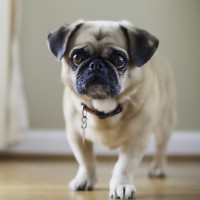
| The Puginese is a popular designer hybrid between the Pug and the Pekingese. The two parent dogs are similar in size and appearance. The Puginese was first developed in China and is well known for its appearance and personality. They are recognized by five breed registries and competitive associations, including the American Canine Club and the Designer Dogs Kennel Club. The Designer Breed Registry, the Dog Registry of America and the International Designer Canine Registry also recognize Puginese. The Pupinese also bears other designer names using the names of parent breeds, such as the Pugapeke and the Pekeapug, two adorable names for this lovable companion breed. |
History of the Puginese |
| The Puginese is a designer dog from China whose parents are also of Chinese origin, the Pug and the Pekingese. Little is known about the Puginese, although it is a popular hybrid companion dog. Predictable standards and appearances are not possible for the Puginese due to the potential for variation in dogs, however, owners and people wishing to adopt a Puginese can review the histories and character traits of the parent breeds to better understand their Puginese. |
A little of the Pug |
||
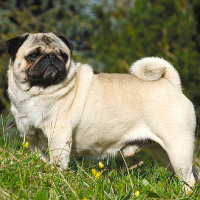
| The Pug is an ancient Chinese dog of Mastiff lineage, dating back to the Han dynasty in 200 BC. The Pug remained isolated in China until the 16th century, when trade with Europe introduced the breed to the West. The short-nosed appearance and wonderful companion disposition stole the hearts of aristocratic and noble families and led to the Pug's instant popularity. The Pug became so popular that it replaced other native companion dogs in Europe, such as the Cavalier King Charles Spaniel. Pugs were bred in Europe and simultaneously in China, and the two regional breeds developed variations over time. The Chinese Pug was rediscovered during the British invasion in the 18th century, and several pure Pug dogs were brought back to England to be added to improve European Pug bloodlines. The Pug arrived in the United States after the Civil War, and the American Kennel Club recognized the breed in 1885. | ||
 |
||
| Standard of the Pug |
A little of the Pekingese |
| The Pekingese is another ancient Chinese dog, but one whose history was much more guarded. The Pekingese is known as the “lion dog”, and Chinese legend has it that a lion fell in love with a marmoset, which is a small monkey. The Pekingese is the result of the union between the lion and the marmoset. The Chinese imperial court kept the Pekingese under guard and the breed was not allowed to leave the palace, so it remained hidden from the world. However, a Pekingese was found in the palace by the British after the Opium War and brought back to England as a hunting dog. Pekingese remained rare and only smuggled dogs left China during the 19th century. By the 20th century, however, the Pekingese was growing in numbers and popularity in the West, and the American Kennel Club recognized the breed in 1906. |
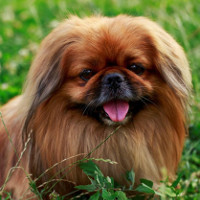 |
| Standard of the Pekingese |
Appearance of the Puginese |
| The Puginese is a short-nosed hybrid of the Pug and Pekingese, the two Chinese dogs. The hybrid often has medium to long hair, like the Pekinese, but with the black masks of the Pug. Some Puginese coats can resemble the Pug parent and are short and dense. The Puginese is a toy-sized dog that sits low to the ground with large, round, prominent eyes. They sometimes suffer from poor dentition and may have an underbite, which is undesirable and can lead to dental problems. Their ears fold back and rest on the sides of their skulls, and their noses are small and black. |
Temperament of the Puginese |
| The Puginese is an ideal companion for singles and the elderly. It's a relaxed, low-energy dog that, while affectionate with children, may not be able to keep up with children's high energy levels. The Puginese is not particularly fond of strangers and will bark to alert its owner. However, this hybrid will settle down once the threat has been assessed. Pug parental lines help to soften the Puginese's distrust of strangers and kindness to other dogs and pets. The Puginese should have early socialization with other dogs, people and places often to help it adapt and gain confidence. With proper socialization, the Puginese is an excellent companion who can live in harmony with other pets. As for training, the Puginese can be slightly stubborn and requires a patient owner to work with them. However, they enjoy spending time with their people and are eager to please, which will help with training. Puginese energy levels are low and this breed should never be overworked due to its respiratory problems. |
Needs and activities of the Puginese |
| The Puginese is a low-energy dog that doesn't require much daily exercise and can get most activities done by following its owner around the house. The Puginese's activity levels and size make it an ideal companion for seniors and singles living in apartments and urban areas. Backyards are not necessary, but daily activities can also include roaming in the grass in a small backyard. The Puginese does not tolerate cold well and should never be left outdoors. The outdoors should be avoided during months of extreme temperatures, as a hot climate is also intolerable for the Puginese. |
Maintenance of the Puginese |
| The Puginese has a high shedding potential and requires weekly brushing to help remove dead and loose hairs, especially if the coat resembles the Pekinese. Weekly brushing will also prevent tangles and mats on the Puginese. The Puginese may have loose skin around the face and hindquarters that requires care. Dirt, moisture and debris can become trapped in the folds of skin and, if not kept clean, can develop into infections or foul odors. These folds can be cleaned with a hypoallergenic, unscented pet wipe. Owners also want to refrain from over-bathing their Puginese, as this hybrid's skin is very sensitive. |



 English (United Kingdom)

Comments