
 |
Poovanese |
|
He is not recognized by the F.C.I. |
Origin |
France <> Western Mediterranean -> U.S.A. | |
Translation |
Francis Vandersteen | |
This breed is also known as |
Hava-Poo
|
A brief presentation of the Poovanese |
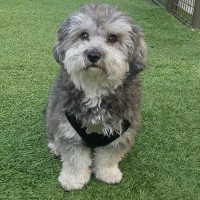
| The Poovanese is a hybrid pet that combines the traits of the Havanese Bichon and the Poodle. It's a small to medium-sized breed that excels in activities such as obedience and agility trials. The medium-sized Poovanais most closely resembles the Havanese Bichon in size and structure, while retaining the curly coat of the Poodle. Its personality is perfect for anyone longing for an affectionate dog that adores you completely. He has an infectious, happy nature and gets on extremely well with everyone, from small children to other dogs. On top of this, the Poovanese resembles the Poodle and is therefore hypoallergenic, making it the perfect dog breed for anyone with allergies. The only drawback to this breed is that it can have a low tolerance to being left alone for long periods, due to its attachment to its owner, and can be a little sensitive if not properly socialized at a young age. With careful training and lots of love and care, however, these negative traits can be easily dealt with and overlooked in comparison to all his wonderful traits. The Poovanese doesn't bark often and does well in any type of environment, cold or warm. |
History of the Poovanese |
| Created within the last decade, the Poovanese is a breed that hasn't had much time to develop a well-detailed origin story. For this reason, we need to look at the parent breeds to understand what makes the Poovanese so unique and why it may have been developed in the first place. Many different elements come into play when creating a new dog breed, from appearance to personality. |
A little of the Poodle |
||
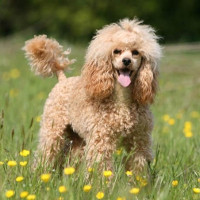
| The typical Poodle size used for the Poovanese combination is the Miniature Poodle, but there is also a standard variant and a toy that are also extremely well-known. This breed began life as a water retriever in Germany, whose main purpose was to provide a service to their hunting masters. However, over time, despite being a working dog, the Poodle's beautiful curly coat and intelligent personality brought it to the attention of other status circles, including the King of France, King Louis XVI. King Louise XVI adored Poodles and had many in his castle, which radically changed the Poodle's popularity and purpose. The breed became the country's national dog, and people everywhere brought them into their homes as companion dogs instead of hunters. To this day, Poodles are still pets and loyal companions rather than hunting dogs. Their fun-loving personality and unique appearance have made them a worldwide favorite, and they'll probably remain so until the end of time. | ||
 |
||
| Standard of the Poodle |
A little of the Havanese Bichon |
| When we look at the Havanese Bichon, this breed was created primarily as a companion dog, so it's loving and gentle with the ability to make people smile wherever it goes. The Havanese Bichon breed was originally created in Havana, from which it takes its name, and is part of the Bichon family. Over time, this popular breed found its way into the hearts of the Spanish colonists who brought the dog to Cuba in the late 18th century. Once there, the Havanese Bichon's abundant silky coat became more insulated, contributing to its ability, and that of the Poovanais, to tolerate the heat very well. Despite the Havanese Bichon's popularity in Cuba after the Cuban Revolution, the dog felt left by the wayside and was all but forgotten. Fortunately, some of the dogs made their way to America with Cuban refugees, where their popularity grew exponentially. Accepted by the American Kennel Club in 1999, the Havanese Bichon has been a show dog and loyal family companion ever since. |
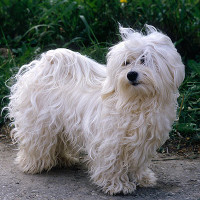 |
| Standard of the Havanese Bichon |
Appearance of the Poovanese |
| The Poovanese is a small to medium-sized dog that can reach up to 20.5 kilos at maturity, with a height of 38 centimeters at the shoulder. Its coat varies from long to medium length and can be wavy or curly. The Poovanese's coat can come in a variety of colors, such as golden, gray, brown and black, to name but a few. Its eyes are a vivid dark brown, it has folded ears that flap against its face and a longer tail, although occasionally it is docked. Thanks to this breed's coat, the Poovanese is happy in all weathers and doesn't lose often. |
Temperament of the Poovanese |
| If you're looking for a very affectionate dog that makes a wonderful guardian and companion, then the Poovanese will suit you. By combining the best and worst parts of the Havanese Bichon and the Poodle, we get a well-balanced hybrid breed and a real treat for dog owners of all experience levels. The Poovanese is laid-back, loving, intelligent, loyal, friendly and easy to train. All it wants is to have a good time in life, and this carefree temperament never fails to make people smile. This breed doesn't bark often and never has an aggressive side. It may be slightly annoyed by younger children from time to time, but if it is socialized and accustomed to such things at a young age, this shouldn't be a problem. |
Needs and activities of the Poovanese |
| As a moderately active dog, the Poovanese will need daily exercise. While it doesn't need endless hours of play, a simple walk or a playful game of fetch in the yard will do wonders for its soul. This breed loves its people more than anything else, so activities where you can bond will be the most beneficial. Training is a great way to bond with your Poovanese as well as give it a good physical and mental workout. |
Maintenance of the Poovanese |
| Because the Poovanese sheds so little, brushing should only take place a few times a week to remove any knots or tangles that may appear in the coat. If you have a light-colored Poovanese, such as white or cream, you may need to wash it often to keep the coat clean and presentable. Apart from that, however, the Poovanese doesn't need to be bathed frequently, as it doesn't have any kind of bad dog smell. However often you bathe your dog, it's important to always dry his ears thoroughly, as any remaining moisture trapped inside the ear canal can cause ear infection and discomfort. Finally, trim your dog's nails every few weeks so that his feet are healthy, snag-free and less likely to scratch someone when he gets up for a cuddle. |



 English (United Kingdom)

Comments