
 |
Peke-A-Pin |
|
He is not recognized by the F.C.I. |
Origin |
China <> Germany -> U.S.A. | |
Translation |
Francis Vandersteen |
A brief presentation of the Peke-A-Pin |
| The Peke-A-Pin is a specific cross between a pure-bred Pekingese and a pure-bred Miniature Pinscher. They are small dogs, but full of energy and very sure of themselves. They'll need a firm hand to know who's in charge. But they are loyal and affectionate dogs who are very curious, especially when it comes to eating everything they come across. They are best suited to families with older children, and will be happy to be the only dog in the house. Early socialization will be necessary if there are other dogs or cats. Whether they have the short, smooth coat of the Min Pin or the longer hair of the Pekingese will depend on how much care they need, but it shouldn't take more than brushing their teeth a few times a week. Common colors are black and brown, black and white, chocolate, gray and gold. |
History of the Peke-A-Pin |
| The Peke-A-Pin is a hybrid breed, a cross between a Pekingese and a Miniature Pinscher. |
A little of the Pekingese |
||
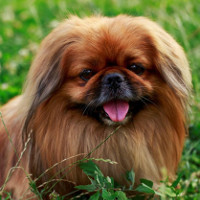
| Pekingese were bred in China as companions to the imperial family. They take their name from what was then the capital Beijing, and are considered the oldest dog breed dating back 2,000 years. The first Pekes arrived in England as Opium War trophies in 1860. Queen Victoria received the smallest of them, which she named “Looty” in reference to the British troops burning down the imperial palace. Pekingese are also known as Pelchie Dog, Peke, Lion Dog or Peking Lion Dog due to their resemblance to Chinese guardian lions, stone statues that stood in front of imperial palaces, temples and government buildings. In the 1890s, a number of dogs were smuggled out of China and became more popular. One named Pekin Peter is said to have been the first Pekingese to be exhibited at a British dog show, in 1894. Originally, they were known as Chinese Pugs or Pekingese Spaniels. The Pekingese Club of America was founded in 1909. | ||
 |
||
| Standard of the Pekingese | ||
A little of the Miniature Pinscher |
||
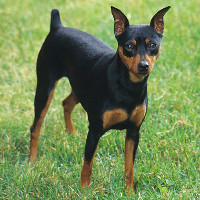
| The Miniature Pinscher is affectionately known as the Min Pin. These dogs originated in Germany and were used to catch rats. Nicknamed the “king of toys” for its strong-willed, self-confident attitude, the Miniature Pinscher is considered a direct descendant of the German Pinscher. Although it resembles a small Dobermann, it is a completely separate breed. Other Min Pin ancestors were probably Dachshunds and Italian Greyhounds. In Germany, the Min Pin was called the Reh Pinscher because of its resemblance to the forest-dwelling reh, or small deer. In 1895, the Pinscher Klub was formed, but was later renamed the Pinscher-Schnauzer Klub. It was then that the first breed standard was drawn up. Miniature Pinschers were first shown at the Stuttgart Dog Show in Germany in 1900, when they were virtually unknown outside their native country. They appeared in the United States around 1919, and a decade later the Miniature Pinscher Club of America was formed. They were also recognized by the American Kennel Club in the same year. | ||
 |
||
| Standard of the Miniature Pinscher |
Appearance of the Peke-A-Pin |
| The Peke-A-Pin is a hybrid breed composed of a cross between a pure-bred Pekingese and a pure-bred Miniature Pinscher. They are small dogs weighing up to 4.5 kilos and standing around 25.5 centimeters tall. Common colors are black and brown, black and white, chocolate, gray and golden, and the coat is generally short, hard and smooth, but can be longer depending on the parent breed. They have brown eyes that may swell slightly on the Pekinese side. Their ears generally fall forward over the face and may be feathered. Min Pins often had their ears cropped and their tails cut off, but these practices are now forbidden in many countries. |
Temperament of the Peke-A-Pin |
| Despite its size, a Peke-A-Pin is a tough, fearless dog that is affectionate and will make an excellent pet. They are not suitable for people with young children, as they will not cope well with rough handling. A Peke-A-Pin can be a challenge for new dog owners, unless they are prepared to invest a lot of time and patience in training them. They are inquisitive, energetic dogs, often filled with complacency, so they need to be taught early on what their limits are. Early socialization will be important, as they don't like other dogs or cats. They make excellent watchdogs, barking at strangers and being very protective of their family. These dogs don't like to spend too much time alone and are therefore ideal for those who work at home or active seniors. They should be kept on a leash when out in public, as they are known to wander off. A secure fenced yard is also a good idea. |
Needs and activities of the Peke-A-Pin |
| A Peke-A-Pin is an energetic, playful and curious dog, but will only need light exercise to stay fit and healthy. A daily walk on leash and play sessions in a secure, enclosed yard will ensure that he's relaxed and calm. The Min Pin is renowned as an escape artist and a Pekingese tends to wander off if given the opportunity, so make sure your pet is always under your control when out in public. A Peke-A-Pin will do well in an apartment or house with a garden. They're quite sensitive to heat and cold, so make sure they don't exercise when it's hot and that they're warm enough in winter. |
Maintenance of the Peke-A-Pin |
| A Peke-A-Pin sheds moderately and is fairly easy to groom, especially if its coat is short. If they are longer and have bangs around the ears, they may need occasional trimming. A weekly brushing should be more than enough to keep them looking good and get rid of loose hairs. They don't have a strong dog smell, so a very occasional bath is necessary. Check the ears regularly for any build-up of dirt or wax, and clean them gently. It's a good idea to brush your dog's teeth every day to avoid any dental problems. Check the nails from time to time to see if they need trimming. |



 English (United Kingdom)

Comments