Patterjack

He is not recognized by the F.C.I.

Origin
Great Britain -> U.S.A.
Translation
Francis Vandersteen

A brief presentation of the Patterjack

The Patterjack dog is the result of crossing a Patterdale Terrier with a Jack Russell Terrier. Puppies from the same litter may vary in appearance and temperament, but they are generally robust little dogs with a cheerful, energetic nature. They come from a working environment, so they need regular mental stimulation and exercise to prevent bad habits from setting in. Measuring up to 35.5 centimeters in height, these solid, sturdy dogs can be a handful for the inexperienced owner. The worst thing is to let them get away with leading you; they respect a firm pack leader they can respect. If not raised properly or without any rules, it can lead to stubbornness and even aggression. Properly managed, Patterjacks are affectionate, loyal and protective. They are good with children if well socialized, but it's always important to supervise young children with any dog.

History of the Patterjack

Let's look at the parent dogs to determine the history our Patterjack Terrier will inherit.


A little of the Patterdale Terrier

        
The Patterdale Terrier is an active descendant of the Fell Terrier. The dog's origins can be traced back to northern England hundreds of years ago, where they were used to hunt and control foxes and eliminate vermin from homes and stables. Although little is known of their history, they are respected for their fearless nature and capacity for hard work. These tough little terriers would give anything for Lake District hunters, often chasing game like fox into the den, then coming in to chase or fight it. They were also used to hunt badgers to control numbers. In recent times, they are still used as hunting and working dogs, mainly on farms, as they have been for eons. The UK recognized the Patterdale Terrier in 1995 as both a working dog and a companion. This feisty little dog has made its way to the United States, where it hunts raccoons, foxes and groundhogs. Patterdale Terriers excel in a number of dog sports, including agility and running.
Presentation of the Patterdale Terrier

A little of the Jack Russell Terrier

The Jack Russell Terrier originated in southern England. Parson John Russell developed the breed in the mid-1800s, hence its name. The aim of this development was to obtain a terrier that would hunt with the dogs, but above all would go into the dens after the foxes, which would then run away and the dogs would take up the chase. This active little dog became a favorite with hunters, especially those on horseback. The Jack Russell Terrier became known for its enthusiastic and energetic pursuit. By the 1930s, this hard-working little dog was well known and popular among owners in the USA. In 2000, the American Kennel Club recognized the breed, calling it the Parson Russell Terrier to distinguish it from the Jack Russell Terrier Club of America. Fiery, energetic and a hard-working dog, the Jack Russell Terrier remains a popular terrier to this day.
Standard of the Jack Russell Terrier

Appearance of the Patterjack

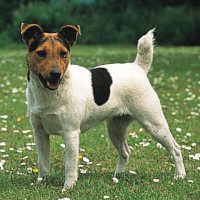
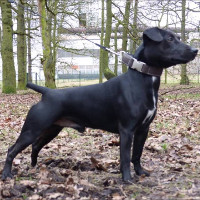
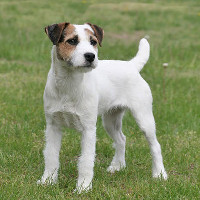
The Patterjack is a handsome, small but muscular and stocky dog, around 35.5 centimeters tall, with a short, dense coat and alert posture and expression. The top of the head is only slightly rounded and wedge-shaped, with the ears set high but folded back to almost touch the tip of the eye. Dark or amber eyes don't miss a turn, and the muzzle is long with teeth that meet in a scissor-like pattern. The nose is generally black, but can be brown in liver-colored dogs. A sturdy body on short, strong legs, a high tail and deep chest give this dog a look more powerful than its size. The coat can be a single shade, or a combination of two colors or patches. The alert appearance and active nature demonstrate the true character of the Terrier brand.

Temperament of the Patterjack

The Patterjack dog could best be described as robust, cheerful, full of energy and needing to do something... anything. They're not the dog for small apartments or houses, as they need a yard to explore or, ideally, the countryside. With a strong hunting instinct, they tend to chase small, fast-moving animals, including cats. This helps if your dog has been raised with a cat, but it doesn't mean he won't chase the neighbor's cat. A typical terrier, they can be overconfident and won't even back down from larger dogs. Walk your dog on a leash to control his natural hunting instinct. This beautiful dog requires strong leadership. Being lenient with this dog won't do him any favors; he needs strong, consistent leadership to stay out of trouble. These are dogs that need jobs. They need to be challenged, like agility work, farm chores or long walks in the countryside to wear them out. As a family dog, they get on well with children. If they've been raised with children, they'll be affectionate and caring. Teach children to respect the dog and not to pull its tail, prick its ears or mess up its food, as this dog may not have the patience to put up with rough treatment. Best described as a true working dog, but loyal, affectionate and handsome, the Patterjack needs a firm, confident hand to bring out the best in him.

Needs and activities of the Patterjack

Patterjacks are active dogs that come from a working environment. They need at least one long walk a day, two would be ideal. Challenge their minds by involving agility work or set tasks for them to solve to keep these busy minds occupied. They can be over-confident or stubborn when trying to train. These dogs are not for the inexperienced owner, as they can take over and become aggressive and willful if you're not careful. The Patterjack dog needs an active family, they don't just want to sit and snuggle, they want to do things. Not suitable for an apartment, as they are too active and can be quite vocal. They are suited to most climates and like a country setting with lots of work to do.

Maintenance of the Patterjack

Patterjacks are relatively easy to care for. Their short, thick coat requires brushing every few days to keep it smooth, with occasional combing to get rid of loose hair. These dogs may need more baths than some other companion dogs, due to their active nature and tendency to dig. Don't overdo it, as this could strip the coat of its natural oil, reducing the effectiveness of this weather-resistant coat. While brushing, check for cuts or sores on their body and treat them if necessary. Also check their feet for injuries and trim nails if necessary. The ears are another area that can accumulate dirt and oil, so gently wipe the inner ear with a soft, damp cloth, drying it carefully once you've finished. Twice a week or more, brush your dog's teeth to ensure soft breath.

Comments

Latest page updates

  • Telomian

    Telomian He is not recognized by the F.C.I. Origin Malaysia Translation Francis Vandersteen A brief presentation of the Telomian The Telomian is a very rare breed of dog, and the only one native to Malaysia to have been bred outside the country. They were originally bred by the indigenous people of Malaysia to combat parasites such as snakes, rats,...
  • King Wheaten -- Cavalier King Charles Spaniel X Irish Soft Coated Wheaten Terrier

    King Wheaten He is not recognized by the F.C.I. Origin Great Britain <> Ireland -> U.S.A. Translation Francis Vandersteen A brief presentation of the King Wheaten The King Wheaten is a small dog with a heart this big and a playful disposition. Borrowing the energy and soft-coated waves of the Irish Soft Coated Wheaten Terrier and the size and...
  • Spanierd -- English Springer Spaniel X German Shepherd

    Spanierd He is not recognized by the F.C.I. Origin Great Britain <> Germany -> U.S.A. Translation Francis Vandersteen A brief presentation of the Spanierd The Spanierd is a hybrid dog. Its parent breeds are the English Springer Spaniel and the German Shepherd. They have an affable personality. He's known for entertaining family and friends with his...
  • Alaskan Goldenmute -- Alaskan Malamute X Golden Retriever

    Alaskan Goldenmute He is not recognized by the F.C.I. Origin U.S.A. <> Great Britain -> U.S.A. Translation Francis Vandersteen This breed is also known as Alaskan GoldenGoldenmuteAlaskan Gold Retriever     A brief presentation of the Alaskan Goldenmute The Alaskan Goldenmute is a descendant of two great dog breeds: the Alaskan Malamute and the Golden...
  • French pointing dog Pyrenean type

    French pointing dog Pyrenean type FCI standard Nº 134 Origin France Translation Mrs. Peggy Davis Group Group 7 Pointing Dogs Section Section 1.1 Continental Pointing Dogs « Braque » Type Working With working trial Acceptance on a definitive basis by the FCI Tuesday 18 January 1955 Publication of the official valid standard Tuesday 01 August 2023 Last...
  • French pointing dog Gascogne type

    French pointing dog Gascogne type FCI standard Nº 133 Origin France Translation Mrs. Peggy Davis Group Group 7 Pointing Dogs Section Section 1.1 Continental Pointing Dogs « Braque » Type Working With working trial Acceptance on a definitive basis by the FCI Monday 17 January 1955 Publication of the official valid standard Tuesday 01 August 2023 Last...
  • Vucciriscu

    Vucciriscu He is not recognized by the F.C.I. Origin Sicily Translation Francis Vandersteen En français, cette race se dit Vucciriscu Diese Norm ist in deutscher Sprache sichtbar Vucciriscu En español, esta raza se dice Vucciriscu In het Nederlands, wordt dit ras gezegd Vucciriscu This breed is also known as Sicilian Vucciriscu Sicilian Butcher...

© 2026 Groupe Milouchouchou ASBL. Tous droits réservés. En savoir plus

Protected by Copyright01
We use cookies

We use cookies on our website. Some of them are essential for the operation of the site, while others help us to improve this site and the user experience (tracking cookies). You can decide for yourself whether you want to allow cookies or not. Please note that if you reject them, you may not be able to use all the functionalities of the site.

Ok