 |
Papi-Poo |
|
He is not recognized by the F.C.I. |
Origin |
France and Belgium <> France -> U.S.A. | |
Translation |
Francis Vandersteen |
A brief presentation of the Papi-Poo |
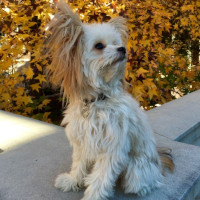
| This little dog is the one everyone loves as soon as they see him. Small, fluffy and adorable, Papi-Poo is like a living, moving stuffed animal. They're ideal for families, seniors or singles, and offer the affection and devotion of a true companion. These little dogs have great personalities: they're gentle, intelligent, lively and even a little mischievous, but they can get away with their seductive expression. They are the result of crossing the Continental Toy Spaniel with a Poodle, which has produced a dog with lots of energy, who is easy and willing to be trained, and who is relatively easy to care for, although that lovely fluffy coat requires regular maintenance. They love to explore their home, often walking with you wherever you go. Apartment living suits this dog perfectly, or a home with a yard to explore will be just as eagerly accepted. With their bright eyes and soft, medium-length coats, they're really hard to resist, and they know it. |
History of the Papi-Poo |
| The Papi-Poo is known as a hybrid dog, the result of a cross between a Continental Toy Spaniel and a Poodle. To discover the characteristics that make up this dog, we need to turn to its parent breeds. |
A little of the Continental Toy Spaniel |
||
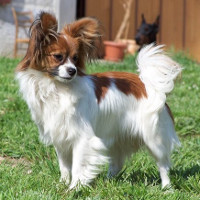
| The Continental Toy Spaniel is an ancient breed, dating back to the 1500s, when it was popular with noblewomen throughout Europe. They were prized as companion dogs and perhaps guard dogs for their mistresses, and enjoyed the glory and affection they received. The name is French and was given to the breed when, in the 17th century, its appearance changed from floppy to straight ears. Apparently, the nobility decided they looked like butterflies, hence the name change. The ears weren't the only change, as their solid color slowly turned to a white with spots. The Continental Toy Spaniel has remained a popular little dog over the years, and some can be very tense and nervous, becoming very attached to their owners. | ||
 |
||
| Standard of the Continental Toy Spaniel | ||
A little of the Poodle |
||
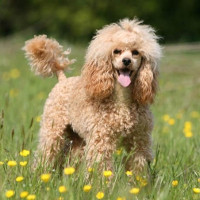
| The Poodle is another ancient breed that originated in Germany. They were used as working dogs, retrieving waterfowl for their owners. Their unique coat protected them from the water. The French adopted the Poodle when it arrived in the 15th century, and refined the breed into the three types we know today. The Standard Poodle is the waterfowl retriever, the Miniature is used to find truffles and the Toy Poodle was and still is the pampered companion. The circus people of the time discovered how clever the dog was and trained them to perform in front of crowds of adoring people. These people were also responsible for the outrageous Poodle haircut that the French adored and refined. The Poodle was recognized in America in 1886 and although some people think the breed is aloof and wary, to their families, the Poodle is a comedian, a friend and an affectionate member of the family. | ||
 |
||
| Standard of the Poodle |
Appearance of the Papi-Poo |
| The Papi-Poo has a well-proportioned body with short but strong legs. The head is often rounded and their ears are set wide apart and can be long and floppy or pricked, giving them an alert appearance. While puppies can vary in appearance even within the same litter, this little dog generally looks like an attractive stuffed animal that has come to life. With soft feathers around their medium-length muzzle and furry eyebrows, they definitely have that appealing value. Soft, wavy hair and tail, bright expressive eyes and a deep little black nose add to its charm. They come in a variety of colors, often a combination of one or more shades. Small paws, lots of hair and a ton of energy and enthusiasm describe the Papi-Poo's character and appearance. |
Temperament of the Papi-Poo |
| The Papi-Poo is a gentle, funny, lively and devoted dog, but it can be sensitive to tone of voice or develop separation anxiety if left alone for too long. When meeting new people, they can be a little wary and will alert you to strangers entering the property by barking loudly. They are intelligent little dogs who love to please and will train well as long as they are treated gently but firmly and given plenty of praise and rewards. This breed is an ideal family dog as they love children, but bear in mind that as puppies they will be very small and can be easily hurt by boisterous youngsters. Teach your children that a dog is not a toy and that they need to be gentle with them. The reward for this effort will be a confident, well-socialized dog who will repay the family with affection and devotion. Papi-Poo will also get along with other pets and dogs. They consider themselves part of your family and will want to participate in all family outings and gatherings. Papi-Poo doesn't just like company, it needs a lot of involvement, so if you have a job that means it's left alone most of the time, then this dog isn't for you. This is a dog that wants to be by your side, on your lap or at the end of a leash while he walks you. Adaptable to life in an apartment or a house with a yard, these little dogs are true companions. |
Needs and activities of the Papi-Poo |
| The Papi-Poo is a dog with a lot of energy, although he uses most of it in the house, following you around or playing with the kids. Although small, he'll benefit from a daily walk just to get him out and socialize with other dogs and people. It's also better for his health. A walk around the neighborhood or some free time to run and play with his buddies at the pet park is always welcome, and although he's small, he'll try to keep up with the bigger dogs. They love learning tricks and people-pleasing, so they appreciate a little training as long as it's positive and rewarding. Papi-Poo will join in any play, loves water play and demands to be the center of attention. Later, they'll curl up on your lap, exhausted but happy. |
Maintenance of the Papi-Poo |
| Although Papi-Poo are not heavy excretors, they require brushing almost every day just to keep the coats looking good and to avoid tangles. They'll also need a dog groomer to provide a good trim every couple of months, especially during the summer months. They don't need to be bathed constantly; a good guide is only when necessary, using a gentle dog shampoo to protect the skin's natural oils. Other maintenance issues are their teeth, which they'll need brushing at least twice a week to maintain oral health. It's best to start training them for this when they're a young puppy, making a game of it while they get used to the process. Finally, an ear and eye check, as well as soft nail clippers, will keep your Papi-Poo looking stylish. |



 English (United Kingdom)

Comments