
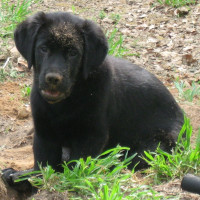
 |
New Labralound |
|
He is not recognized by the F.C.I. |
Origin |
Canada -> U.S.A. | |
Translation |
Francis Vandersteen |
A brief presentation of the New Labralound |
| The New Labralound is a hybrid of the Labrador Retriever and the Newfoundland Dog. Both are large dogs, averaging around 45 kilos. They generally stand around 66 centimeters tall and have medium to long coats that are usually very dense and can be wavy or straight. The New Labralound is a wonderful family dog, excellent with children of all ages, patient and docile with other pets, whatever they may be. They even get on well with cats and small animals like rabbits, although they may try to retrieve them from the wild. |
History of the New Labralound |
| Because the New Labralound is a hybrid, you need to look at the history of its parent breeds, the Labrador Retriever and the Newfoundland Dog. |
A little of the Labrador Retriever |
||
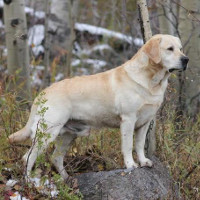
| The Labrador Retriever originated in Canada in the 1800s and was first known as the Saint John's Water Dog in the capital of Newfoundland. This big, beautiful dog helped fishermen catch fish that escaped from their nets, giving them the name Retriever, while the name Labrador came from the Labrador Sea. According to their records, they were brought to England in the early 1800s and the Earl of Malmesbury was the first to own one and discovered their excellent hunting and retrieving abilities. They almost disappeared in the 1880s when Newfoundland laws prohibited owning more than one of these dogs, but were saved by the Malmesbury family and other breeders. They were accepted into the American Kennel Club in 1917, where they are still the number-one dog breed in America. | ||
 |
||
| Standard of the Labrador Retriever | ||
A little of the Newfoundland |
||
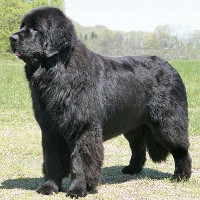
| The Newfoundland also comes from Canada, and is thought to have been brought there by European fishermen. Some say they're descended from Pyrenean Mountain Dogs, others think they're from the French Hound, but most say they're related to the Tibetan Mastiff. Records date them back to the 1700s, when they were used by fishermen to help retrieve fish from their nets. They are also known to have saved around 20 people from shipwreck in 1919 by bringing their lifeboats to safety. In 1886, the American Kennel Club officially recognized the breed where it is now the 35th most popular dog breed. | ||
 |
||
| Standard of the Newfoundland |
Appearance of the New Labralound |
| The New Labralound is a gentle giant with curious little brown eyes and a leathery black nose on a large, tapering muzzle. They have floppy, furry ears, a large forehead, long, strong legs and a long, feathered tail that hangs down unless he wags, which he often does. Their coat is very dense and water-resistant, can be straight or slightly wavy, medium to long in length, but is always soft and fluffy. Some of the most common colors of this breed are black and white, black, brown and white, brown, cream, fawn and brown, fawn and white, fawn, brindle, sable, and piebald. |
Temperament of the New Labralound |
| The New Labralound is one of the friendliest dog breeds around, due to its parentage. They are known as one of the best family dogs because they are gentle and affectionate with children and other pets, show little or no aggression and are easy to train. However, you'll need to keep them on a leash when outside if your dog isn't in a fenced-in area, as they'll chase squirrels, rabbits and other wildlife. They love to play with other dogs, so there shouldn't be any problems at the dog park or anywhere else you might see other dogs. |
Needs and activities of the New Labralound |
| New Labralounds need plenty of activity to stay healthy and happy. They tend to become obese if they don't get enough exercise. It's best for your New Labralound to get at least an hour to an hour and a half of vigorous exercise a day. They're happy to be outdoors and love to hunt local wildlife, so if you're going to the park, be prepared for that. They love swimming, agility training, hiking, long walks, running, playing ball and any other activity that gets them out and about. If they don't get enough exercise, they can develop behavioral problems like barking and chewing things. |
Maintenance of the New Labralound |
| Your New Labralound should be brushed at least five or six times a week with a pin brush and a metal comb. You should also use a detangling tool during the molting season, as they tend to shed a lot of hair at this time. To keep their ears clean, wipe them with a damp cotton ball every week and also check for mites, earwax, redness or irritation. Their nails should be trimmed when necessary, which is usually about once a month. In addition, you should brush your dog's teeth with a soft toothbrush and toothpaste specially designed for dogs. This will help prevent cavities and other dental problems. |



 English (United Kingdom)

Comments