
 |
Mountain Bulldog |
|
He is not recognized by the F.C.I. |
Origin |
Switzerland <> Great Britain -> U.S.A. | |
Translation |
Francis Vandersteen |
A brief presentation of the Mountain Bulldog |
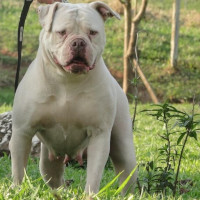
| The Mountain Bulldog is a large hybrid that is a cross between the Bernese Mountain Dog and the English Bulldog. As these breeds are currently registered with dog clubs based mainly in the United States, we can assume that the breed originated in the USA. These hybrids are strong, muscular dogs that can seem very intimidating to those who meet them. However, the breed is considered quite friendly and playful, making it an excellent companion for families with other pets and children. The Mountain Bulldog is an adaptable breed that does well in most homes, however, due to their dense coats, they may be better suited to a cool climate. |
History of the Mountain Bulldog |
| The Mountain Bulldog is a new hybrid dog breed currently recognized by the American Canine Hybrid Club, Designer Breed Registry, Designer Dogs Kennel Club and Dog Registry of America. The Mountain Bulldog is descended from the Bernese Mountain Dog and the English Bulldog. |
A little of the Bernese Mountain Dog |
||
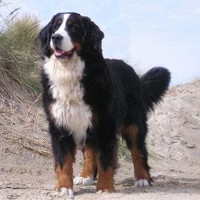
| The Bernese Mountain Dog is a large, versatile breed with Swiss roots. The breed is thought to have originated in the 18th and 19th centuries, when they often worked on farms, taking part in jobs such as cart pulling, drawing, cattle breeding and herding. Today, the breed has retired from hard farm work. Today's Bernese is often seen primarily as a companion dog, but can still be seen at work as a search and rescue and guard dog. 1937 was the year the breed joined the American Kennel Club. | ||
 |
||
| Standard of the Bernese Mountain Dog | ||
A little of the English Bulldog |
||
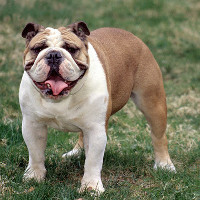
| The English Bulldog is descended from an ancient Mastiff in England. The breed was first mentioned in 1500, when it was used as a bull baiter. Because of the dog's intended use, the aim was to develop a dog endowed with muscle, strength, courage and aggression. As a result, earlier Bulldogs were larger than the modern Bulldog. In 1835, bull baiting was finally banned in England. Breeders modified the Bulldog to create a more loving and affectionate breed. Many people admired the breed's endurance and persistence. In 1859, Bulldogs began to appear in conformation shows. In 1864, the first Bulldog breed club was formed. In 1890, the Bulldog Club of America was formed. In 1896, the breed standard was created and in 1890, the American Kennel Club recognized the breed, which today has much less purposefully developed strength and endurance but is now a much-loved companion. | ||
 |
||
| Standard of the English Bulldog |
Appearance of the Mountain Bulldog |
| The Mountain Bulldog is a powerful, heavy dog that stands over 53 centimeters tall and can weigh up to 41 kilos. These hybrids often have large skulls, medium-length muzzles and powerful jaws. They may also retain wrinkles and folds, which are usually concentrated around the head and neck area. Their eyes may be slightly wide-set and almond-shaped. Ears are thick, floppy and broad. Some Mountain Bulldogs may retain an underbite, which is a characteristic feature of the English Bulldog. The Mountain Bulldog has a strong, muscular body, its chest is broad and deep, while its legs remain of medium length. In terms of coat, Mountain Bulldogs often have a dense, medium-length coat that can be soft to the touch. Coat colors are often tricolored, ranging from black, tan and white to fawn and brindle mixes. |
Temperament of the Mountain Bulldog |
| The Mountain Bulldog is a friendly, protective, hard-working breed that will do well in a family home. It's important to remember, however, that the Mountain Bulldog is descended from the English Bulldog, once considered an aggressive breed. Early training and plenty of socialization will enable your hybrid to be at its best and feel at ease with children and other pets. In general, because of its Bernese lineage and if properly socialized, the Mountain Bulldog is an excellent, docile companion. When meeting a new stranger, your Mountain Bulldog will be on guard and alert. These dogs can be protective of their family and may take time to familiarize themselves with new people. However, once accustomed to a new face, your hybrid will become friendly towards the stranger. |
Needs and activities of the Mountain Bulldog |
| Despite its size, the Mountain Bulldog is a medium-energy dog that will require around 60 minutes of daily exercise. These hybrids thrive in colder environments, so they'll be more active during winter. The Mountain Bulldog will enjoy activities such as playtime with other dogs at the dog park, long winter walks, playing in the snow and cold-weather running. Because of their dense coat, your hybrid is likely to remain relatively inactive in summer, and can overheat if over-exercised. |
Maintenance of the Mountain Bulldog |
| The Mountain Bulldog is a high shedding, high drooling breed and is considered a high maintenance dog. These hybrids will require weekly brushing to remove trapped dirt from the coat. The Mountain Bulldog should only be washed when necessary, some owners may choose to use a dry shampoo or pet spray if their dog develops a doggy smell. As with all dogs, particular attention should be paid to the ears and teeth. Dental hygiene must be maintained to prevent tartar build-up, gum disease and tooth decay. Teeth should be brushed weekly or as often as possible. In addition, ears should be cleaned and checked for signs of excessive dirt or wax build-up. Excessive wax or debris can lead to yeast infections and inflammation of the ear canal. Mountain Bulldog nails should be trimmed every two weeks to a month. |



 English (United Kingdom)

Comments