 |
Mini Torkie |
|
He is not recognized by the F.C.I. |
Origin |
Australia <> Great Britain -> U.S.A. | |
Translation |
Francis Vandersteen |
A brief presentation of the Mini Torkie |
| The Mini Torkie is a hybrid cross between a Miniature Fox Terrier and a Yorkshire Terrier. They are very small, weighing between 2 and 3.5 kilos and standing less than 30 centimeters tall. They generally have a medium to long coat of straight, silky fur that is usually a combination of white, black, blue and fawn. Mini Torkies are not a good match for families with young children, although they are suitable for older children under supervision. They're also best in a home without other pets, although they can be trained to get along with others if socialized early. They are not easy to train, and many Mini Torkie owners end up using puppy pads rather than fighting their stubbornness. |
History of the Mini Torkie |
| As a specific crossbreed, the Torkie is not a purebred, but rather a mixture of two purebred parents. The mother and father of this cross are, you guessed it, a Yorkshire Terrier and a Miniature Fox Terrier. These two small but cheeky dogs produce a toy dog with lots of spunk. In most cases, mixed-breed offspring offer the best of all worlds, a golden middle ground of the two Terriers, if you like. |
A little of the Miniature Fox Terrier |
||
| The Miniature Fox Terrier is thought to have been a mix of the Whippet, English Toy Terrier, British Fox Terrier, Toy Manchester Terrier and Toy Fox Terrier in the late 1800's. It is also known as the Mini Foxie and is the only Terrier originally from Australia. The aim was to create a smaller, faster dog with the hunting characteristics of the Fox Terrier. They were well known for their courage in hunting and killing snakes, rats and other vermin, but ultimately proved even better as pets. They are owned by many famous people in Australia, including Tony Field of the children's show, The Wiggles, and an Olympic athlete, Ian Thorpe. The breed is not as popular in the USA, but has been recognized by the United Kennel Club since 1936. | ||
 |
||
| Presentation of the Miniature Fox Terrier | ||
A little of the Yorkshire Terrier |
||
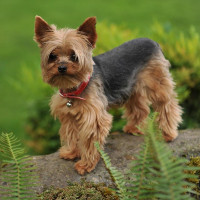
| The Yorkshire Terrier is a miniature breed from Yorkshire, England, developed in the 1800's. They were originally bred as ratter dogs to get rid of rats and other vermin in coal mines and cotton mills. Their ancestors are thought to be the Dandie Dinmont Terrier, Skye Terrier, Paisley Terrier, Manchester Terrier and Waterside Terrier. Originally, the Yorkshire Terrier was much larger, but when people recognized its beauty and friendliness, they began breeding them into smaller pets. The breed was one of the first to become popular for carrying in handbags or saddlebags. The breed is still very popular in the United States and has been a member of the American Kennel Club since 1885. | ||
 |
||
| Standard of the Yorkshire Terrier |
Appearance of the Mini Torkie |
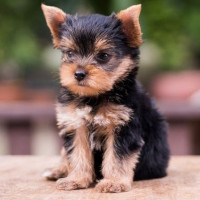
| Your Mini Torkie will probably have a medium to long coat of fine, silky straight fur. They are usually white with another darker color such as black, brown, blue, black and cream or fawn. Their big brown eyes are intelligent and inquisitive, and their noses can be brown or black on a medium-sized muzzle. They are miniature breeds, often measuring less than 30 centimeters in height and weighing between 2 and 3.5 kilos. Mini Torkies have short, muscular legs, a long curved tail and perky triangular ears. Their round feet are small with black nails and deep pads. |
Temperament of the Mini Torkie |
| Because of their size and temperament, they don't do well in homes with young children and other pets. You can train them to get along with others, but this can take time and a lot of patience. They tend to develop small-dog syndrome if you let them. If you treat them like little humans, they'll start to believe they're little humans and end up with small-dog syndrome, becoming bossy, talkative and spoiled. You need to make sure they know they're the dog and you're the human so they know who's boss. |
Needs and activities of the Mini Torkie |
| The Mini Torkie has a lot of excess energy and needs at least 60 to 90 minutes of physical activity every day. It's a good idea to schedule walks with your dog twice a day, weather permitting. In between, you can play with your dog indoors, as he's so small and doesn't need much space to play. They also like to go to the dog park to play with other dogs, go hiking and play ball. If your Mini Torkie doesn't get enough exercise every day, it can develop bad habits such as excessive barking and chewing things. |
Maintenance of the Mini Torkie |
| Your Mini Torkie should be brushed regularly, at least every other day, with a pin brush and metal comb to prevent matting. Because their fur is more like hair, it needs to be brushed often to prevent tangling. They can be bathed and shampooed once a month, but be sure to use a vet-approved dog shampoo to prevent your dog's skin from drying out. Also, brush your Mini Torkie's teeth a few times a week to prevent periodontal disease, and trim his nails as needed. Also, clean your Mini Torkie's ears once a week with a cotton ball and check for earwax build-up, mites and redness. |



 English (United Kingdom)

Comments