
 |
Mini Foxie Doxie |
|
He is not recognized by the F.C.I. |
Origin |
Australia <> Germany -> U.S.A. | |
Translation |
Francis Vandersteen |
A brief presentation of the Mini Foxie Doxie |
| You won't find a more adorable hybrid. Well-adapted Mini Foxie Doxies are bursting with energy and affection. On the other hand, they can be a little territorial and protective of people and property. Nevertheless, dog owners often fall in love with the breed's stubborn character. Mini Foxie Doxies live up to 14 years, weigh between 3 and 9 kilos and measure between 20.5 and 28 centimeters. They resemble a Dachshund, but with longer legs and less exaggerated features. Mini Foxie Doxies are thought to have been bred for around a century, however, they are not yet recognized by the American Kennel Club's list of purebred dogs. |
History of the Mini Foxie Doxie |
| The Mini Foxie Doxie takes its name from its parent breeds: the Miniature Fox Terrier and the Dachshund or “Doxie”. |
A little of the Miniature Fox Terrier |
||
| With ancestors like the Chihuahua and Toy Manchester Terrier, the Miniature Fox Terrier was once a perky circus dog, entertaining many with its energy and agility. Originally bred as vermin hunters, this talented and courageous canine excelled at his job. He was first recorded at the United Kennel Club in 1936. Still using his innate talents today, the Miniature Fox Terrier loves to compete and is a pro at Earth Dog trials where he hunts and digs as he has always loved to do. He is now listed with the American Kennel Club, having been accepted onto the list in 2003. | ||
 |
||
| Presentation of the Miniature Fox Terrier | ||
A little of the Dachshund |
||
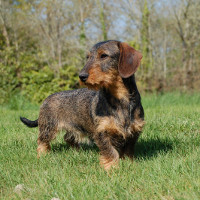
| The Dachshund originated in Germany in the 15th century. The breed was developed as a fearless badger and small vermin hunter. In fact, the name Dachshund means “badger dog” in German. There are several varieties of Dachshund, the “smooth-coated” variety came first and was the result of breeding several hunting dogs, including the Pinscher and Basset Hound. The wire-haired and long-haired Dachshunds came later, by mixing Spaniels and other Terrier breeds. From the 1800s, Dachshunds began to be bred as companion dogs throughout Europe, due to their loyalty and fun-loving personalities. Their popularity eventually spread across Europe and North America, and breeders began creating “miniature” versions that weighed less than 5 kilos. Dachshunds were recognized by the AKC in 1895, but their popularity plummeted due to their association with Germany during the First and Second World Wars. They have rebounded, however, and are now one of the most popular family dogs in the USA and Europe, particularly in the UK. The Mini Foxie Doxie is not recognized by the AKC, but is fairly established and believed to have originated in the early 1900s, when both parent breeds were present and popular in the USA. They were probably bred for their plucky personalities, adorable faces and practical size. Yet Mini Foxie Doxies can vary considerably in temperament and appearance, and breeders should be thoroughly researched if you're considering buying a puppy from them. | ||
 |
||
| Standard of the Dachshund |
Appearance of the Mini Foxie Doxie |
| Mini Foxie Doxies resemble a larger Dachshund with less exaggerated characteristics. They generally weigh between 3 and 9 kilos and measure between 20.5 and 28 centimeters. If the Miniature Fox Terrier is bred with a Miniature Dachshund as opposed to a Standard Dachshund, the result will be similar but smaller in size and weight. Mini Foxie Doxies are known for their sweet puppy faces, with round, inquisitive eyes and a delicately tapered muzzle that ends in a black, brown or sometimes isabella nose. This breed comes in many color combinations and patterns. Some of the most common colors are black, white, beige, brown, cream, red and blue. Some even come in sable, brindle or dapple patterns. The coat of a Mini Foxie Doxie can also vary considerably depending on whether it's the result of a smooth, long-haired or wire-haired Dachshund parent. Smooth is the most popular, giving a fine, short, straight coat. |
Temperament of the Mini Foxie Doxie |
| Mini Foxie Doxies are known as loyal, affectionate family companions. They are alert, intelligent and playful dogs that demand a lot of attention. They love learning tricks, playing games like fetch with their owners and playing with chew toys of all kinds. Terriers are known to be protective and vocal dogs, and the Mini Foxie Doxie is no exception, vigorously guarding his people and their property. Owners may wish to introduce their Mini Foxie Doxie to strangers and other dogs with caution. If Mini Foxie Doxies are not properly socialized or neglected, they can become aggressive or destructive. What's more, these dogs can be stubborn, difficult to train and may require obedience schooling. Nevertheless, a well-adapted and well-trained Mini Foxie Doxie will be the happiest and most affectionate pet a dog owner can have. Overall, these courageous pets thrive in environments where they receive assiduous training, socialization and affection from their owners. |
Needs and activities of the Mini Foxie Doxie |
| The Mini Foxie Doxie is an athletic breed that requires moderate exercise amounting to 30 to 45 minutes of daily activity. They can enjoy a moderate walk or a trip to the dog park, depending on temperament. They are fast, agile runners with a very strong tendency to roam and attack small animals. Owners should therefore not leave Mini Foxie Doxies unattended when outdoors or in unfenced areas. These puppies also love toys, especially balls, and are happy to play indoors with their owners. Otherwise, Mini Foxie Doxies do well in all types of climates and environments. Given their size, they are particularly suited to urban and/or apartment living as long as they receive sufficient attention from their owners. In fact, Mini Foxie Doxies are happiest when they get a good dose of daily cuddles as well as exercise. |
Maintenance of the Mini Foxie Doxie |
| Mini Foxie Doxies are not a hypoallergenic breed and are therefore not suitable for owners of pets with allergies. Their coats shed moderately and vary in length and texture depending on whether the Dachshund parent is smooth, long-haired or wire-haired. Mini Foxie Doxies with longer coats may require grooming with a shedding blade or smoother brush. This breed also requires a monthly bath in which the ears and eyes must be meticulously cleaned. They should also have their nails trimmed once or twice a month. Like all breeds, Mini Foxie Doxies also need their teeth cleaned daily to prevent plaque build-up and other dental diseases. |



 English (United Kingdom)

Comments